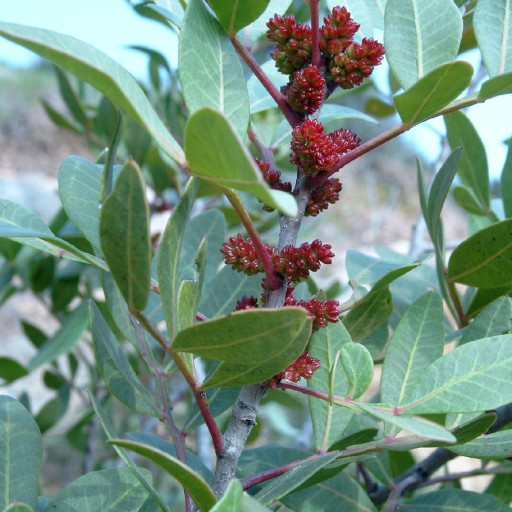
Plant Overview
Known as the "Mastic Tree" or "Lentisk," this evergreen shrub is the soul of the Mediterranean scrubland. For centuries, it has been prized for its "tears"—a fragrant, translucent resin that flows from its bark like liquid gold. Whether used in ancient medicine or gourmet desserts, this resilient plant tells a story of survival in harsh, sun-drenched landscapes.
🔍 How to Identify
- 🍃 The Foliage: Look for leathery, dark green leaves arranged in pairs along a central stem. A key giveaway is the "winged" rachis—the leaf stem itself has small, flat green "flaps" or margins between the leaflets.
- 🍒 The Berries: In late summer, the tree produces dense clusters of tiny, pea-sized berries. They start as a vibrant, jewel-toned red and eventually ripen to a glossy, deep black.
- 🌳 The Habit: It usually grows as a dense, sprawling, multi-stemmed shrub. Over many decades, it can mature into a gnarled, architectural small tree with grey, fissured bark.
🏡 In Your Garden
- 🌊 Coastal Warrior: This is a premier choice for seaside gardens. It is incredibly salt-tolerant and acts as a fantastic windbreak, shrugging off salty sprays and harsh gales that would wither other plants.
- 🏜️ Drought Specialist: Once established, the Lentisk is nearly indestructible regarding water. It prefers "lean" or poor soil and hates having "wet feet," so avoid heavy clay or over-watering, which can lead to root rot.
⚠️ Safety & Toxicity
- ✅ Generally Safe: Pistacia lentiscus is not considered toxic to humans, dogs, or cats. In fact, its berries are a vital food source for migrating birds.
- 🩹 Resin Sensitivity: While the resin is used in gourmet cooking, the raw, sticky sap can cause mild skin irritation or "contact dermatitis" in sensitive individuals. It is best to wear gloves when pruning a large specimen.
✨ Fun Fact
🍬 The Original Gum: The English word "masticate" (to chew) is derived directly from the name of this plant! People have been harvesting its dried resin to freshen their breath and whiten their teeth since the time of the Roman Empire.

Detailed Care Instructions
| Color | Inconsicuous Green |
| Soil Ph | Alkaline |
| Lighting | Full Sun |
| Soil Type | Dry, Sandy, Well Draining |
| Bloom Time | Spring |
| Plant Type | Broadleaf Evergreen |
| Mature Size | 25 Ft. Tall, 35 Ft. Wide |
| Native Area | Mediterranean Area |
| Sun Exposure | Full Sun |
| Hardiness Zones | 9-11 |
Growing a Pistacia Lentiscus plant, commonly known as the mastic tree or lentisk, requires specific conditions and techniques. Here is a step-by-step guide to help you grow this plant successfully:
- Climate and location: Pistacia Lentiscus thrives in the Mediterranean to subtropical climates. Ensure that your location has mild winters and hot, dry summers. It is best to grow the plant outdoors in full sun.
- Soil requirements: Pistacia Lentiscus prefers well-draining soil. Choose sandy or loamy soil with a pH level of 6-8. Avoid heavy clay soils that retain water.
- Seed selection and germination: Obtain seeds from a reputable source. Soak the seeds in warm water for 24 hours before planting. This process helps to soften the seed coat and improve germination.
- Planting: After soaking, plant the seeds about 1 inch deep in small pots or propagators filled with well-draining soil. Keep the soil consistently moist but not waterlogged.
- Germination and seedling care: Maintain a warm temperature for germination, ideally around 68-77°F (20-25°C). Germination can take several weeks to a few months, so be patient. Keep the soil evenly moist during this time. Once the seedlings emerge, provide bright light or filtered sunlight, gradually increasing their exposure to direct sunlight.
- Transplanting: When the seedlings grow to about 2-3 inches tall, transfer them to larger pots or suitable planting spots. Make sure the soil is well-draining and has good airflow around the roots.
- Watering: Once established, Pistacia Lentiscus plants are drought tolerant. However, in the first year, water them regularly, especially during dry periods. Water deeply but avoid overwatering, as the plant is susceptible to root rot.
- Pruning: Maintain the desired shape and size of the plant by pruning. You can remove any dead or diseased branches, shape the plant, or control its growth. Pruning is typically done in late winter or early spring.
- Fertilizing: Fertilization is generally not necessary for Pistacia Lentiscus plants. However, you can apply a balanced slow-release fertilizer in spring if your soil lacks nutrients. Follow the manufacturer's instructions for proper application.
- Pest and disease control: Pistacia Lentiscus plants are generally resistant to pests and diseases. However, occasional infestations of aphids or scale insects may occur. Monitor your plant regularly and use appropriate organic insecticides if needed.
Remember to research and follow regional regulations before planting Pistacia Lentiscus, as it may be considered invasive in some areas.

Place in a bright room that is sun drenched almost all day. Or directly in a south-facing window.

To water this plant, it is important to ensure that the soil stays consistently moist, but not waterlogged. You can achieve this by watering deeply and slowly, allowing the water to penetrate the soil and reach the roots. Make sure to water the plant at the base, avoiding the leaves and stems. It is important to also ensure good drainage, allowing excess water to flow out of the bottom of the pot or container. Keep an eye on the plant and adjust watering frequency as needed depending on weather conditions and the plant's growth habits.
To fertilize this plant, use a slow-release fertilizer with a nitrogen-phosphorus-potassium ratio of 10-10-10. Apply the fertilizer according to the instructions on the package, but avoid over-fertilization which can cause damage to the plant. It is recommended to fertilize the plant twice a year, once in early spring and again in late summer. Water the plant well after fertilization.
When planting Pistacia Lentiscus, it is important to choose an appropriate soil type that will provide necessary nutrients and drainage for the plant to thrive. Ideally, the soil should be well-draining and slightly acidic with a pH range between 6.0 and 7.5. It should also be rich in organic matter, such as compost or well-rotted manure, to promote healthy growth.
Additionally, it is recommended to choose a soil that is suitable for the climate and location where the plant will be grown. For example, if the area is prone to heavy rainfall, a well-draining soil that can handle excess water would be ideal. On the other hand, if the area is dry, a soil that can retain moisture and provide adequate hydration for the plant's roots would be more appropriate.
Some specific soil types that can be used for Pistacia Lentiscus include sandy loam, loam, and clay loam. It is important to avoid soils that are too sandy or heavy with clay, as these types of soils can hinder the plant's growth and development.
Overall, choosing the right soil for Pistacia Lentiscus is essential for ensuring the plant's health and vitality.
- Cuttings: To propagate this plant, take stem cuttings from a mature plant during the spring or early summer. Select a healthy and sturdy stem, then use a sharp and sterile pruning shears to take an approximately 4-6 inches cutting. Cut the base of the stem at a 45-degree angle and remove all the leaves from the lower half of the cutting. Dip the cut end into rooting hormone powder and plant it in a soilless mixture of coarse sand and perlite. Keep the cutting moist and warm, and it should root within a few weeks.
- Layering: Another way to propagate this plant is through layering. Select a low branch on the parent plant, bend it down to the ground, and make a small cut on the side facing the ground. Dust the wound with rooting hormone powder and cover it with soil. Water the layered stem and keep it moist. Within a few months, roots should develop from the wound, and the new plant can be cut off from the parent plant and transplanted.
- Division: For mature plants, propagation can also be done by dividing the root ball. To do this, you need to carefully dig up the entire plant. Gently tease apart the roots into multiple sections, each containing several stems and roots. Replant the divided sections in separate containers filled with a good quality potting mix. Water them regularly and keep in a partially shaded spot until new growth appears.
Regardless of the propagation method, young Pistacia Lentiscus plants need warm, well-drained soil, sufficient moisture, and protection from excessive sun exposure. Gradually increase the amount of light and heat as the plant grows. With proper care, it should develop into a healthy, mature plant, producing fragrant flowers and small, red fruits.
Common pests of the lentisk include Scale insect, mealybugs, spider mites, thrips. Make a habit of checking your lentisk frequently for pests so that any infestations can be caught and managed early.








