Plant Overview
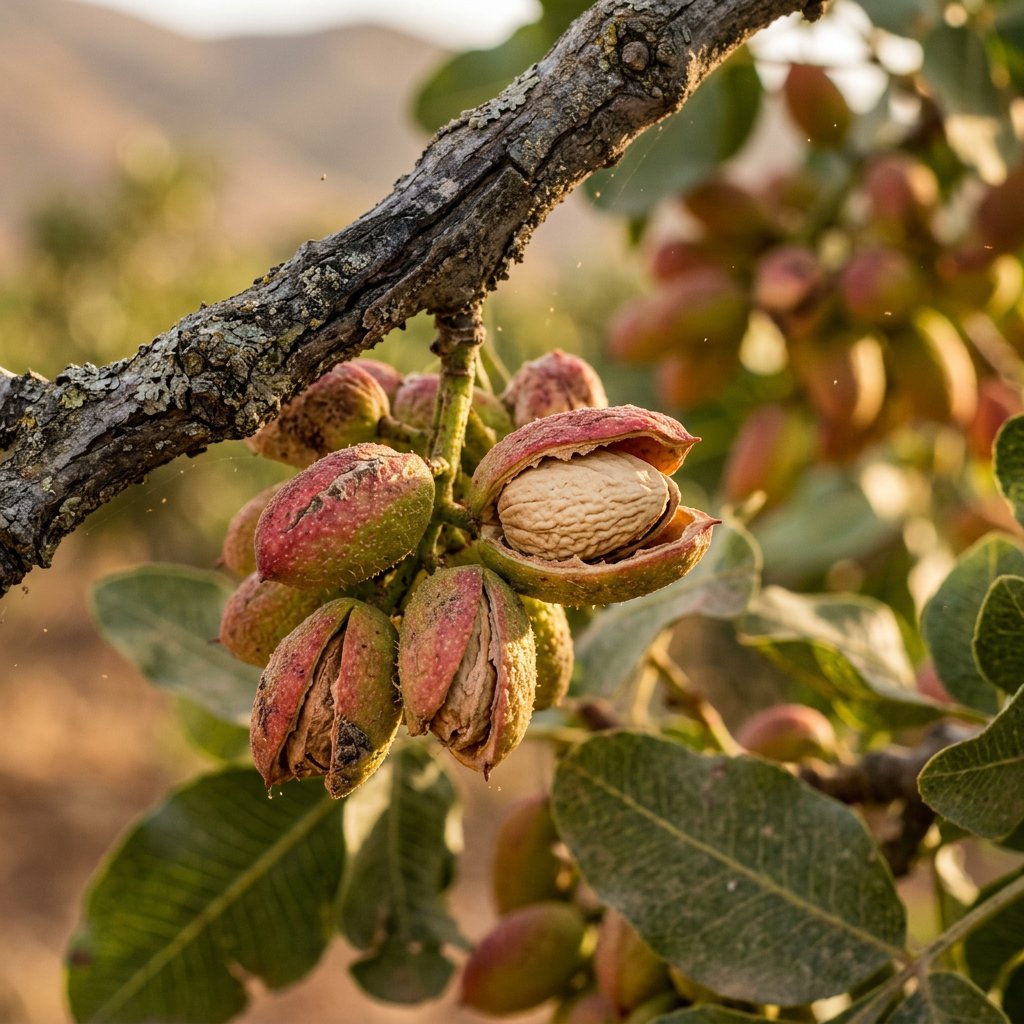
Often called "The Smiling Nut" in Iran or "The Happy Nut" in China, Pistacia vera is a desert-loving ancient treasure. Native to the rugged landscapes of the Middle East and Central Asia, this tree has been cultivated for over 9,000 years, famously gracing the hanging gardens of Babylon. It is a slow-growing, resilient survivor that thrives in the heat where other plants would wither.
🔍 How to Identify
- 🍃 Leathery Leaves: The leaves are deciduous and pinnate, usually consisting of 3 to 5 thick, oval-shaped leaflets with a slightly waxy texture designed to retain moisture in arid climates.
- 🌳 Gnarled Silhouette: This is a small, spreading tree that develops a rugged, grayish bark and a twisting, sculptural branch structure as it reaches maturity.
- 🍒 The Fruit Clusters: Long before they reach a snack bowl, the nuts grow in heavy, grape-like clusters. The fleshy outer hull (exocarp) turns a beautiful rosy-pink or blush-red when the fruit is ripe.
🏡 In Your Garden
- 🏜️ The Taproot Rule: Pistachios grow a very long, deep taproot early in life to find underground water. This makes them incredibly drought-tolerant, but it also means they despise being transplanted. You must choose their permanent location carefully, as moving them later often proves fatal.
- ❄️ The Winter Chill: While they love intense summer heat, these trees are specific about their sleep. They require a "chill period" of cold winter temperatures to break dormancy and produce fruit effectively.
- 👫 The Need for a Partner: Pistacia vera is dioecious, meaning individual trees are either male or female. To harvest nuts, you must plant at least one male tree (the pollinator) for every 8 to 11 female trees.
⚠️ Safety & Toxicity
- ✅ Generally Safe: The nuts are a highly nutritious "superfood" for humans, packed with healthy fats and antioxidants.
- 🐾 Pet Precautions: While the nut itself isn't "poisonous" like a macadamia, the high fat content can cause pancreatitis in dogs. Additionally, the hard shells are a major choking hazard and can cause dangerous intestinal blockages if swallowed.
✨ Fun Fact
- 💥 The Sound of Luck: In some Middle Eastern cultures, lovers meet under the pistachio trees at night to listen for the "pop." As the nuts ripen, the shells naturally split open with a distinct cracking sound, which is considered an omen of great luck and a happy marriage!

Detailed Care Instructions
| Color | Reddish-Brown Buds |
| Soil Ph | 6.6-7.8 |
| Lighting | Full Sun |
| Toxicity | Toxic |
| Soil Type | Light, Well-Draining, Sandy, Loamy |
| Bloom Time | Spring |
| Plant Type | Perennial |
| Mature Size | 25 To 30 Feet Tall |
| Native Area | Central Asia |
| Sun Exposure | Full Sun |
| Hardiness Zones | 7-11 |
To grow a Pistacia Vera plant, also known as the pistachio tree, you can follow these steps:
- Climate and soil requirements: Pistacia Vera plants prefer warm, dry climates. They thrive in well-drained, sandy or loamy soils. Ensure the pH of the soil is between 6.0 and 7.8.
- Choose a suitable location: Find a sunny spot with good air circulation for your plant. Pistachio trees require at least 8 hours of direct sunlight every day.
- Germination: Start by planting a fresh pistachio nut in a container or directly in the ground. Soak the seeds in water for 24 hours before planting to help with germination. Plant the seeds 2-3 inches deep.
- Watering: Maintain a regular watering schedule, keeping the soil moist but not waterlogged. Allow the top inch of soil to dry out between watering.
- Fertilization: Apply a balanced, slow-release fertilizer in the early spring and mid-summer. Follow the package instructions for appropriate quantities.
- Pruning: Train your Pistacia Vera plant to have a central leader by pruning away competing branches. Also, remove any dead, damaged, or diseased branches regularly.
- Pests and diseases: Watch out for common pests like aphids, leaf miners, or spider mites. Use insecticidal soap or neem oil if necessary. Keep an eye out for diseases such as root rot or powdery mildew. Proper watering and good air circulation can help prevent these issues.
- Harvesting: It may take several years for the Pistacia Vera plant to produce nuts. The nuts will change from green to brown, indicating they are ready for harvest. Allow them to dry in a warm, dry location for a few days before cracking them open to eat.
Remember that planting a Pistacia Vera tree from seed may not guarantee the same quality or characteristics as the parent tree. Consider purchasing a grafted pistachio tree from a reputable nursery to ensure better results.

Place in a bright room that is sun drenched almost all day. Or directly in a south-facing window.

1. Observe: Take a close look at the plant and assess its needs. Check the soil moisture, leaves, and stems for any signs of dehydration or overwatering.
2. Watering method: Pistacia Vera plants require watering thoroughly, but at the same time, it must not be sitting in standing water. Use a watering can with a narrow spout or a hose with a spray nozzle. This will allow you to water the soil directly at the base of the plant.
3. Water frequency: The watering frequency of the plant largely depends on the environment, temperature and humidity, and the size of the plant. Pistacia Vera plants should be watered when the top few inches of soil feels dry to the touch. In general, they require less water in the winter and more in summer.
4. Water amount: Ensure that the soil is properly soaked, and the water has penetrated deep into the roots. The amount of water required will depend on the size of the plant, pot size, and the moisture-retaining capacity of the soil mix.
5. Drainage: It is important to ensure that the soil has good drainage. If the soil is too compacted or retains too much moisture, it can lead to root rot. Adding perlite or sand to the soil mix can improve drainage.
6. Temperature: Avoid watering during the hottest part of the day as this can cause the water to evaporate quickly before it can be absorbed by the roots. It is better to water in the early morning or late evening when the temperature is cooler.
7. Humidity: Pistacia Vera plants prefer moderate to high humidity, so it may be necessary to mist the foliage occasionally to increase the humidity level. However, avoid getting the leaves and stems too wet as this can lead to fungal diseases.
To fertilize Pistacia Vera plant, follow these instructions:
- Choose a balanced fertilizer with equal amounts of nitrogen (N), phosphorus (P), and potassium (K), labeled as NPK 10-10-10 or similar.
- Dilute the fertilizer according to the instructions on the packaging. Usually, this involves mixing a certain amount of fertilizer with water.
- Water the Pistacia Vera plant thoroughly before applying the fertilizer to ensure the soil is moist.
- Pour the diluted fertilizer solution around the base of the plant, targeting the root zone. Avoid getting the fertilizer on the leaves or stems.
- Use caution not to over-fertilize, as it can lead to nutrient burn or other adverse effects. It is usually best to apply fertilizers at half or quarter strength and adjust accordingly based on the plant's response.
- Repeat the fertilization process every 4-6 weeks during the growing season, typically from spring to early fall.
- Monitor the plant's overall health and adjust the fertilization frequency or strength if necessary. If the leaves turn yellow or growth becomes stunted, it may indicate a need for more nutrients.
- Always follow the fertilizer manufacturer's instructions for application rates and safety precautions.
- Regularly water the plant to prevent nutrient buildup and ensure proper absorption of the fertilizer.
- Observe any specific recommendations from a horticulturist or consult a local plant expert if needed to tailor the fertilization approach for optimal Pistacia Vera plant care.
The Pistacia vera plant thrives best in well-draining soil with a pH level between 6 and 8. It requires a soil type that is light, loose, and slightly sandy to allow for proper moisture retention without becoming waterlogged. The ideal soil for this plant should have adequate organic matter content, which can be achieved by incorporating compost or well-rotted manure during planting or regularly adding organic amendments.
Additionally, the soil should have good drainage properties to prevent waterlogging, as excessive moisture can cause root rot and other diseases. Therefore, avoiding heavy clay soils or compacted soils is essential. Adding perlite, sand, or vermiculite to the soil mixture can enhance drainage and aeration.
It is important to note that the Pistacia vera plant is sensitive to saline soil conditions. Therefore, it is recommended to avoid using soil with high levels of salt or using water for irrigation that has a high salt content. Conducting a soil test can provide valuable information about soil composition, nutrient content, and pH levels, allowing for necessary adjustments to optimize the growing conditions for the Pistacia vera plant.
To propagate a Pistacia Vera plant, you can follow these steps:
- Gather ripe, healthy seeds from the desired parent tree. Make sure to collect mature seeds that have fallen naturally from the tree.
- Prepare a suitable germination medium by mixing equal parts of well-draining soil and compost. Fill small pots or seedling trays with this mixture, leaving about an inch of space from the top.
- Moisten the soil in the pots with water, ensuring it is slightly damp throughout. Avoid waterlogging the soil, as this can lead to rotting.
- Sow the collected seeds in the prepared pots, placing one seed per pot. Gently press the seeds into the soil, but do not bury them too deeply. Cover the seeds with a thin layer of the germination medium.
- Place the pots in a warm and well-lit area, such as near a window that receives bright but indirect sunlight. Maintain a temperature range of 70-80°F (21-27°C) for optimal germination.
- Keep the soil in the pots consistently moist by watering with a gentle spray of water whenever the top layer feels slightly dry. Avoid overwatering, as this can cause the seeds to rot.
- Germination may take anywhere from a few weeks to a few months depending on the conditions. Be patient and monitor the pots regularly.
- Once the seedlings have emerged and are several inches tall, they can be transplanted into larger pots or containers filled with well-draining potting soil. Be careful not to damage the delicate roots during transplantation.
- Continue providing the young plants with ample sunlight, moderate watering, and a suitable temperature range to promote healthy growth.
- As the Pistacia Vera plants mature, you can gradually expose them to outdoor conditions, such as placing them in a sheltered area or a greenhouse.
By following these steps, you can successfully propagate a Pistacia Vera plant from seeds and care for the seedlings until they reach maturity.
Common pests of the pistachio include Scale insect, mealybugs, spider mites, thrips. Make a habit of checking your pistachio frequently for pests so that any infestations can be caught and managed early.








