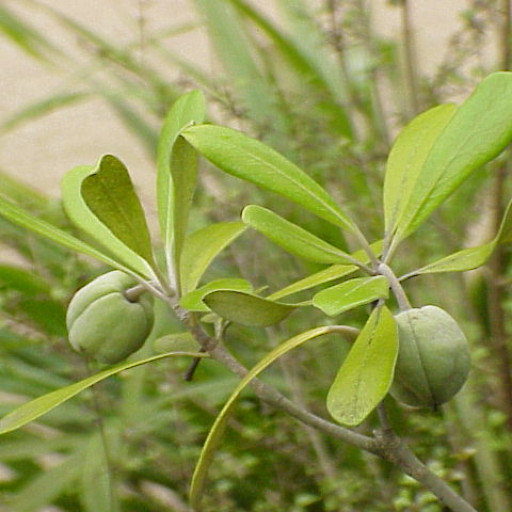
Plant Overview
Known affectionately as the Karo, this New Zealand native is the ultimate coastal warrior. With its thick, leathery leaves and salt-sprayed resilience, it has earned its reputation as one of the toughest shrubs for gardeners facing harsh seaside winds. While it might look like a simple green hedge from a distance, its small, dark flowers release a surprisingly sweet, honey-like fragrance that fills the evening air.
🔍 How to Identify
- 🍃 The Leaves: Look for thick, spoon-shaped leaves that are a deep olive green on top. If you flip one over, you’ll find a soft, white-to-grey "felt" or fuzz coating the underside, which helps the plant retain moisture.
- 🌸 The Flowers: In spring and early summer, small, bell-shaped clusters appear. They are a deep, moody shade of maroon or chocolate-red and are remarkably fragrant after sunset.
- 🌰 The Seed Pods: After flowering, the plant produces woody, grey-green capsules. When they ripen, they split into three sections to reveal a hoard of shiny, jet-black seeds coated in a sticky resin.
🏡 In Your Garden
- 💨 Coastal Specialist: The Karo is famous for its ability to withstand salt spray and gale-force winds. It’s the perfect choice for a "first line of defense" hedge or shelterbelt if you live near the ocean.
- ✂️ Tough Transitions: This plant is incredibly forgiving of pruning. Because it has a naturally dense growth habit, it can be shaped into a formal hedge or allowed to grow into a small, gnarly tree. It prefers well-drained soil and, once established, is exceptionally drought-tolerant.
⚠️ Safety & Toxicity
- 🐾 Mild Caution: Like many members of the Pittosporum family, the Karo contains saponins. While not considered "deadly," ingesting the leaves or seeds can cause mild stomach upset, drooling, or vomiting in cats and dogs.
- 🖐️ Skin Sensitivity: The sticky resin on the seeds can be a bit of a nuisance to get off your hands, but it is generally non-irritating to human skin.
✨ Fun Fact
The name Pittosporum is derived from the Greek words for "pitch" and "seed." This refers to the sticky, resinous substance that coats the seeds, a clever evolutionary trick that helps the seeds hitch a ride on the feathers of passing birds!

Detailed Care Instructions
To grow Pittosporum crassifolium, also known as Karo or Pittosporum tenuifolium, you can follow these steps:
- Choosing the right location: Select a spot in your garden that receives full sun to partial shade. Pittosporum crassifolium can tolerate a range of soil conditions but prefers well-draining soil.
- Planting: Dig a hole that is twice as wide and slightly deeper than the root ball of the plant. Gently loosen the root ball and place the plant in the hole. Backfill the hole with soil, lightly pressing it down to remove any air pockets.
- Watering: Give the plant a deep watering after planting to help settle the soil. After that, water regularly to keep the soil consistently moist but not waterlogged. Adjust watering based on weather conditions to avoid overwatering or drought stress.
- Mulching: Apply a layer of organic mulch around the base of the plant to help retain moisture, suppress weed growth, and protect the roots from extreme temperatures.
- Pruning: Pittosporum crassifolium benefits from occasional pruning to maintain its desired shape and size. Prune in late winter or early spring to remove any dead, diseased, or overgrown branches. You can also shape the plant by selectively trimming the branches.
- Fertilizing: Apply a slow-release balanced fertilizer in spring to provide essential nutrients to the plant. Follow the instructions on the fertilizer packaging for application rates.
- Pest and disease control: Keep an eye out for common pests such as aphids, mealybugs, and scale insects. If necessary, treat with an appropriate insecticide or use environmentally friendly pest control methods. Regularly inspect the leaves for any signs of fungal infections or diseases and take appropriate measures if needed.
Remember, individual plant care may vary depending on your specific climate and growing conditions.

Place in a bright room that is sun drenched almost all day. Or directly in a south-facing window.

To water this plant, it is important to check the soil moisture level by sticking a finger about an inch into the soil. If the soil feels dry, it is time to water the plant. Water the plant at the base, taking care not to wet the leaves. Use a watering can or hose with a gentle stream to avoid displacing the soil. Make sure to water thoroughly, allowing the excess water to drain out of the pot or away from the base of the plant. Avoid overwatering, as this can lead to root rot. It is recommended to water this plant once every week, or more often during hot, dry weather.
The best time to fertilize this plant is in the spring, before new growth appears. Use a balanced, slow-release fertilizer with an NPK ratio of 10-10-10. Apply the fertilizer around the base of the plant, being careful not to get any on the foliage or stem. Water well after fertilizing. Avoid fertilizing during the winter months when the plant is dormant.
When selecting soil for this plant, it is important to keep in mind its specific needs. It does best in well-draining soil that is slightly acidic, with a pH range of 5.5-7.5. The soil should also be rich in organic matter, such as compost or aged manure, as this will provide the necessary nutrients for healthy growth.
It is recommended to avoid heavy clay soils, as they can retain too much moisture and lead to root rot. Instead, a sandy loam or loamy soil with good drainage is ideal.
Before planting, it is also important to ensure that the soil is free of weeds and debris, as well as any soil-borne diseases or pests that may be harmful to the plant. Adding some slow-release fertilizer to the soil can also help promote healthy growth and overall health for the plant.
Propagation of this plant can be done through several methods. One common method is by taking semi-hardwood cuttings during the summer. Cuttings should be around 4-6 inches long and taken from the current season's growth with a sterilized sharp knife. Remove the leaves from the lower half of the stem and dip the cut end in rooting hormone powder. Plant the cutting in a pot filled with moist, well-draining soil and cover it with a plastic bag or dome to create a humid environment. Place the pot in a bright, indirect light and keep the soil moist until the cutting roots and begins to produce new growth.
Another method is by collecting the seeds from mature fruits. Once the fruits have turned brown, collect them and remove the seed coating. Soak the seeds in water for 24 hours and then plant them in a pot filled with moist, well-draining soil. Keep the pot in a bright, indirect light and water as needed to keep the soil moist. The seeds will germinate in 2-4 weeks.
This plant can also be propagated through layering. Select a low-growing branch and remove any leaves from the bottom half of the stem. Gently nick the stem and apply rooting hormone powder to the area. Bury the nicked area in the soil, securing it with a U-shaped pin or small rock. Keep the soil moist and monitor the layering until new growth appears, which can take several months. Once the new growth appears, cut the stem and transplant the new plant to its permanent location.
Common pests of the evergreen pittosporum include Scale insect, mealybugs, spider mites, aphids. Make a habit of checking your evergreen pittosporum frequently for pests so that any infestations can be caught and managed early.








