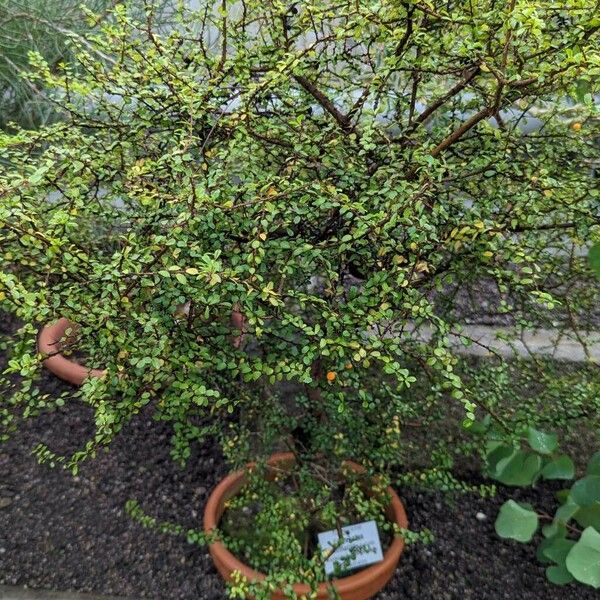
Plant Overview
Often called the Orange Thorn, this Australian native is the ultimate "security guard" for your garden. With its intricate, zig-zagging branches and brilliant orange berries, it looks like a piece of living wire art that has been sprinkled with citrus-colored beads. It is a favorite among those looking to create a "wildlife-friendly" sanctuary, as it offers a safe haven that larger predators simply cannot enter.
🔍 How to Identify
- 🍃 Miniature Foliage: The leaves are incredibly small (often less than 1cm), glossy, and dark green, giving the plant a delicate, bonsai-like appearance even when fully grown.
- ⚔️ Formidable Spines: Its most defining feature is the sharp, slender thorns found at almost every leaf node along its wiry, zig-zagging stems.
- 🟠 Beaded Fruit: Following tiny, inconspicuous white flowers, the plant produces small, round berries that ripen into a vivid, glossy orange or yellow.
🏡 In Your Garden
- 🐦 Avian Fortress: Because of its dense, thorny interior, this shrub is one of the best plants for providing "safe zones" for small honeyeaters and wrens to nest, keeping them protected from cats and larger predatory birds.
- 🪴 Low-Maintenance Sculpting: While it grows slowly, it is exceptionally hardy and tolerates a variety of soil types. It is often used as a "barrier hedge" to direct foot traffic or as a textured accent in native-themed landscapes.
- 💧 Drought Resilience: Once established, its tiny leaves help it conserve moisture, making it an excellent choice for gardens that experience dry spells or have "difficult" corners.
⚠️ Safety & Toxicity
- 🩹 Physical Hazard: This plant is not known to be chemically toxic to humans or pets. However, the thorns are extremely sharp and can easily puncture skin or paws.
- 🧤 Handling Advice: Always wear thick, leather gardening gloves when pruning or transplanting. It is best planted away from high-traffic walkways or children's play areas to avoid accidental scratches.
✨ Fun Fact
In the wild, the Orange Thorn’s zig-zag growth habit is an evolutionary masterstroke; it allows the plant to knit together with neighboring shrubs to form an impenetrable thicket, protecting the plant’s core from grazing animals.

Detailed Care Instructions

Place in a bright room that is sun drenched almost all day. Or directly in a south-facing window.

Some plants require more regular watering than others, which should be done every few days. It's critical to maintain the soil moist all of the time. The water requirements of the same plant placed in pots with varying sizes will differ. Because the water in the smaller pot evaporates faster than the water in the larger pot, it will require more watering. Regardless of pot size, the surface should constantly be maintained moist.







