Plant Overview
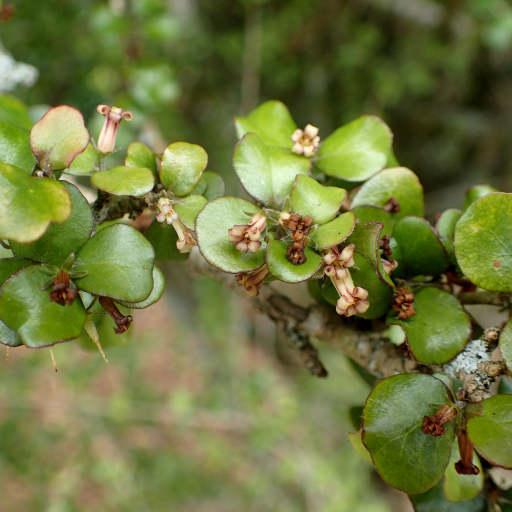
Often called the Heart-leaved Kohuhu or Wide-angled Pittosporum, this New Zealand native is a master of architectural mystery. At first glance, it looks like a cloud of tangled, smoky-grey wire, but a closer look reveals thousands of tiny, perfectly heart-shaped leaves. This "divaricating" growth habit makes it a fascinating choice for gardeners looking for a plant with a prehistoric aesthetic and incredible structural depth.
🔍 How to Identify
- 🌿 The Leaves: Tiny, leathery, and distinctly heart-shaped (obcordate). They are often less than 5mm wide, making them some of the smallest in the Pittosporum family.
- 🎋 Branching Pattern: It features "zig-zag" branches that interlace and tangle together. This creates a dense, twiggy interior that is almost impossible to see through.
- 🌸 Hidden Blooms: In late spring, it produces miniature star-shaped flowers. They are deep maroon or pale yellow and release a sweet, honey-like fragrance that is strongest at dusk.
🏡 In Your Garden
- 🦅 Evolutionary Shield: Its tangled growth isn't just for looks; scientists believe it evolved this way to protect its inner leaves from being eaten by the now-extinct giant Moa bird.
- 🌬️ Resilient Nature: Because of its dense structure, it is incredibly wind-resistant. It makes an excellent "filigree" hedge or a standalone specimen in a contemporary, minimalist garden.
- 💧 Soil Preference: Unlike some of its desert-dwelling cousins, this species naturally grows near riverbanks and swampy lowland forests. It appreciates soil that stays moist but has enough grit to prevent the roots from suffocating.
⚠️ Safety & Toxicity
- ✅ Status: Generally considered non-toxic to humans and pets.
- 🧪 The Details: Many Pittosporum species contain saponins (which can be slightly bitter or irritating if eaten in massive quantities), but this plant is not known to be hazardous. It is a safe, structural addition to family backyards.
✨ Fun Fact
The Pittosporum obcordatum is quite rare in the wild! For many years, it was thought to be extinct in certain regions of New Zealand until a small population was rediscovered in the 1980s. Buying one for your garden actually helps keep the legacy of this unique "fossil" plant alive.

Detailed Care Instructions

Place in a bright room that is sun drenched almost all day. Or directly in a south-facing window.

Watering Pittosporum Obcordatum plant requires careful attention to the soil, weather conditions, and the plant's growth phase. Before watering, check the soil's moisture levels by sticking your finger into the soil up to the second knuckle. If the soil feels dry, it's time to water. However, if the soil feels moist, hold off on watering.
When watering, use a gentle stream of water to avoid damaging the plant's roots. Water the plant slowly and evenly, ensuring that the water seeps deeply into the soil. Water until the soil is moist to a depth of at least six inches.
During hot weather, water more frequently. In contrast, during cooler weather, let the soil dry out slightly before watering again. This encourages the roots to grow deeper and helps the plant to develop stronger roots.
Avoid waterlogging the plant, as this can lead to root rot. Ensure that the soil has proper drainage to avoid waterlogging, and remove any excess water that collects in saucers or at the bottom of pots.
Finally, it's crucial to water the plant at the right time of day. Watering in the early morning or late afternoon helps to reduce water evaporation and allows the plant to absorb water when it needs it the most.
The ideal soil for Pittosporum Obcordatum should be well-draining and aerated. The soil should have good moisture retention properties while allowing excess water to drain out easily. It should have a slightly acidic pH level, between 5.5 to 6.5. A good quality soil mix containing peat moss, perlite, and vermiculite would be ideal for this plant. The soil should be rich in nutrients, particularly nitrogen, phosphorus, and potassium. It should also be disease-free and free from any contaminants or chemical residues. It is important to avoid using heavy clay soils or soils that are too compacted, as this can hinder the growth of the plant.








