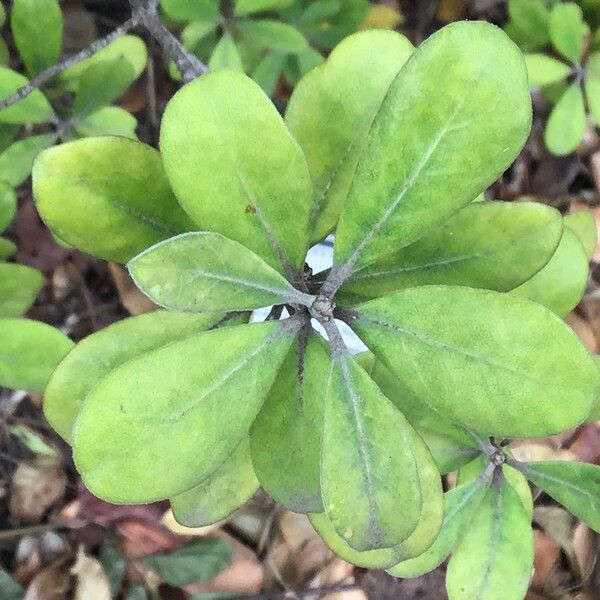
Plant Overview
Often called the Ralph's Karo, this New Zealand native is a coastal champion known for its incredible resilience against salty winds. While it looks like a soft, silvery shrub from a distance, it is a tough-as-nails evergreen that brings a touch of the wild Kiwi coastline to any garden landscape. It is frequently sought after by gardeners who need a "living wall" that can survive where other plants might wither.
🔍 How to Identify
- 🍃 The Leaves: Look for leathery, oval-shaped leaves. While the tops are a matte green, the undersides are covered in a thick, white "felt" or fuzz (tomentum) that helps the plant retain moisture.
- 🌸 The Blooms: In late spring, it produces clusters of small, bell-shaped flowers. They are a deep, moody maroon or chocolate-purple color and emit a subtle, sweet fragrance.
- 🌰 The Fruit: After the flowers fade, woody green capsules appear. When ripe, these split into three valves to reveal bright, sticky black seeds nestled inside.
🏡 In Your Garden
- 💨 The Coastal Warrior: This plant is an elite choice for windbreaks or "shelter belts." It shrugs off salt spray and heavy gales, making it perfect for seaside properties or exposed hilltop gardens.
- ✂️ Privacy & Patience: Because it responds beautifully to pruning, it is a favorite for dense privacy screens. However, avoid "shuffling" it around the garden; like many Pittosporums, it develops a sensitive root system and prefers to stay exactly where it was first planted.
- 💧 Drought Strategy: That white fuzz on the leaf underside isn't just for show—it’s an evolutionary trick to trap humidity, allowing the plant to thrive in dry spells once it is fully established.
⚠️ Safety & Toxicity
- 🐾 Pet Safety: The plant contains saponins (natural soap-like compounds). While not typically lethal, ingesting the leaves or seeds can cause drooling, vomiting, or lethargy in cats and dogs.
- 👶 General Handling: It is generally safe for humans, though the "pitchy" resin on the seeds can be very sticky and difficult to wash off skin or clothing.
✨ Fun Fact
The name Pittosporum comes from the Greek words pitta (pitch) and sporos (seed). This refers to the gooey, tar-like resin that coats the seeds, ensuring they stick to the feathers of birds so they can be "hitchhiked" to new locations!

Detailed Care Instructions
To grow Pittosporum Ralphii plant, you can follow these steps:
- Choose a suitable location: Pittosporum Ralphii prefers full sun to partial shade and well-drained soil. Make sure the area has enough space for the plant to grow to its full size.
- Prepare the soil: Amend the soil with organic matter, such as compost, to improve drainage and fertility. Pittosporum Ralphii prefers slightly acidic to neutral soil pH.
- Planting: Dig a hole that is slightly larger and deeper than the plant's root ball. Place the plant in the hole, making sure the top of the root ball is level with the surrounding soil. Backfill the hole with soil and gently firm it around the plant.
- Watering: Water the plant generously after planting to help settle the soil and establish the root system. Afterwards, provide regular watering, especially during dry periods, to keep the soil consistently moist but not waterlogged.
- Mulching: Apply a layer of organic mulch, such as wood chips or bark, around the base of the plant to help retain moisture, regulate temperature, and suppress weed growth.
- Pruning: Prune Pittosporum Ralphii when necessary to control its size and shape. Remove any dead or diseased branches, and trim back excessive growth to maintain a compact and tidy appearance.
- Fertilizing: Pittosporum Ralphii plants do not require heavy fertilization. Apply a balanced, slow-release fertilizer in spring to promote healthy growth. Follow the instructions on the fertilizer package for application rates.
- Protection: Protect the plant from extreme cold temperatures, especially during its early growth stages. Consider using a frost cloth or temporarily covering the plant during frosty nights.
By providing proper care and maintenance, your Pittosporum Ralphii plant should grow and thrive, adding beauty to your garden or landscape.

Place in a bright room that is sun drenched almost all day. Or directly in a south-facing window.

Pittosporum Ralphii is a type of evergreen plant that requires regular watering to stay healthy and grow properly. To water this plant, you should first check the soil around the base of the plant to determine if it requires watering. Insert your finger or a soil moisture meter into the soil to check for dryness. If the soil feels dry to the touch, it is time to water your Pittosporum Ralphii.
When watering this plant, you should use a watering can or garden hose with a nozzle that offers a gentle or mist setting. This will ensure that the water is distributed evenly and doesn't damage the plant. Slowly pour water onto the soil around the base of the plant until the soil is moist but not saturated. You should avoid overwatering this plant, as it can lead to root rot and other problems.
You should aim to water your Pittosporum Ralphii plant once or twice per week, depending on the weather conditions and the moisture levels of the soil. In hot, dry weather, you may need to water more frequently to prevent the soil from drying out completely. Similarly, if the plant is located in a shady or cooler spot, it may require less water than if it were in a sunny, exposed location.
Overall, it is important to monitor the soil moisture levels and adjust your watering schedule accordingly to ensure that your Pittosporum Ralphii plant stays healthy and thriving.
To fertilize this plant, use a balanced fertilizer with equal parts nitrogen, phosphorus, and potassium. Apply the fertilizer in early spring before new growth appears and again in early summer. Water the plant thoroughly before applying the fertilizer to prevent burning the roots. Follow the instructions on the fertilizer package for application rates, but generally, use about 1 tablespoon of fertilizer per foot of plant height. Spread the fertilizer evenly around the base of the plant, avoiding contact with the trunk or stems. Water the plant deeply after fertilization to help distribute the nutrients throughout the soil.
The ideal soil for this plant is well-draining and fertile, with a pH level between 6.5 and 7.5. It should be rich in organic matter and contain a mixture of sand, loam, and some clay. This type of soil will provide adequate drainage while also retaining enough moisture to keep the plant healthy. It is also important to ensure that the soil is not too compacted, as this can restrict root growth and cause the plant to become stressed. A good way to achieve this is to mix in a layer of organic mulch or compost to the surface of the soil.
To propagate this plant, you can collect seeds from the fruit and plant them in a well-draining soil mix. It is important to keep the soil consistently moist and provide light shade until the seedlings have established. Alternatively, you can take semi-hardwood cuttings in the summer or early autumn and root them in a moist rooting hormone and compost mixture. Cover the cuttings with plastic to maintain humidity and provide indirect light. Over time, the cuttings will root and can be transplanted into a larger container or the ground.








