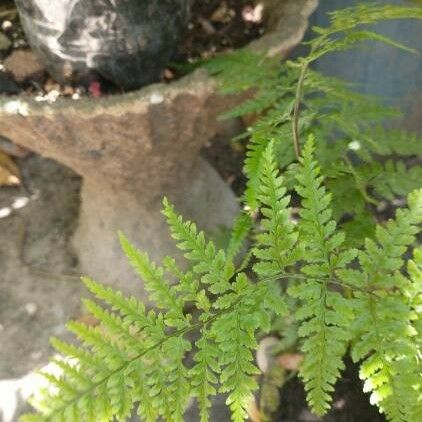
Plant Overview
Often called the Silver Back Fern or the Silver-and-Gold Fern, this tropical beauty is famous for the shimmering white powder coating the underside of its fronds. It looks as though it has been dusted with moonlight or confectioner's sugar. While it originated in the American tropics, it has traveled the globe, often popping up in unexpected places like old stone walls or rocky crevices.
🔍 How to Identify
- 🌿 Dual-Toned Fronds: The top side of the leaf is a deep, matte green, while the underside features a striking, chalky silver or white coating known as "farina."
- 📐 Triangular Shape: The fronds grow in an elegant lanceolate (spear-like) or triangular pattern, divided into many small, delicate segments.
- 🖤 Dark Stems: The stalks (stipes) are remarkably dark—often a glossy black or deep burgundy—which creates a sharp contrast against the silver foliage.
🏡 In Your Garden
- ☀️ The Sunscreen Effect: Unlike many shade-loving ferns, the Silver Back Fern can handle brighter light. That silver powder isn't just for show; it acts as a natural "sunscreen," reflecting intense rays and helping the plant retain moisture in sunnier spots.
- 🧗 The Rock Climber: In the wild, this fern is "epipetric," meaning it loves to grow on rocks. In a home setting, this means it hates "wet feet." Use a very airy, well-draining potting mix—like a blend of orchid bark and peat—to mimic its rocky natural home.
⚠️ Safety & Toxicity
- 🐾 Safe for Pets: This plant is generally considered non-toxic to cats, dogs, and horses, making it a "paws-itive" addition to a pet-friendly household.
- 🖐️ Skin Sensitivity: While not poisonous, the white powder (farina) can cause mild skin irritation or allergic reactions in sensitive individuals. It is best to handle the plant by the stems rather than touching the underside of the leaves.
✨ Fun Fact
The silver powder on the underside is so thick and loose that you can press a frond onto a dark piece of clothing or paper to leave a perfect, shimmering "nature tattoo" or print of the leaf's intricate silhouette!

Detailed Care Instructions
To grow Pityrogramma Calomelanos (also known as the silver fern or silver lace fern), follow these steps:
- Choose the right location: Pityrogramma Calomelanos thrives in partially shaded areas. It prefers bright but indirect light, such as that provided by a north or east-facing window. Avoid exposing it to direct sunlight, as it can scorch the leaves.
- Planting medium: Use a well-draining potting soil mix, such as one composed of equal parts peat moss, perlite, and sand. This will ensure proper drainage and prevent waterlogging.
- Pot selection: Select a pot with drainage holes to allow excess water to escape. The pot should be large enough to accommodate the root ball comfortably, with some room for growth.
- Watering: Keep the soil evenly moist but not overly wet. Water the plant when the top inch of soil feels dry to the touch. Avoid letting the plant sit in standing water, as it can lead to root rot.
- Humidity requirements: Pityrogramma Calomelanos thrives in high humidity environments. If your indoor humidity is low, you can increase humidity by misting the leaves or placing a tray of water near the plant. Grouping plants together can also create a microclimate with higher humidity.
- Fertilizer: Use a balanced liquid fertilizer once every one to two months during the growing season (spring and summer). Dilute the fertilizer according to the package instructions and apply it to moist soil.
- Pruning: Remove any yellow or brown fronds with clean and sharp pruning shears. This promotes new growth and keeps the plant looking tidy.
- Transplanting: If the plant outgrows its pot, repot it into a slightly larger container with fresh potting soil. This is best done in spring when the plant begins actively growing.
With proper care and attention to its growing conditions, your Pityrogramma Calomelanos plant should flourish and provide you with its beautiful silver-lace foliage.

Place in a window with dappled sun or a spot in the middle of a room. Or directly in a window facing west or east.

To properly water this plant, you should first determine its specific watering needs based on factors such as the plant's size, environment, and soil type. Then, choose an appropriate watering method such as a watering can or hose. When watering, do not over-saturate the soil but ensure it is moist throughout the root zone. Avoid getting water on the leaves as this can cause damage or disease. It is recommended to water early in the morning to allow for maximum absorption and avoid water loss due to evaporation during the heat of the day. Monitor the plant for signs of over or under watering, such as yellowing leaves, wilting, or root rot.
To fertilize this plant, use a water-soluble fertilizer with equal parts of nitrogen, phosphorus, and potassium every 2-3 weeks during growing season. Dilute the fertilizer to half strength and apply it directly to the soil. Avoid fertilizing the plant during winter months when it is dormant.
The ideal soil for the plant is a well-draining, slightly acidic soil with a pH range of 5.0-6.0. The soil should be rich in organic matter and have good water retention capacity. A mixture of peat moss, perlite, and vermiculite or a high-quality potting mix can be used. Adding some sand or small gravel to the soil mixture will help improve drainage. The plant prefers moist, but not waterlogged soil and should be kept evenly moist throughout the growing season. It will benefit from regular feeding with a balanced fertilizer during the growing season. The soil should be kept free of weeds and debris to prevent competition for nutrients and water.
Propagation of this plant can be done through division of its rhizomes. The process involves gently digging up the parent plant and separating its root system into smaller sections, each containing several leaves and roots. Each section can then be potted in well-draining soil and kept in a warm and humid location until new growth appears. It is important to water the newly planted sections regularly but not let the soil become waterlogged. Alternatively, leaf cuttings or spores can also be used for propagation, but these methods are more difficult and require more specialized knowledge.








