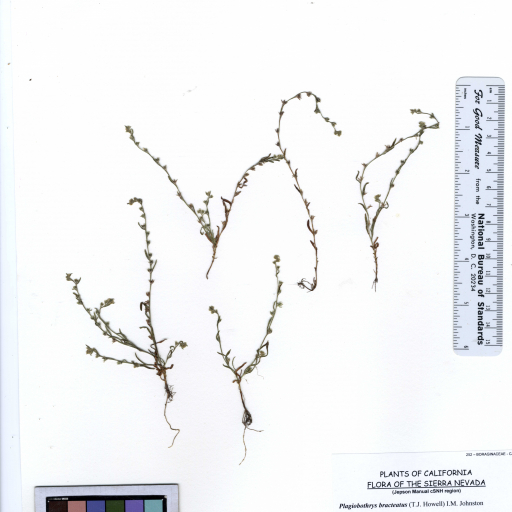
Plant Overview
Often found dotting the damp meadows and vernal pools of the American West, the Bracted Popcornflower earns its charming nickname from its clusters of tiny, crisp-white blossoms. This native wildflower is a seasonal delight, appearing as if someone scattered handfuls of freshly popped kernels across the landscape after a heavy spring rain. It is a resilient survivor, specifically adapted to thrive in soils that transition from muddy wetlands to bone-dry cracked earth.
🔍 How to Identify
- 🍿 The "Popcorn" Blooms: Each tiny flower features five rounded, white petals surrounding a bright yellow or orange "eye" at the center, mimicking the look of buttered popcorn.
- 🌿 Leafy Bracts: As the name bracteatus suggests, this species is distinguished by the small, leaf-like structures (bracts) that grow tucked right under the flower clusters.
- 🌵 Bristly Texture: The stems and narrow leaves are covered in fine, stiff hairs, giving the plant a slightly rough or "hirsute" feel when touched.
🏡 In Your Garden
- 💧 Wetland Specialist: This plant is an "obligate" or "facultative" wetland species, meaning it loves heavy, clay-like soils that hold water in the spring. If you have a low spot in your yard that stays soggy, this is its ideal home.
- 🌱 Ephemeral Beauty: Do not expect a year-round show; this plant is an annual. It completes its entire life cycle quickly as the moisture evaporates, leaving behind seeds that wait patiently for the next year’s rains.
⚠️ Safety & Toxicity
- 🐾 Livestock Warning: While generally safe for human hikers to admire, many members of the Borage family contain pyrrolizidine alkaloids. These can be toxic to livestock (like horses and cattle) if consumed in large quantities over time.
- 👶 Skin Sensitivity: The tiny, stiff hairs on the stems can be "prickly" and may cause mild mechanical irritation or a localized rash on children or adults with sensitive skin.
✨ Fun Fact
Many species in the Popcornflower family produce a potent purple or reddish dye in their roots. In the past, this "living ink" was sometimes used by indigenous people and early explorers as a natural pigment for decorating skin or fibers!

Detailed Care Instructions

Place in a bright room that is sun drenched almost all day. Or directly in a south-facing window.

Water-loving plants flourish in wet or sloppy soil and near ponds. The extensive root system enables these plants to absorb plenty of water. The surface of the soil should be kept moist at all times. Place your pot in a container filled with water to guarantee that plants get enough water. If the ground becomes dry, it is recommended that you water it well. Plants in smaller pots will need to be watered more frequently. Water the soil in which the plant is standing thoroughly using a watering can.








