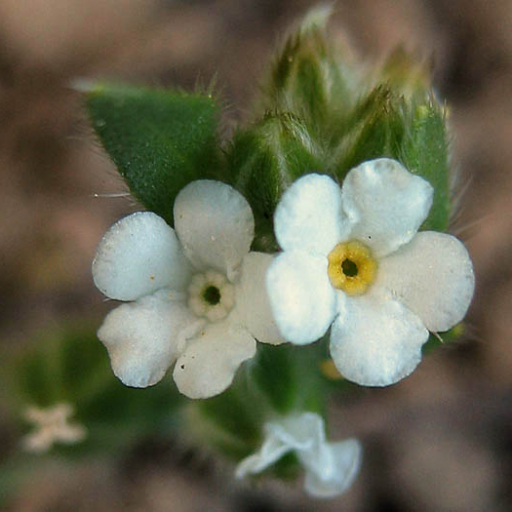
Plant Overview
Often called the Valley Popcornflower, this charming wildflower looks as though a giant has sprinkled handfuls of fresh popcorn across the grassy meadows of California and Oregon. A member of the Borage family, it is a quintessential sign of spring in the American West, painting valleys in bright white and sunny yellow before the summer heat arrives. Its species name, canescens, refers to the soft, grayish-fuzz that covers its stems, giving the plant a "hoary" or frosted appearance.
🔍 How to Identify
- 🌼 The "Popcorn" Bloom: Tiny, five-petaled white flowers feature a bright yellow center (the "eye"), mimicking the look of buttered popcorn.
- 🦂 Scorpioid Cymes: The flower clusters are arranged on a coiled stem that unfurls like a scorpion’s tail as the blossoms open one by one.
- ☁️ Fuzzy Foliage: The leaves and stems are densely covered in fine, soft white hairs, giving the entire plant a silvery-green or "canescent" hue.
🏡 In Your Garden
- 🌱 Ephemeral Beauty: As an annual, this plant lives fast and dies young. It sprouts with the winter rains, blooms in a spectacular burst, and then retreats into seeds once the soil dries out.
- ☀️ Open Space Lover: In a naturalistic garden, it thrives in sunny, open spots with well-draining soil. It struggles to compete with tall, invasive grasses, so it appreciates a little breathing room to show off its delicate stature.
⚠️ Safety & Toxicity
- 🟢 Generally Safe: Valley Popcornflower is not considered highly toxic to humans or casual touch, making it a safe neighbor for most hikers and gardeners.
- 🐴 Livestock Caution: Like many members of the Boraginaceae family, some Plagiobothrys species can contain pyrrolizidine alkaloids. While not an immediate threat, these can be harmful to horses or cattle if grazed in large quantities over a long period.
✨ Fun Fact
The seeds of the Popcornflower are called "nutlets." They are incredibly tiny and often have intricate, wrinkled patterns on their surface that are so unique they are used by botanists to tell different species of Plagiobothrys apart under a microscope!

Detailed Care Instructions

Place in a bright room that is sun drenched almost all day. Or directly in a south-facing window.

Some plants require more regular watering than others, which should be done every few days. It's critical to maintain the soil moist all of the time. The water requirements of the same plant placed in pots with varying sizes will differ. Because the water in the smaller pot evaporates faster than the water in the larger pot, it will require more watering. Regardless of pot size, the surface should constantly be maintained moist.








