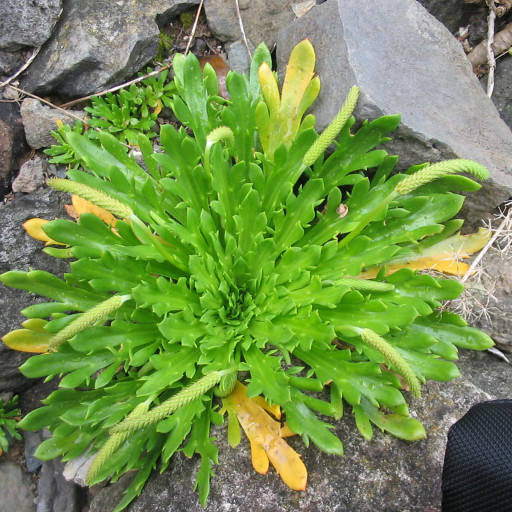
Plant Overview
Often called Buck’s-horn Plantain or Minutina, this resilient little plant is a seaside specialist that has found its way into high-end culinary salads. Its common name comes from the unique shape of its leaves, which branch out like the antlers of a deer. While many see it as a humble weed, it has been a prized "winter green" in Italy for centuries, known as Erba Stella (Star Grass).
🔍 How to Identify
- 🦌 The Antler Leaves: The most striking feature is the rosette of narrow, deeply lobed leaves that mimic the jagged points of a buck’s horn.
- 🌟 Star-Shaped Growth: It grows in a very flat, symmetrical rosette pressed against the ground, which helps it survive being stepped on or windswept.
- 🌾 Subtle Blooms: Like other plantains, its flowers are tiny, greenish-brown, and clustered on top of thin, wiry stems that rise from the center of the plant.
🏡 In Your Garden
- 🌊 Salt & Sand Lover: This plant is incredibly salt-tolerant. If you live near the coast or have a "hellstrip" by a road that gets salted in winter, this plant will thrive where others wither.
- 🥗 A Gourmet "Weed": If you are growing it to eat, harvest the young, tender leaves from the center. As the plant gets older or faces drought, the leaves can become quite tough and bitter.
- 🌱 Low Maintenance: It prefers well-drained, sandy soil and full sun. It doesn't mind poor soil quality and is actually quite difficult to kill once established because of its deep taproot.
⚠️ Safety & Toxicity
- ✅ Status: Generally considered safe and edible for humans and most pets.
- 🧼 Urban Caution: Because it often grows in cracks in the sidewalk or near roads, be wary of harvesting wild plants that may have absorbed heavy metals, pesticides, or runoff from cars.
- 🐕 Pet Safety: It is non-toxic to dogs and cats, though, like any fiber-rich plant, eating large amounts might cause a mild stomach upset for a pampered pet.
✨ Fun Fact
In the 16th century, Buck's-horn Plantain was recommended by herbalists to "cool the temperature" of the body. Today, it has made a massive comeback in "Misticanza"—a traditional Roman salad mix—prized for its crunchy texture and slightly nutty, salty flavor.

Detailed Care Instructions
| Lighting | Full Sun |
| Sun Exposure | Full Sun |
| Hardiness Zones | Min 6A |
- Choose the right location: Plantago Coronopus plants prefer full sun to partial shade. Ensure that the location has well-drained soil.
- Prepare the soil: Before planting, loosen the soil using a garden fork or tiller. Remove any weeds and rocks that may hinder the growth of the Plantago Coronopus plant.
- Sow the seeds: Plant the seeds directly into the soil about 1/4 to 1/2 inch deep. Space the seeds about 12 to 18 inches apart.
- Provide regular watering: Water the seeds immediately after planting, and keep the soil consistently moist until the plants establish. Once established, water the plants regularly, especially during dry periods.
- Monitor for pests: Keep an eye out for common pests such as aphids, snails, and slugs. If necessary, use organic pest control methods to protect your plants.
- Fertilize as needed: Plantago Coronopus plants usually don't require much fertilizer. However, if the soil is poor or lacking in nutrients, you can apply a balanced, slow-release fertilizer according to the package instructions.
- Weed control: Regularly inspect and remove any weeds that may compete with the Plantago Coronopus plants for nutrients and space.
- Harvesting: You can start harvesting the leaves and young shoots of the Plantago Coronopus plant when they reach a suitable size. Harvesting promotes the healthy growth of the plant and encourages continuous production.
- Pruning: Prune off any dead or damaged leaves or stems to maintain the overall health and appearance of the plant.
- Winter care: Plantago Coronopus is a hardy perennial, so it generally requires minimal winter care. However, in colder climates, you can provide a layer of mulch around the base of the plant to protect it from frost.

Place in a bright room that is sun drenched almost all day. Or directly in a south-facing window.

To water this plant, ensure that the soil remains moist but not waterlogged. Water the plant deeply once a week, allowing the water to penetrate the roots. Avoid watering the leaves or flowers, as this can encourage fungal growth. Make sure to use room temperature water and avoid using hard water, which can cause damage to the plant's roots.
To fertilize the Plantago Coronopus plant, you should use a balanced fertilizer with equal amounts of nitrogen, phosphorus, and potassium. Apply the fertilizer to the soil around the plant, making sure not to get it on the leaves or stem. Water the plant immediately after applying the fertilizer to help it absorb the nutrients. Repeat this process every 4-6 weeks during the growing season. Be sure to follow the manufacturer's instructions for the amount and frequency of fertilizer application.
Plantago Coronopus plant prefers a well-draining soil that is not too heavy or dense. It should be rich in nutrients and organic matter. Adding compost or well-rotted manure to the soil can help to improve its fertility and provide the plant with the nutrients it needs to grow. The soil should be slightly acidic to neutral in pH, ideally between 6 and 7. The plant also prefers a soil that is slightly moist but not waterlogged, so good drainage is important. A mixture of loam, sand, and some organic matter is ideal for this plant. It is recommended that the soil be tilled or turned over before planting to provide better growing conditions for the roots of the plant.
Plantago Coronopus plants can be propagated by collecting their seeds in late summer or autumn and sowing them in trays or pots. The seeds should be sown thinly and covered lightly with soil. The trays or pots should be kept in a cool, shaded place and watered regularly.
Alternatively, the Plantago Coronopus plant can be propagated by taking stem cuttings and rooting them in water or a rooting hormone. Cuttings should be taken from healthy, mature plants and the lower leaves should be removed. The cuttings should be about 10-15cm long and planted in pots filled with moist potting soil. They should be kept in a warm, shaded place and watered frequently until they have established roots.
Once the seedlings or cuttings have developed strong roots, they can be transplanted into larger pots or directly into the garden. It is important to choose a sunny or partially shaded spot with well-draining soil. The Plantago Coronopus plant can be used to provide ground cover, attract bees and other pollinators, and add interest to a herb garden or wildflower meadow.
Common pests of the buckhorn plantain include Larvae, snails. Make a habit of checking your buckhorn plantain frequently for pests so that any infestations can be caught and managed early.








