Plant Overview
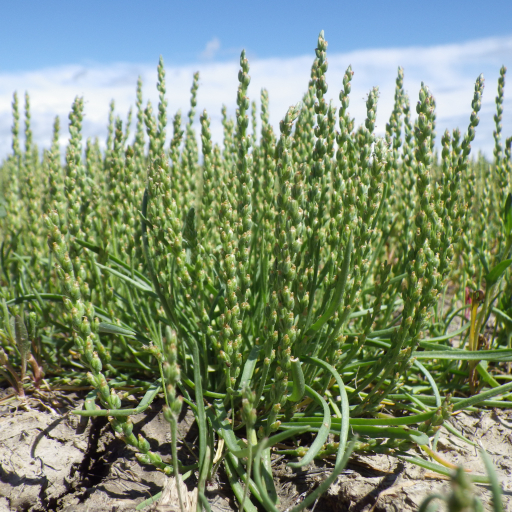
Often overlooked as a simple blade of grass, Plantago elongata, known commonly as the Slender Plantain, is a resilient native of North American prairies and saline flats. Unlike its broad-leaved cousins found in suburban lawns, this plant is a master of minimalism with its thread-like, delicate foliage. It thrives in challenging environments where other plants struggle, often appearing in the brief window of spring moisture before the summer heat sets in.
🔍 How to Identify
- 🍃 The Foliage: Look for very narrow, linear leaves that resemble blades of grass. They grow in a small basal rosette and are much thinner than common plantains.
- 🌾 Flower Spikes: The plant produces tiny, brownish-green flowers clustered on a slender, cylindrical spike at the end of a leafless stalk.
- 📏 Growth Habit: This is a low-growing annual that rarely exceeds 6 to 8 inches in height, making it easy to miss among taller prairie grasses.
🏡 In Your Garden
- 🏜️ Tough Terrain: This plant is an "extremophile" of sorts, frequently found in alkaline or saline soils where the high salt content usually kills off most competition.
- 💧 The Vernal Cycle: It is perfectly adapted to vernal pools—areas that are wet and muddy in the spring but bone-dry by summer. It completes its entire life cycle quickly to avoid the drought.
- 🌱 Low Maintenance: Because it is an annual with a short lifespan, it doesn't require pruning or traditional care, but it does need open, uncrowded soil to self-seed for the following year.
⚠️ Safety & Toxicity
- ✅ Safe Status: Plantago elongata is generally considered non-toxic to humans, dogs, cats, and livestock.
- 🐾 Pet Friendly: While it isn't a primary forage plant, it poses no threat if a curious pet decides to take a nibble while out on a hike or in the backyard.
✨ Fun Fact
The seeds of many Plantago species, including the Slender Plantain, develop a sticky, glue-like coating (mucilage) when they get wet. This helps them "hitchhike" by sticking to the fur of passing animals or the boots of hikers to travel to new locations!

Detailed Care Instructions
Plantago elongata, commonly known as Buckhorn Plantain, is a perennial herb that is relatively easy to grow. Here are some steps to help you grow it successfully:
- Soil preparation: Buckhorn Plantain grows best in well-draining soil with a pH level between 6.0 and 7.5. Prepare the soil by removing any weeds or debris and loosening it to improve aeration.
- Planting: Plant the seeds directly in the garden bed or start them indoors in pots. If starting indoors, sow the seeds in a seed-starting mix about 6-8 weeks before the last frost date, then transplant them to the garden once the seedlings have grown.
- Location: Choose a sunny or partially shaded spot for planting. Buckhorn Plantain can tolerate a wide range of soil conditions but prefers full sun or light shade.
- Watering: While the plant is establishing, keep the soil moist, but not overly saturated. Once it has matured, Buckhorn Plantain is drought-tolerant and does not require frequent watering.
- Maintenance: Remove weeds regularly as they can compete for nutrients and space. Mulching around the plant can help suppress weeds and retain moisture.
- Fertilization: Buckhorn Plantain generally does not require much fertilizer. However, if your soil is nutrient-deficient, you can apply a balanced, slow-release fertilizer in spring or early summer.
- Pruning: Trim off any dead or damaged leaves as needed to maintain a tidy appearance. This will also help rejuvenate the plant and encourage new growth.
- Propagation: Buckhorn Plantain can be propagated by dividing mature plants in early spring. Dig up the plant, separate the root clumps, and replant them in desired locations.
- Pests and diseases: Buckhorn Plantain is relatively resistant to most pests and diseases. However, keep an eye out for slugs, snails, and some leaf spot diseases. Treat as necessary with organic insecticides or fungicides.
- Harvesting: Buckhorn Plantain is primarily grown for its medicinal properties. You can harvest the leaves throughout the growing season by cutting them close to the ground. Dry the leaves in a well-ventilated area away from direct sunlight, then store them in airtight containers for later use.
Remember to check your local regulations before planting Buckhorn Plantain, as it may be considered invasive in some areas.

Place in a window with dappled sun or a spot in the middle of a room. Or directly in a window facing west or east.

The plant should be watered regularly, ensuring the soil around it remains moist but not waterlogged. This can be achieved by allowing water to slowly seep into the soil, rather than pouring it directly on the plant. It is important to avoid getting water on the plant's leaves or stem, as this can cause damage or disease. Ideally, the plant should be watered in the morning or evening when the sun is not at its strongest. The frequency of watering may depend on factors such as the climate, soil type and size of the plant. It is recommended to use a well-draining soil mix and to adjust watering accordingly to prevent overwatering.
To fertilize this plant, sprinkle a slow-release, low-nitrogen fertilizer on the soil around the base of the plant in early spring. Water thoroughly after applying the fertilizer. Avoid high-nitrogen fertilizers as they can cause excessive leaf growth and reduce overall plant health. Repeat this fertilization process every few months during the growing season and avoid fertilizing during periods of drought or extreme heat.
Plantago Elongata is a plant that requires well-draining soil that is rich in nutrients. The soil should be slightly acidic with a pH level between 5.5 and 6.5. It is recommended to use a mixture of organic compost, peat moss, and perlite to provide the necessary nutrients and drainage. The soil should be kept moist, but not waterlogged, as this can cause root rot. It is also important to ensure the soil has good aeration as the plant can become stressed in compacted soils. Finally, avoid heavy clay soils as they tend to retain too much moisture and do not allow for adequate drainage.
Plantago Elongata is a plant that can be propagated in several ways. The first way is by seed propagation. To propagate this plant by seeds, it is best to harvest the seeds during the fall season. Harvest the seeds by removing the seed heads from the plant and storing them in a paper bag until they are ready to be sown. To sow the seeds, create small holes in the soil that are about three times the size of the seeds, drop the seeds in, and cover them with soil. Water the soil regularly and wait for the seeds to grow into new plants.
Another way to propagate Plantago Elongata is through division. This can be done by carefully splitting the root system of an established plant into smaller sections, each containing a portion of the roots and foliage. Each of these sections can then be potted or planted in the ground, where they will establish themselves as new plants.
A third way to propagate Plantago Elongata is by stem cuttings. Take a cutting from the parent plant in the spring or summer, taking care to choose a stem that is healthy and not too woody. Strip the lower leaves from the cutting, leaving only a few at the top. Dip the cut end of the stem into rooting hormone and plant it in a container filled with moist soil. Keep the soil moist and warm, and eventually roots will form from the cutting.
All of these propagation methods can be successful with Plantago Elongata, allowing gardeners and growers to clone and multiply their plants for a vibrant, full garden display.








