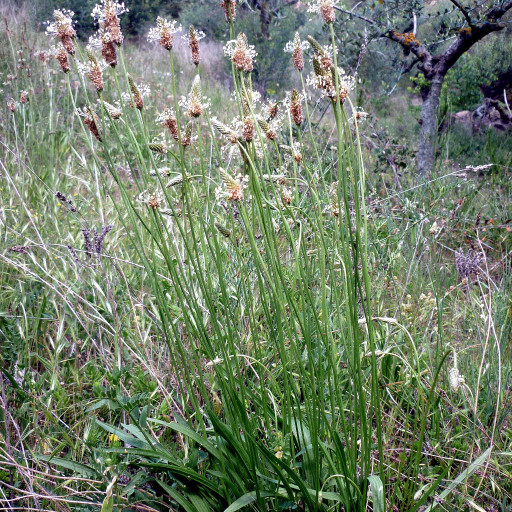
Plant Overview
Often called "Soldier’s Herb" or "Ribwort," this resilient wild plant is a familiar sight in meadows and sidewalk cracks alike. While many modern gardeners dismiss it as a mere weed, it has been cherished for centuries as a "natural bandage" due to its incredible ability to soothe skin irritations and stings on the fly.
🔍 How to Identify
- 🌿 The Leaves: Long, narrow, and lance-shaped, these leaves grow in a "rosette" pattern flat against the ground. They are famous for their 3–5 deep, parallel veins that look like prominent ribs.
- 🌾 The Flowers: Small, brownish-green flower heads sit atop tall, wiry stalks. When in bloom, a delicate "halo" of tiny white stamens circles the flower head, making it look like a tiny planet with rings.
- 💪 The Texture: The leaves are tough and fibrous. If you snap a leaf, you will often see the elastic, string-like veins (the "ribs") stretching between the broken pieces.
🏡 In Your Garden
- 🌱 Soil Specialist: Ribwort Plantain is a master of compacted soil. It actually helps aerate the earth with its strong roots, making it a "pioneer plant" that prepares the ground for more delicate species to follow.
- ✂️ Growth Habit: Because it grows so low to the ground, it can survive frequent lawn mowing by tucking its leaves under the blades. If you want to keep it out of your flower beds, it's best to dig it out by the taproot rather than just pulling the leaves.
⚠️ Safety & Toxicity
- ✅ Status: Generally safe and non-toxic for humans, dogs, and cats.
- 🩹 External Use: It is widely used in "spit poultices" by hikers to treat nettle stings or insect bites, as the leaves contain tannins and mucilage that cool the skin.
- 🚜 Pollution Warning: Because it often grows near roads and paths, avoid using plants that may have been exposed to car exhaust, road salt, or chemical lawn herbicides.
✨ Fun Fact
In many parts of Europe, children play a game called "Cocks and Hens" using this plant. They loop the long, wiry stalk around the flower head and "shoot" it at each other like a tiny, organic slingshot!

Detailed Care Instructions
| Color | Greenish Brown |
| Soil Ph | 4.6–7.8 (Acidic To Slightly Alkaline) |
| Invasive | Weed |
| Toxicity | Non-Toxic |
| Soil Type | Any Soil Type; Tolerates Dense, Compacted Soil |
| Bloom Time | April To September |
| Plant Type | Herbaceous Perennial |
| Mature Size | 3.9 – 15.7 In. |
| Native Area | Europe, Eurasia (Naturalized Across Eastern North America) |
| Sun Exposure | Full Sun To Part Shade |
| Hardiness Zones | 3-12 |
To grow Plantago lanceolata, commonly known as English plantain, follow these steps:
- Select a suitable location: Plantago lanceolata prefers full sun but can tolerate partial shade. Ensure the soil is well-draining to prevent waterlogging.
- Prepare the soil: Loosen the soil and remove any weeds or larger rocks. Add organic matter, such as compost or well-rotted manure, to improve soil fertility.
- Sow the seeds: Sprinkle the Plantago lanceolata seeds directly onto the soil surface. Lightly firm the soil to ensure good seed-to-soil contact. Since the seeds require light for germination, avoid covering them with too much soil. Water gently to settle the seeds in place.
- Watering: Keep the soil consistently moist until the seeds germinate and establish. After that, Plantago lanceolata is quite drought-tolerant and generally does not require much additional watering.
- Weed control: While Plantago lanceolata is a hardy plant, it can face competition from weeds. Regularly inspect the area and remove any weeds that appear near or around the plant. This will prevent competition for nutrients and ensure healthy growth.
- Maintenance: Plantago lanceolata requires minimal care. However, to maintain a neat appearance or encourage more flowering, you can trim or mow the plant occasionally.
- Propagation: Plantago lanceolata self-seeds abundantly. If you wish to propagate more plants, allow some seed heads to dry and disperse naturally. Alternatively, you can collect the seeds and sow them in other areas or containers.
- Pests and diseases: English plantain is not significantly plagued by pests or diseases. However, keep an eye out for common issues like snails or slugs. In case of infestation, treat with suitable methods or use organic pest control remedies.
By following these steps, you can successfully grow and maintain Plantago lanceolata in your garden or outdoor space.

Place in a window with dappled sun or a spot in the middle of a room. Or directly in a window facing west or east.

Plantago Lanceolata is a plant that requires regular watering to thrive. To water this plant, you should first ensure that the soil is completely dry before proceeding. This can be done by inserting your finger into the soil and checking for moisture. If the soil feels dry to the touch, it is time to water the plant.
When watering Plantago Lanceolata, you should be careful to avoid over-watering it. Over-watering can cause root rot and other problems that can harm the plant. Instead, you should aim to water the plant thoroughly but infrequently.
To water this plant, you should use a watering can or hose with a gentle spray nozzle. Start by saturating the soil around the base of the plant. Be sure to water the entire root zone, which is typically the top 6-8 inches of soil. Avoid getting water on the leaves or flowers of the plant.
After watering, allow the soil to drain for a few minutes before emptying any excess water from the catch tray. This will help prevent the roots from sitting in standing water, which can lead to rot.
Repeat this process whenever the soil feels dry to the touch. In general, Plantago Lanceolata requires watering once or twice per week, depending on the climate and season. With proper hydration, this hardy and versatile plant will thrive in a wide range of growing conditions.
The best time to fertilize the Plantago Lanceolata plant is during its active growing season. Use a balanced slow-release fertilizer and apply it according to package instructions. Avoid over-fertilizing as it can damage the roots and cause burns on the leaves. Water the plant thoroughly after fertilizing to help the nutrients get absorbed by the roots.
Plantago Lanceolata is a hardy perennial that can thrive in a wide range of soil types. It prefers soils that are well-draining, rich in organic matter, and slightly acidic to neutral pH. A loamy soil mix consisting of equal parts sand, garden soil, and compost is ideal for this plant. The soil should be prepared by tilling or digging to a depth of at least 8-10 inches to loosen the soil to allow for root growth. Adding a layer of mulch around the base of the plant can help retain moisture and suppress weed growth. Additionally, regularly feeding the soil with a balanced fertilizer can help ensure healthy plant growth.
Plant propagation refers to the process of creating new plants from existing ones. To propagate the Plantago Lanceolata plant, one can use various methods such as stem cutting, division, and seed propagation.
Stem cutting involves taking a portion of the plant's stem, usually about four to six inches long, and placing it in a pot with soil. The cutting should have a few leaves, and any lower leaves should be removed to prevent moisture loss. Plant it in the soil with rooting hormone, and keep it moist and in a warm, bright location until roots develop.
Division involves separating the existing plant into smaller, individual plants. This is typically done by digging up the plant and carefully pulling apart the root sections. Each section can then be potted and treated as a new plant.
Seed propagation involves collecting seeds from the plant and planting them in soil. The seeds should be planted in a shallow hole and covered lightly with soil. The soil should be kept damp, and the seeds should be kept in a warm, bright location until they germinate.
Regardless of the method chosen, it is important to give the propagated plant the proper care and attention to ensure its growth and health. This includes providing ample water, nutrients, and sun exposure.








