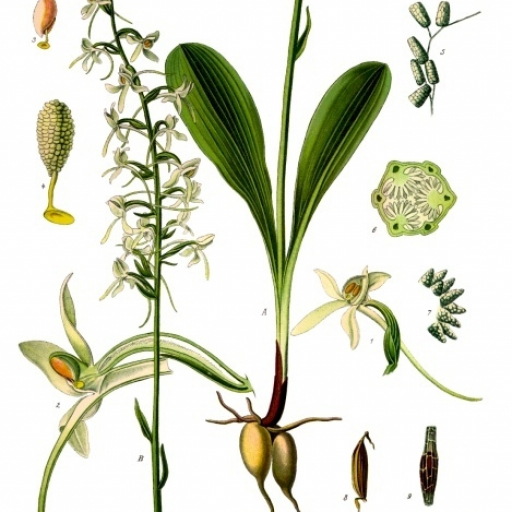
Plant Overview
Known as the Lesser Butterfly-orchid, this delicate woodland treasure is a ghost of the meadows and forests. Often mistaken for its "Greater" cousin, it is beloved for its ethereal, snow-white flowers that seem to float in the air like tiny insects. In many cultures, these orchids were seen as symbols of purity and were frequently associated with the "fair folk" of the woods.
🔍 How to Identify
- 🍃 The Twin Leaves: True to its name (bifolia), the plant typically produces two large, shiny, oval-shaped leaves that sit nearly flat against the ground.
- 🌸 Ghostly Blooms: It features a tall spike of 10–25 greenish-white flowers, each with a narrow, strap-like lower lip that hangs downward.
- 🧪 The Nectar Spur: If you look closely at the back of the flower, you’ll see a long, slender, curving tube (the spur) filled with nectar to attract long-tongued visitors.
🏡 In Your Garden & Habitat
- 🤝 Fungal Friendships: Like most orchids, this plant is a "mycotroph." It relies on a complex relationship with specific soil fungi to survive, meaning it rarely thrives if moved from its natural home.
- 🌲 Preferred Settings: While it can be found in a variety of places, it truly loves the dappled light of ancient deciduous woodlands or the moist, acidic soil of moorlands and hay meadows.
- 🦋 Nighttime Perfume: While it remains scentless during the day to save energy, it releases a heavy, intoxicating vanilla-clove fragrance at dusk to guide its pollinators through the dark.
⚠️ Safety & Toxicity
- 🟢 Non-Toxic: The Lesser Butterfly-orchid is generally considered non-toxic to humans and common household pets.
- 🚫 Look But Don't Touch: In many regions, this plant is rare or legally protected. Because it depends on specific soil conditions, "rescuing" it to your garden usually results in the plant’s death. It is always best to leave it in the wild.
✨ Fun Fact
This orchid is a master of "moth-marketing." Its nectar is hidden so deep in its spur that only specific Hawkmoths with incredibly long tongues can reach it. As the moth drinks, the orchid precisely glues two pollen sacs onto the moth's eyes, ensuring they are transported to the next flower!

Detailed Care Instructions
| Humidity | Dry |
| Lighting | Shade |
| Difficulty | Medium |
| Hibernation | Cold Period |
| Temperature | 15°C - 32°C |
| Hardiness Zones | 7 - 8 |
To successfully grow Platanthera Bifolia, also known as the lesser butterfly-orchid or small white orchid, you need to provide the right growing conditions and care. Here are some steps you can follow:
- Choose the right location: Lesser butterfly-orchids prefer partially shaded areas with dappled sunlight. Avoid direct sunlight, especially during the hottest part of the day.
- Soil requirements: They thrive in moist, well-draining soil that is high in organic matter. The pH level of the soil should be slightly acidic to neutral.
- Propagation: You can propagate Platanthera Bifolia through seed sowing or division of mature plants. Seeds should be sown in a suitable growing medium during the fall or very early spring, as they require cold stratification. Division can be done in spring or autumn.
- Planting: Carefully plant the seeds or division clumps at a shallow depth, approximately 1-2 centimeters deep.
- Watering: Keep the soil consistently moist but not waterlogged. Water the plant regularly during dry periods, but avoid overwatering, as it can lead to root rot.
- Fertilization: Lesser butterfly-orchids do not require heavy feeding. However, you can apply a slow-release, balanced orchid fertilizer once or twice a year during the growing season.
- Mulching: Apply a layer of organic mulch around the plants to retain moisture, suppress weed growth, and provide nutrients as it breaks down.
- Weeding: Regularly remove weeds from the planting area to minimize competition for nutrients and space.
- Pest and disease control: Check your plants regularly for any signs of pests or diseases, such as aphids or fungal infections. If detected, take appropriate measures, such as using natural pest control methods or organic fungicides.
- Winter care: In colder climates, provide adequate protection during the winter. Mulching the base of the plant and covering it with a layer of straw or leaves can help insulate the roots.
- Wildlife-friendly gardening: Lesser butterfly-orchids are pollinated by moths. Creating a wildlife-friendly garden with native plants and avoiding the use of chemical pesticides can attract pollinators and enhance the overall health of the ecosystem.
Remember, Platanthera Bifolia is a delicate orchid that requires proper care and attention. Regular monitoring and adjustment of the growing conditions will help ensure its successful growth.

Place in a window with dappled sun or a spot in the middle of a room. Or directly in a window facing west or east.

To properly water the Platanthera Bifolia plant, it is important to first understand its watering needs. This plant requires regular watering, especially during its growing season. It is important to keep the soil consistently moist, but not waterlogged, as this can lead to root rot. Allow the soil to dry slightly on the surface between waterings.
To water the Platanthera Bifolia plant, thoroughly saturate the soil around the base of the plant. Avoid watering the leaves or flowers, as this can increase the risk of disease. Use a watering can or hose fitted with a gentle spray nozzle to ensure even watering. If the plant is in a pot, make sure there are drainage holes to allow excess water to escape.
During periods of hot weather or when the plant is actively growing, it may require more frequent watering. Monitor the soil regularly to ensure it stays moist, and adjust your watering schedule accordingly. In addition, consider adding a layer of mulch around the base of the plant to help retain moisture and regulate soil temperature.
Here are the fertilizing instructions for the Platanthera bifolia plant:
- Use a balanced fertilizer: Select a well-balanced fertilizer with equal nitrogen (N), phosphorus (P), and potassium (K) ratios. This will help provide the necessary nutrients for healthy growth.
- Dilute and apply: Follow the instructions on the fertilizer packaging to dilute the fertilizer properly. Once adequately diluted, apply the fertilizer to the soil around the base of the plant.
- Timing: Fertilize the Platanthera bifolia plant during the growing season, which is typically in spring or early summer. This will provide the plant with essential nutrients when it needs them the most.
- Avoid over-fertilizing: It is crucial not to over-fertilize the plant, as excessive nutrients can be harmful. Follow the recommended dosage instructions on the fertilizer packaging and avoid applying more than necessary.
- Watering: After fertilizing, water the plant thoroughly. This will help to distribute the nutrients throughout the soil and improve their absorption by the plant's roots.
- Regular feeding: For optimum growth, consider regularly fertilizing the Platanthera bifolia plant. This can be done approximately every 4-6 weeks during the growing season, but always monitor the plant's response to the fertilizer and adjust accordingly.
Remember, it's always best to perform a soil test before fertilizing to determine if any specific nutrient deficiencies need to be addressed.
The ideal soil for the Platanthera Bifolia plant should be rich in organic matter and well-draining. It should have a neutral to slightly acidic pH level, around 6.0-7.0. The plant prefers moist soil that retains some moisture but is not waterlogged. Adding compost or peat moss to the soil can help improve its quality and water retention. It is also recommended to mix in some sand or perlite to improve drainage. Avoid using heavy or clay soils as they can retain too much water and suffocate the roots.
Platanthera bifolia, a flowering plant, can be propagated through various methods. Here's a detailed guide on how to propagate it:
- Division: This method is best performed in early spring or fall when the plant is dormant. Gently dig out the entire plant, being careful not to damage the roots. Divide the plant into several sections, ensuring that each section has healthy roots and shoots. Replant the divisions immediately in well-draining soil or containers filled with a mixture of peat moss and perlite. Water thoroughly and provide adequate sunlight.
- Seed Propagation: Collect seeds from mature Platanthera bifolia plants during late summer or early fall. The seeds are small and can be obtained from the dried seed pods. Prepare a seed tray filled with a well-draining and sterile seed-starting mix. Scatter the seeds on the surface of the soil and lightly press them in. Keep the tray in a cool and shady location. Maintain moist soil by misting with water regularly. Germination can take several weeks to several months. Once the seedlings have developed a few leaves, transplant them into individual pots or directly into the garden.
- Tissue Culture: This method requires specialized laboratory equipment and techniques. It involves taking small tissue samples from the plant and isolating them in a sterile environment. Through tissue culture, these samples are encouraged to grow and multiply. Once a sufficient number of plantlets have formed, they are transferred to a nutrient-rich medium and acclimatized to an outdoor environment before being planted in the desired location.
- Rhizome Cuttings: This method is best performed during early spring or fall. Locate a healthy and mature Platanthera bifolia plant. Dig carefully around the base of the plant to expose the rhizomes. Cut a section of the rhizome, ensuring it has at least one viable bud. Plant the rhizome section in a well-draining soil mix, either in pots or directly in the ground. Ensure that the bud is facing upwards and is slightly covered with soil. Water thoroughly and provide indirect sunlight. Regularly check for new shoots, indicating successful propagation.
Remember that Platanthera bifolia is a native plant, and propagation from the wild might be regulated or prohibited in certain areas to protect its natural populations. Always check local regulations and consider obtaining plants or seeds from reputable nurseries or conservation organizations.








