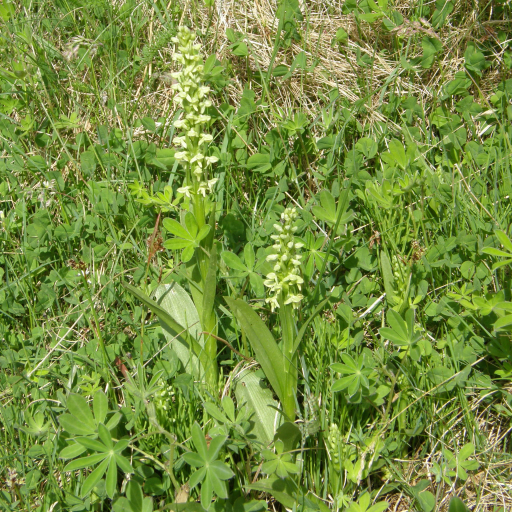
Plant Overview
Often called the Northern Green Orchid, this hardy survivor is a true pioneer of the plant world. While we often associate orchids with steamy tropical jungles, this species thrives in the subarctic chill of Greenland and the high-altitude bogs of North America. It is a subtle, emerald-hued beauty that prefers to blend into the mossy landscape rather than stand out with flashy colors.
🔍 How to Identify
- 🌿 The Stem: A stout, fleshy green stalk that can grow quite tall, often crowded with leaves that clasp tightly to the stem.
- 🟢 The Flowers: Numerous small, yellowish-green blossoms are arranged in a dense spike. Unlike many of its cousins, the flowers are often "hooded" and quite inconspicuous from a distance.
- pointed The Lip: The bottom petal (the "lip") is lance-shaped and tapers to a blunt point, a key feature for distinguishing it from other green orchids.
🏡 In Your Garden & Habitat
- 💧 A Wetland Specialist: This orchid is a "hydrophile," meaning it loves water. In the wild, you will find it in fens, bogs, and along the cold, misty banks of mountain streams.
- 🤝 Fungal Friendships: It relies on a complex relationship with soil fungi (mycorrhizae) to survive. Because of this delicate subterranean bond, it is extremely difficult to transplant; if moved from its home, it will likely wither as its fungal partners are left behind.
- 🌬️ Climate Preference: It is built for the cold. It thrives in "boreal" conditions where the summers are short and the soil remains cool and damp year-round.
⚠️ Safety & Toxicity
- ✅ Status: Non-toxic and generally safe.
- 🌸 Details: While not poisonous to pets or humans, it is a delicate member of the ecosystem. Many orchid species are protected by law, so it is best to admire this green traveler in the wild rather than attempting to bring it indoors.
✨ Fun Fact
The Northern Green Orchid is one of the few orchid species capable of surviving in the Arctic Circle. Because pollinators like bees are scarce in such cold climates, it has adapted the ability to self-pollinate, ensuring its survival even in the loneliest, wind-swept tundras.

Detailed Care Instructions
To grow Platanthera Hyperborea (Northern Green Orchid) successfully, follow these steps:
- Climate and location: Platanthera Hyperborea is native to northern regions, including parts of North America and Europe. It prefers cool temperatures and thrives in moist, well-draining soil. Choose a location with partial shade to replicate its natural habitat.
- Soil preparation: Before planting, prepare the soil by adding organic matter, such as compost, to improve drainage and nutrient content. This helps create a favorable environment for the plant's growth.
- Planting: Platanthera Hyperborea can be propagated through seeds, divisions, or transplants. If starting from seeds, sow them directly into the prepared soil in spring or autumn. For divisions or transplants, ensure they are planted at the same depth they were growing before. Space individual plants about 6 to 12 inches apart to allow for their spreading habit.
- Watering: Keep the soil consistently moist, especially during the growing season. Watering should be sufficient to maintain dampness but avoid waterlogged conditions. Be careful not to overwater, as this could cause the roots to rot.
- Fertilizing: These plants are not heavy feeders, and excessive fertilization can cause issues. However, you can apply a balanced, slow-release fertilizer once or twice during the growing season to provide some nutrients.
- Mulching: Placing a layer of organic mulch around the plants helps to conserve moisture, suppress weed growth, and maintain cooler soil temperatures, all of which assist in the plant's growth.
- Pests and diseases: Platanthera Hyperborea generally has a good resistance to pests and diseases. However, keep an eye out for any signs of insect damage or disease, and address these issues promptly using appropriate organic pest control methods if necessary.
- Dormancy: Platanthera Hyperborea is a perennial plant that undergoes dormancy during winter. To aid in its natural growth cycle, allow the plant to enter dormancy without interference. Avoid excessive watering or feeding during this period.
By following these guidelines and providing the necessary conditions, you can successfully grow Platanthera Hyperborea in your garden or outdoor space.

To properly water this species of plant, it is important to consider the environment it is being grown in. It typically thrives in a naturally moist and cool environment, so its watering needs should reflect this.
Firstly, it is important to use a well-draining soil to ensure that the plant does not become waterlogged. It is also recommended to use filtered or distilled water, as this species is sensitive to chemicals that may be found in untreated tap water.
Watering should be done consistently but not excessively, as the plant does not like to dry out completely between watering sessions. As a general rule, it is recommended to water when the top inch of soil feels dry to the touch.
During the winter months, the plant may enter a dormant phase where it requires less water. It is important to monitor the soil moisture level during this time and adjust watering accordingly.
Overall, providing consistent, gentle watering to this plant in a well-draining soil and appropriate environment will help it to thrive.
To fertilize this plant, mix a slow-release fertilizer into the soil before planting. In the second year, use a balanced liquid fertilizer every four to six weeks during the growing season. Avoid over-fertilizing, as this can cause the plant to grow too large and become unstable. Water the plant thoroughly after fertilizing to help distribute the nutrients.
The ideal type of soil to use for this particular plant is a well-draining soil that is slightly acidic in nature. The soil should also be able to retain moisture without becoming waterlogged, as this can lead to root rot and other fungal diseases. A good way to achieve this type of soil is by mixing peat moss, perlite, and sand together in equal parts. Additionally, adding some compost or organic matter to the soil can help to improve its overall fertility and nutrient content, which can further promote healthy growth and development of the plant. Overall, the soil used for this plant should be carefully prepared and maintained to ensure optimal growing conditions and maximum success.
To propagate this plant, you will first need to carefully collect seeds from a mature plant. Once you have the seeds, sow them into a well-draining soil mix and keep the soil consistently moist. It is important to keep the soil consistently moist as the plant needs a lot of water to germinate.
Alternatively, you can propagate Platanthera Hyperborea by dividing the rhizomes of an already established plant. To do this, carefully dig up the mature plant and separate the rhizomes into smaller sections, ensuring that each section has at least one healthy bud. You can then replant the newly divided sections in a suitable growing environment and water them regularly until they establish themselves.








