Plant Overview
Known as the London Plane, this majestic hybrid is the ultimate urban survivor. Born from a chance encounter between the American Sycamore and the Oriental Plane in the 17th century, it has graced the grandest avenues of world capitals for hundreds of years. Its ability to provide cooling shade while thriving in paved environments has made it a favorite of city planners globally.
🔍 How to Identify
- 🌳 The Bark Pattern: Look for a distinctive "camouflage" bark that peels away in large, irregular flakes, revealing a mosaic of creamy white, olive green, and dusty grey patches beneath.
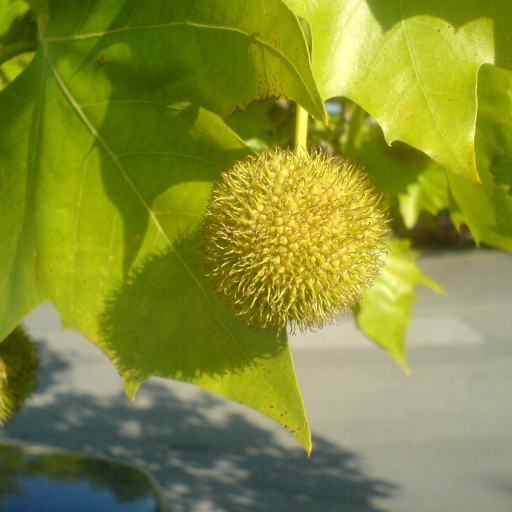
- 🍁 Leaf Structure: Large, thick, palm-shaped leaves with 3 to 5 pointed lobes. They look remarkably like Maple leaves but are arranged alternately along the branch rather than in opposite pairs.
- 📿 Seed Balls: Spherical, bristly seed pods (achenes) that hang from long stalks like natural Christmas ornaments, often remaining on the tree throughout the winter months.
🏡 In Your Garden
- 🏙️ Pollution Specialist: The London Plane is unique because it "breathes" through its bark; by shedding its outer layer, it effectively throws away trapped soot and pollutants that would suffocate other trees.
- ✂️ The Art of Pollarding: This tree is incredibly resilient to heavy pruning. You will often see them "pollarded" (cut back to a knuckle-like trunk) in European cities to keep their massive size in check for smaller garden spaces.
- 🧱 Root Mindfulness: Because it is such a vigorous grower, its root system is powerful. Avoid planting it too close to underground pipes or garden walls, as it needs ample room to anchor its massive canopy.
⚠️ Safety & Toxicity
- ✅ Pet & Human Safe: Platanus × hispanica is generally non-toxic and safe for households with curious dogs, cats, or children.
- 🌬️ Irritant Potential: The fine, microscopic hairs (trichomes) found on young leaves and seed balls can become airborne in spring. For some people, this causes "Plane Tree Fever," leading to temporary sneezing, itchy eyes, or throat irritation.
✨ Fun Fact
During the heavy coal-burning years of the Industrial Revolution, the London Plane was one of the few trees that didn't die from the smog. Its secret weapon? It literally peels off its "clogged" skin to stay healthy!

Detailed Care Instructions
To grow Platanus × Hispanica, also known as London plane tree, follow these steps:
- Choose the right location: London plane trees prefer full sun but can tolerate partial shade. They require well-draining soil with a pH range of 6.5 to 7.5. Avoid planting them in compacted or waterlogged soil.
- Planting: Dig a hole that is twice as wide and as deep as the tree's root ball. Gently place the tree in the hole and backfill with soil, ensuring that the crown is level with or slightly above the ground level. Tamp the soil gently to eliminate any air pockets.
- Watering: Water the newly planted tree thoroughly, and continue to water regularly for the first year to help establish its root system. Deep watering once or twice a week should be sufficient, ensuring the soil stays moist but not oversaturated.
- Mulching: Apply a layer of organic mulch, such as wood chips or bark, around the base of the tree, extending it to a few inches away from the trunk. Mulching helps retain moisture, suppresses weed growth, and regulates soil temperature.
- Fertilization: London plane trees generally do not require regular fertilization. However, if the soil is poor, you can apply a balanced slow-release fertilizer in early spring. Follow the package instructions for application rates.
- Pruning: Prune the tree during its dormant period, typically in late winter or early spring, to remove any dead, diseased, or damaged branches. Also, remove any suckers or water sprouts that may emerge from the base of the tree.
- Protection: London plane trees are generally resistant to pests and diseases. However, occasional issues like powdery mildew or anthracnose can occur, especially during humid conditions. If necessary, apply appropriate fungicides or seek professional advice.
- Regular care: Monitor the tree's growth and address any issues promptly. Water during dry periods, and ensure it receives adequate sunlight. Regularly monitor the tree for signs of stress or disease and take appropriate action.
Remember that Platanus × Hispanica is a large tree that can grow up to 100 feet tall and has a broad canopy. Ensure you have enough space for it to grow and consider its potential impact on nearby structures or other trees.

Place in a bright room that is sun drenched almost all day. Or directly in a south-facing window.

Platanus × Hispanica is a deciduous tree species that requires adequate watering to remain healthy throughout its lifespan. To irrigate this plant species, it is essential to identify the soil type and the drainage conditions since both factors have a significant impact on the watering needs of this plant.
If the soil is sandy, it will drain quickly, and frequent watering will be required to ensure that the tree's water needs are met. However, if the soil is clayey, it will retain water for an extended period and may not require frequent watering. To evaluate the soil and drainage conditions, gardeners can dig a small hole (about 12 inches deep) and inspect the soil for its texture and drainage speed.
Once the soil type and drainage are determined, gardeners can start watering their Platanus × Hispanica tree accordingly. During the first year after planting, the tree will require regular watering, usually once a week, to help establish its root system. As the tree matures, the watering frequency can be reduced since the roots will have spread wider and deeper into the soil.
Watering should be done at the base of the tree and not on the leaves since this can promote fungal growth and other diseases. A drip or soaker hose can be placed at the base of the tree, and watering should be done slowly and deeply to ensure that the water reaches the roots. Overhead sprinklers should be avoided since they are less efficient, and more water is lost due to evaporation and runoff.
Lastly, watering should be done in the early morning or late evening to reduce water loss due to evaporation during the day, and to allow the water to soak into the soil thoroughly. During hot and dry periods, it may be necessary to increase watering to prevent the tree from suffering drought stress.
- Begin fertilizing in early spring, just before new growth begins.
- Use a general-purpose, slow-release fertilizer to feed the tree.
- Apply the fertilizer evenly over the tree's root zone, which extends out from the trunk to the edge of the tree's canopy.
- Water the fertilizer in thoroughly after application.
- Repeat fertilization once or twice per year, following the package instructions for dosages and application times.
- Avoid over-fertilizing, as this can damage the tree and increase the risk of disease or pest problems.
- Monitor the tree's growth and health regularly, and adjust fertilization as needed to maintain healthy growth and foliage.
Platanus × Hispanica is a deciduous tree that requires a well-draining soil that is rich in nutrients. The soil should have a pH level of 6.5 to 7.5, which is slightly acidic to neutral. It is best to plant this tree in a soil that is loamy, which means it has equal parts sand, silt, and clay. This allows for proper drainage while also retaining moisture and nutrients. Additionally, the soil should be amended with organic matter such as compost, leaf mold, or aged manure to provide the tree with essential nutrients. It is important to avoid planting this tree in heavy clay soils or soils with poor drainage as it can lead to root rot and other issues.
To propagate this plant, you will need to take a cutting from a healthy, mature plant. The cutting should be approximately 6 inches long and taken from a stem that is not flowering or producing fruit. After cutting the stem, immediately immerse it in water to prevent the air from entering the stem. Remove any leaves or buds that are below the water line to prevent the growth of bacteria.
Next, prepare a rooting hormone solution by following the instructions on the packaging. Dip the cutting into the rooting hormone solution, making sure that the bottom end of the cutting is coated with the hormone. Then, plant the cutting in a pot filled with well-draining soil. Water the cutting thoroughly after planting and cover it with a clear plastic bag to maintain high humidity.
Place the pot in a warm and bright location, but out of direct sunlight. Check the cutting regularly and water it when the soil starts to dry out. After a few weeks, remove the plastic bag and check for roots. Once the cutting has developed roots, it can be transferred to a larger pot or planted in the ground.
Common pests of the london plane tree include Spider mites. Make a habit of checking your london plane tree frequently for pests so that any infestations can be caught and managed early.








