Plant Overview
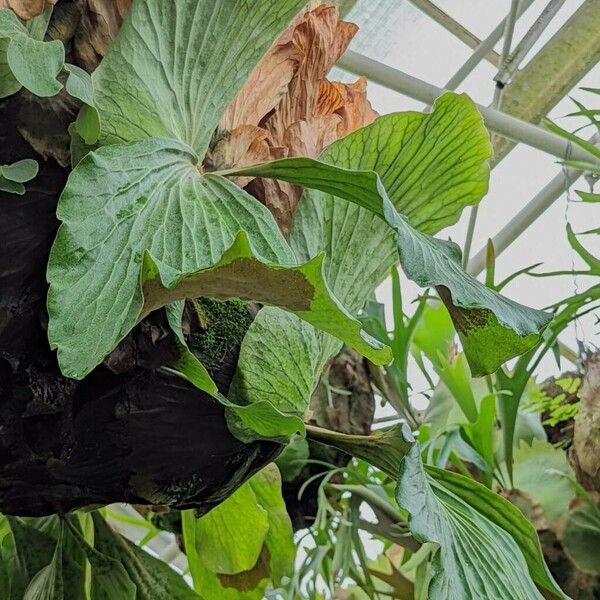
The Elephant Ear Staghorn Fern is a majestic architectural marvel from the tropical forests of Africa. Unlike its more common "antlered" cousins, this species is famous for its massive, rounded fertile fronds that look remarkably like the ears of a roaming elephant. Often found clinging to tree trunks in the wild, it brings a prehistoric, "Jurassic Park" aesthetic to any indoor plant collection.
🔍 How to Identify
- 🐘 Fertile Fronds: Broad, undivided, and fan-shaped. Unlike other staghorns, these do not branch into "fingers" but remain large, singular paddles.
- 🛡️ Shield Fronds: Tall, upright sterile leaves that form a crown at the base. They have wavy top edges designed to "catch" falling leaves and rain in nature.
- 🧤 Velvety Texture: The leaves are covered in a fine layer of silvery-white hairs called trichomes, which help the plant absorb moisture from the air.
🏡 In Your Garden
- 🪵 Mounting is Best: Because this plant is an epiphyte (it grows on trees), it hates sitting in heavy, soggy potting soil. Mounting it on a wooden board or a cork slab allows air to circulate around the roots, preventing rot.
- 💧 Humidity over Watering: Coming from the humid tropics of Africa, it prefers a steamy environment. If the air is too dry, those massive "ears" will start to brown at the edges. Misting the shield fronds is more effective than soaking the center.
⚠️ Safety & Toxicity
- ✅ Safe for All: Platycerium elephantotis is considered non-toxic to cats, dogs, and humans.
- 🌿 Gentle Touch: Avoid rubbing the leaves frequently. Removing the silvery "fuzz" (trichomes) can make the plant more vulnerable to dehydration and sunburn.
✨ Fun Fact
While most Staghorn ferns have two distinct "claws" at the end of their leaves, P. elephantotis is the only species in the genus that produces broad, completely undivided fertile fronds, making it a "unicorn" among fern collectors!

Detailed Care Instructions

Place in a window with dappled sun or a spot in the middle of a room. Or directly in a window facing west or east.

The presence of a dry surface layer of soil does not indicate that the plant requires water. Instead, stick your finger 1-2" (3-5 cm) deep in the soil to feel dampness or moisture content. If the soil seems dry, it's time to water your greens. If the soil is still moist, however, it is better not to water your plant and instead wait a day or two. Overwatering or waterlogging raises the risk of root rot. So if the soil takes longer than a week to dry, check the light conditions because it's likely that the plant isn't getting enough light. It's fine if the upper layer of soil is dry between waterings, but the deeper soil layer should always have some moisture.
These plants can thrive without taking help from any fertilizer. However, if the medium of growth is something other than soil for instance sand then you may need to add little fertilizer. The best way to know if your plants need fertilizer or not is to check for yellowing of leaves. If the leaves start to turn yellow it’s fertilizing time.
You may use All Purpose Plant Food or Green Plant Food for your Angola Staghorn Fern
Common pests of the angola staghorn fern include Scale insect, mealybugs. Make a habit of checking your angola staghorn fern frequently for pests so that any infestations can be caught and managed early.








