Plant Overview
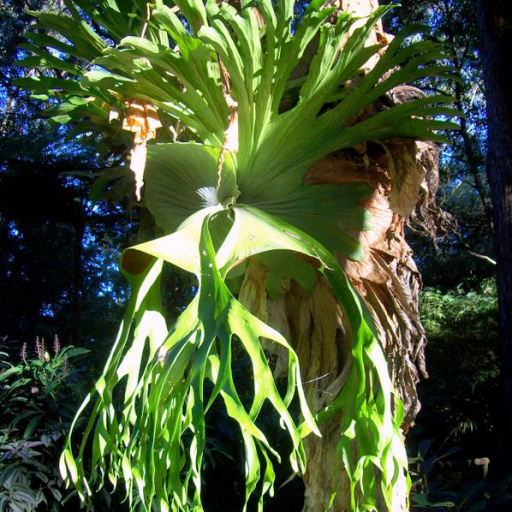
Known as the "Giant Staghorn Fern," Platycerium superbum is a majestic green throne that reigns over the rainforests of Australia. Unlike its smaller cousins that grow in clusters, this species is a solitary giant, resembling a piece of living, hanging architecture. It creates a prehistoric, lush atmosphere in any space, appearing like a crown of velvet antlers suspended in the air.
🔍 How to Identify
- 🛡️ Shield Fronds: It features massive, nest-shaped "shield" fronds at the base that are broad and upright, designed to catch falling debris and water.
- 🦌 Fertile Fronds: Long, drooping green fronds branch out like the antlers of a stag, often reaching lengths of several feet in mature specimens.
- 🧶 Velvety Texture: The entire plant is covered in fine, silvery-white hairs (trichomes) that give the leaves a matte, fuzzy appearance and help it retain moisture.
🏡 In Your Garden
- 🌳 The High Life: As an epiphyte, this fern hates being buried in traditional soil. It thrives best when mounted on a wooden board or nestled in the crook of a tree, using sphagnum moss to protect its sensitive root system.
- 💧 Humidity Lover: While it is surprisingly drought-tolerant once established, it craves high humidity. It prefers a deep "soak and dry" method rather than constant light misting, mimicking the heavy tropical rains of its homeland.
⚠️ Safety & Toxicity
- 🐾 Pet Friendly: Good news for pet owners! The Superb Staghorn Fern is non-toxic to cats, dogs, and horses, making it a safe choice for a "jungle" home.
- 🌿 Handle with Care: Avoid rubbing the fuzzy white coating on the leaves. These hairs are vital for the plant's health and protection; removing them can make the fern more susceptible to dehydration and pests.
✨ Fun Fact
In the wild, this fern acts as its own personal recycler. The upright shield fronds form a "nest" that catches falling leaves and insects from the forest canopy, which eventually decompose to provide the fern with a steady supply of nutrients!

Detailed Care Instructions
| Lighting | Part Sun |
| Toxicity | Non-Toxic |
| Hardiness Zones | 9B - 11 |
To grow a Platycerium superbum plant successfully, follow these steps:
- Choose the right location: Platycerium superbum plants prefer indirect, filtered light rather than direct sunlight. They thrive best in areas with bright, indirect light and high humidity such as a greenhouse or a well-lit bathroom.
- Planting medium: Use a well-draining substrate such as a mix of sphagnum moss, orchid bark, and perlite. The plant also likes some organic matter, so adding some well-decomposed leaf litter or compost can be beneficial.
- Watering: Platycerium superbum plants like their roots to be consistently moist but not soggy. The best way to water them is by misting or using a drip irrigation system. Aim to keep the mossy substrate damp all the time, but avoid letting water accumulate in the center "nest" of the fern, as this can cause rotting.
- Humidity: These plants thrive in high humidity environments. Consider using a humidifier or placing a tray of water near the plant to elevate the humidity. Misting the fronds regularly can also help maintain humidity.
- Temperature: Platycerium superbum prefers temperatures between 70-85°F (21-29°C). Protect them from extreme heat or cold.
- Fertilization: Use a balanced liquid fertilizer diluted to half strength and feed the plant once a month during the growing season (spring and summer). Reduce or stop fertilization during the colder months.
- Potting and division: As the plant grows, it may require repotting. Choose a larger pot and gently separate the plant into divisions, ensuring each new section has enough roots. Repot with fresh substrate, and water thoroughly.
- Nurturing the fronds: Platycerium superbum has two types of fronds: basal and fertile fronds. The overlapping, shield-like basal fronds provide support, while the fertile fronds are pendulous and bear spores. Occasionally mist or wipe the fronds to remove dust and keep them clean.
By following these care tips, you can successfully cultivate and enjoy a thriving Platycerium superbum plant.

Place in a window with dappled sun or a spot in the middle of a room. Or directly in a window facing west or east.

Platycerium Superbum plant is a type of fern that requires regular watering to thrive. To water this plant, one should avoid pouring water directly onto the leaves. Instead, it is recommended to water the soil around the base of the plant. The frequency of watering may vary depending on the environment in which the plant is kept. Generally, it is best to water when the top inch of soil feels dry to the touch but not completely dried out. Overwatering should also be avoided as this plant prefers a slightly moist but not waterlogged soil. When watering, it is recommended to use room temperature water and avoid using water that has been treated with chemicals such as chlorine or fluoride. Additionally, this plant prefers a humid environment, so misting the leaves with water can also be beneficial.
To fertilize this plant, mix an all-purpose liquid fertilizer with water in a ratio of 1:2 and apply it to the base of the plant every month during the growing season. During the dormant season, reduce fertilizing to every two months. Be sure not to over-fertilize, as this can damage the plant.
The recommended soil for Platycerium Superbum plant is a mixture of different organic materials that provide good aeriation and moisture retention. This soil should be a blend of sphagnum moss, perlite, and chopped tree fern fibers.
The sphagnum moss helps retain moisture and provides a good environment for the plant's roots to grow healthy. Perlite provides good aeration and helps prevent the soil from becoming compacted, which can hinder root growth and lead to disease. Chopped tree fern fibers are also essential as this plant is an epiphyte that needs something to attach, the tree fern fibers provide a naturalistic medium for the plant to attach to, and it also provides nutrients to the soil over time.
It is important to note that soil mixes are specific to individual plant species and it's essential to avoid using regular potting soil or garden soil as these do not provide the right mix of nutrients and aeration required by the plant. The soil for this plant should be loose, well-draining, yet capable of retaining moisture. Platycerium Superbum plants are known for their preference for acidic soil, so it's advisable to use a soil pH between 5.5 and 6.5.
Propagating this plant involves dividing its rhizomes carefully and separating them into smaller plants. It can also be propagated by spores, collected from the underside of the fronds and planted on a suitable substrate. The spores will eventually grow into mature plants with proper watering and environmental conditions. It is essential to maintain a high level of humidity and moisture during the propagation process to keep the plant healthy. The young plants should be placed in a bright location, but out of direct sunlight, until they are established. Over time, the new plants will develop their own characteristic features and become mature specimens in their own right.
Common pests of the staghorn fern include Scale insect, mealybugs. Make a habit of checking your staghorn fern frequently for pests so that any infestations can be caught and managed early.








