Plant Overview
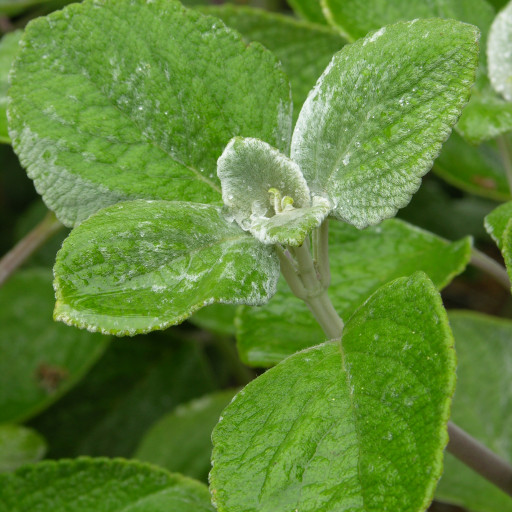
Often called the Silver Spurflower, this Australian native is like a cool, shimmering mist for your garden. Known for its ghostly, metallic foliage, it is a favorite among landscapers who want to brighten up dark, shady corners with an almost moonlit glow. It belongs to the mint family, though it swaps the refreshing scent for a sophisticated, velvety texture.
🔍 How to Identify
- 🥈 The Leaves: Broad, heart-shaped leaves that are densely covered in fine, silvery-white hairs, giving them a soft, felt-like texture.
- 📐 The Stems: Like many of its cousins in the Lamiaceae family, it features distinct square-shaped stems that become woody at the base as the plant matures.
- 🕯️ The Flowers: Tall, slender spikes (racemes) that hold tiny, tubular flowers ranging from icy white to a very pale lavender, typically appearing in late summer.
🏡 In Your Garden
- ☁️ The "Why" of the Silver: Those beautiful silver hairs aren't just for show; they act as a natural sunscreen and moisture-trap, allowing the plant to handle more heat and dryness than its green-leaved relatives.
- 🌿 Low Maintenance: This plant is perfect for "dry shade"—those difficult spots under large trees where other plants struggle to compete for water. It creates a dense groundcover that naturally suppresses weeds.
⚠️ Safety & Toxicity
- ✅ Status: Generally considered non-toxic and safe for home environments.
- 🐾 Details: While it is not on the ASPCA's list of major toxic plants, the essential oils in the leaves can occasionally cause mild stomach upset in curious pets or skin irritation in people with very sensitive skin. It’s always best to keep "nibblers" away from the foliage.
✨ Fun Fact
The species name Argentatus literally translates from Latin to "silvered" or "decorated with silver," a fitting tribute to its status as one of the most reflective plants in the botanical world!

Detailed Care Instructions
To grow Plectranthus argentatus, also known as Silver Spurflower, you can follow these steps:
- Choose a suitable location: Plectranthus argentatus prefers a location with partial shade or filtered sunlight. It can tolerate a range of soil conditions but prefers well-draining soil.
- Propagation: You can grow Plectranthus argentatus from seeds, stem cuttings, or division. Seeds should be planted in seed starting mix and kept moist until germination. Stem cuttings can be taken from mature plants and rooted in water or a well-draining potting mix. Division involves separating clumps of the plant and planting them in separate containers or garden beds.
- Planting: If you are planting Plectranthus argentatus in the ground, dig a hole slightly larger than the root ball and place the plant in it. Backfill the hole with soil and gently firm it around the plant. If you are planting in containers, choose a pot with good drainage holes and use a well-draining potting mix.
- Watering: Plectranthus argentatus prefers moderate watering. Allow the soil to dry out slightly between waterings, but do not let it become completely dry. Overwatering can cause root rot, so it's essential to avoid excessive moisture.
- Fertilizing: Plectranthus argentatus benefits from regular fertilization during the growing season. Use a balanced, water-soluble fertilizer diluted to half strength, and apply it every 2-4 weeks.
- Pruning: Prune Plectranthus argentatus regularly to encourage bushier growth and remove any dead or diseased foliage. Pinching the tips of the stems periodically can help promote a compact and bushy shape.
- Protection from frost: Plectranthus argentatus is not frost-tolerant, so if you live in a region with cold winters, you may need to bring the plant indoors or protect it with a frost cloth during frosty periods.
- Pests and diseases: Plectranthus argentatus is generally resistant to pests and diseases. However, it can be susceptible to aphid infestations or root rot if overwatered. Monitor the plant regularly and take appropriate measures if any issues arise.
By following these guidelines, you should be able to grow healthy and lush Plectranthus argentatus plants.

Place in a window with dappled sun or a spot in the middle of a room. Or directly in a window facing west or east.

To water this plant, it is important to keep the soil consistently moist but not waterlogged. Water deeply each time, allowing excess water to drain out of the pot. It is best to water in the morning to avoid water staying on the leaves in cooler evening temperatures, which can lead to fungal growth. Keep an eye on the plant during hot and dry stretches and increase the frequency of watering as necessary.
To fertilize this plant, use a balanced, water-soluble fertilizer with an equal ratio of NPK (nitrogen, phosphorus, and potassium). Apply the fertilizer once a month during the growing season (spring and summer) and decrease frequency during the dormant season (fall and winter). Dilute the fertilizer to half-strength and apply it to the soil around the plant, being careful not to get any on the leaves. Water the plant thoroughly after fertilizing.
The best type of soil to use for the Plectranthus Argentatus plant is well-draining, loamy soil with a pH range of 6.0 to 7.0. The soil should be rich in organic matter and contain nutrients such as nitrogen, phosphorus, and potassium. It is important to avoid using heavy or compacted soil, as this can restrict the plant's root growth and lead to poor health. When planting, mix in a generous amount of compost or well-rotted manure to the soil to provide additional nutrients. Additionally, adding perlite or sand to the soil can help improve drainage, prevent waterlogging, and promote healthy root development.
There are a few methods to propagate this plant species. The first method is through stem cuttings. Choose a healthy stem that is not too woody and has a few pairs of leaves. Cut the stem just below a node, where a leaf attaches, and remove any lower leaves. Dip the cut end in rooting hormone and place it in a pot filled with a well-draining soil mix. Keep the soil moist and in a warm, bright spot away from direct sunlight. Roots should sprout in 3-4 weeks.
Another method is through division. This is best done in early spring when new growth starts. Gently remove the plant from its pot and carefully separate the root ball into halves or quarters. Each division should have some roots and leaves. Plant each division in its own pot with fresh soil.
Lastly, this plant can also be propagated through seed. Collect the seeds from the plant once they have turned brown and dry. Sow the seeds in a pot filled with a well-draining soil mix, barely covering them with soil. Keep the soil moist and in a warm, bright spot away from direct sunlight. Seeds should germinate in 2-3 weeks.








