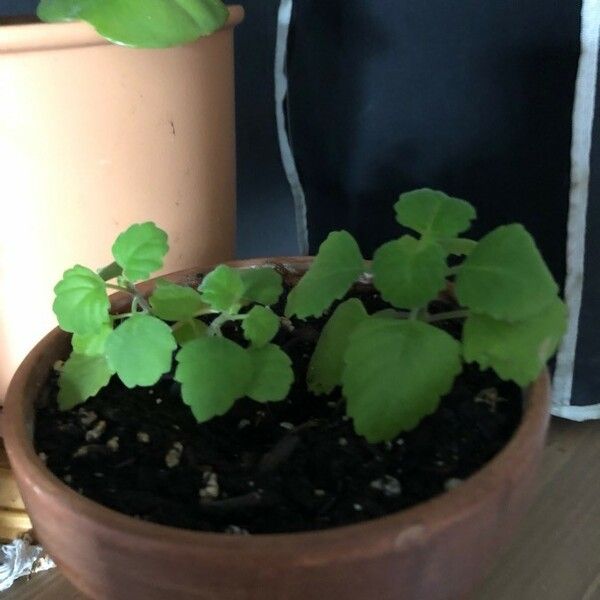
Plant Overview
Often called the "Bonsai Mint," Plectranthus ernstii is a charming semi-succulent perennial from the rocky cliffs of South Africa. It is a favorite among indoor gardeners because it naturally develops a thick, gnarled trunk that looks like an ancient bonsai tree without any of the difficult wiring or training. Despite its rugged, woody appearance, it is actually a close relative of common mint and Swedish Ivy.
🔍 How to Identify
- 🪵 The Caudex: The most striking feature is its swollen, succulent-like base (caudex) and stems. These turn a soft grey-brown and look like aged wood even on very young plants.
- 🍃 Velvety Leaves: The small, teardrop-shaped leaves have scalloped edges and a soft, matte texture. If you gently rub them, they release a light, herbal fragrance.
- 🌸 Summer Blooms: In the warmer months, the plant sends up delicate, upright spikes (racemes) covered in tiny, tubular flowers that are usually pale lavender or white.
🏡 In Your Garden
- 🪴 The "Forgetful Gardener" Friend: Because it stores water in its thick stems, this plant is incredibly drought-tolerant. It prefers its soil to dry out almost completely between waterings, making it perfect for busy hobbyists.
- ☀️ Light & Growth: Unlike many succulents, it actually dislikes harsh, direct midday sun, which can scorch its soft leaves. It thrives in bright, filtered light—think of a spot near a sunny window with a sheer curtain.
- ✂️ Shape Shifting: It is a very fast grower. You can easily maintain its "miniature tree" aesthetic by pinching off the growing tips, which encourages the plant to branch out and thicken its trunk.
⚠️ Safety & Toxicity
- 🐾 Pet Safety: Plectranthus ernstii is generally considered non-toxic to cats, dogs, and horses. It is a much safer alternative for pet owners than many other succulent varieties.
- 👄 Not for Salads: While it is a member of the mint family, this specific variety is grown for its beauty, not its flavor. It isn't considered edible for humans and may cause a mild stomach upset if ingested.
✨ Fun Fact
This plant was "discovered" relatively recently in the botanical world. It was found in the late 1970s by Ernst van Jaarsveld (a famous South African botanist) while he was exploring the steep, inaccessible Oribi Gorge—proving that even in modern times, nature still hides beautiful secrets in hard-to-reach places!

Detailed Care Instructions
| Soil Ph | 6.0 |
| Lighting | Full Sun |
| Soil Type | Well-Draining |
| Bloom Time | Spring, Winter, Fall |
| Plant Type | Annual, Perennial |
| Mature Size | About 18 Inches Tall |
| Native Area | Africa, Madagascar, India |
| Sun Exposure | Full Sun Or Partial Shade |
| Hardiness Zones | 8 To 11 |
To grow Plectranthus ernstii, follow these steps:
- Choose a suitable location: Plectranthus ernstii thrives in partial shade to full shade, so choose a location with indirect sunlight or filtered shade. It prefers a warm and humid climate.
- Prepare the soil: Plectranthus ernstii prefers well-draining soil rich in organic matter. Amend the soil with compost or aged manure to improve its fertility and drainage.
- Propagation: Plectranthus ernstii can be propagated by seeds or stem cuttings. Taking stem cuttings is the most common and effective method. Take a healthy stem cutting from a mature plant and remove the lower leaves. Dip the cut end in a rooting hormone powder and plant it in a pot filled with moistened potting mix.
- Planting: If you are planting from seeds, sow them directly into the prepared soil. If using stem cuttings, plant them in pots filled with moistened potting mix and place the pots in a warm and shaded area.
- Watering: Plectranthus ernstii prefers consistently moist soil. Water the plant when the top inch of soil feels dry. Avoid overwatering, as this can lead to root rot.
- Fertilizing: Use a balanced, slow-release fertilizer during the growing season. Follow the instructions on the fertilizer package for dosage and application frequency.
- Pruning: Plectranthus ernstii can be pruned to maintain its shape and encourage bushier growth. Pinch back the tips of the stems regularly to promote branching and compact growth.
- Pests and diseases: Plectranthus ernstii is relatively pest-resistant, but keep an eye out for common houseplant pests like aphids or mealybugs. Treat any infestations with horticultural soap or neem oil.
- Winter care: Plectranthus ernstii is not frost-tolerant. If you live in a cold climate, bring the plant indoors during winter or provide frost protection. Maintain a minimum temperature of around 10-15°C (50-59°F).
By following these steps, you should be able to successfully grow and care for Plectranthus ernstii.

Place in a window with dappled sun or a spot in the middle of a room. Or directly in a window facing west or east.

To water this plant, check the soil first to ensure it is dry to the touch. Then, use a watering can or hose with a gentle flow to water at the base of the plant until water begins to drain out of the bottom of the pot. Avoid overwatering as this can lead to root rot. Allow the soil to dry slightly before watering again. During hot or dry periods, the plant may need more frequent watering.
To provide nutrients to a certain variety of Plectranthus plant, it is recommended to fertilize it with a balanced liquid fertilizer every two weeks during the growing season. Dilute the fertilizer according to the instructions on the packaging and apply it to the soil around the base of the plant. Avoid getting fertilizer on the leaves, as it may cause damage. During the dormant season, reduce fertilization to once a month. Water the plant thoroughly after fertilizing to help the nutrients soak into the soil.
The best soil to use with this particular plant is one that is well-draining and aerated. The soil should have a pH level between 6.0 and 7.5, which is slightly acidic to slightly alkaline. It is important to avoid heavy, compacted soils as they can lead to root rot and other issues for the plant. A soil mix that includes perlite or coarse sand can help to improve drainage. Additionally, adding organic matter such as compost or peat moss can help to improve soil quality and provide the plant with nutrients. It is important to water the plant regularly, but not overwater as this can also lead to root rot. The soil should be allowed to dry out slightly between waterings. Overall, the key is to provide the plant with a well-draining, nutrient-rich soil that promotes healthy growth and development.
- First, select a mature healthy specimen of the Plectranthus Ernstii plant that you wish to propagate.
- Take a pair of clean, sharp pruning shears and make a clean cut through a healthy stem of the plant, just below a node (the point where a leaf meets the stem).
- Remove the lower leaves from the cutting so that only a few remain at the top.
- Dip the cut end of the stem into a rooting hormone solution, which will increase the chances of the cutting forming roots.
- Fill a small pot with a well-draining potting mix and water it thoroughly.
- Create a small hole in the center of the potting mix with a pencil or chopstick.
- Insert the cutting into the hole, gently packing the mix around the base of the stem to hold it in place.
- Cover the pot with a clear plastic bag to create a humid environment around the cutting—this helps to prevent moisture loss and encourages root development.
- Place the pot in a bright, warm spot, but out of direct sunlight.
- Check the cutting regularly for signs of growth, and mist the leaves with water if they begin to wilt.
- After a few weeks, the cutting should start to form roots and may begin to produce new growth.
- Once the roots have established, the new plant can be transplanted into a larger pot with regular potting soil.
- Be sure to keep the new plant in a bright, warm location and keep the soil moist.
Common pests of the bonsai mint include Mealybugs, spider mites, thrips. Make a habit of checking your bonsai mint frequently for pests so that any infestations can be caught and managed early.








