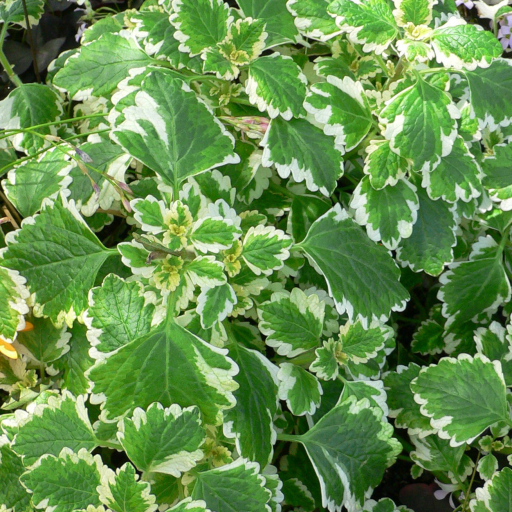
Plant Overview
Known affectionately as the Madagascar Spurflower or Variegated Mintleaf, this charming trailer is a favorite for those who love a plant that engages all the senses. Native to the rocky outcrops of Southeast Africa and Madagascar, it forms a lush, cascading carpet of scalloped foliage. While it looks like a delicate mint, it is actually a hardy semi-succulent that releases a refreshing, spicy aroma whenever you brush against its velvety leaves.
🔍 How to Identify
- 🍃 Fuzzy Foliage: The leaves are small, rounded, and covered in a fine layer of soft white hairs, giving them a "frosted" or velvety appearance.
- ⚪ Variegated Edges: Each bright green leaf is framed by a distinct, creamy-white scalloped border, making the plant pop against darker greenery.
- 🌿 Square Stems: True to its membership in the Mint family (Lamiaceae), its trailing stems are distinctly four-sided and become slightly woody at the base as the plant matures.
🏡 In Your Garden
- 🧺 The Perfect Trailer: Because of its fast-growing, cascading habit, this plant is a superstar in hanging baskets or "spilling" over the edges of decorative stone pots.
- ☀️ Light Sensitivity: While it loves bright light, the white margins on the leaves are prone to sunburn. It thrives best in "dappled" sunlight or bright indirect light, which keeps the variegation crisp and white.
- 💧 Drought Tolerance: Thanks to its semi-succulent nature, it is much more forgiving of a missed watering than true mint. It prefers to dry out slightly between drinks to avoid "wet feet" and root rot.
⚠️ Safety & Toxicity
- 🟢 Safe for Most: Plectranthus madagascariensis is generally considered non-toxic to humans and is not listed as a major threat by the ASPCA for cats and dogs.
- 🧴 Skin Sensitivity: The aromatic oils and fine hairs on the leaves can occasionally cause mild skin irritation for people with very sensitive skin. It is always a good idea to wash your hands after a heavy pruning session.
✨ Fun Fact
Despite its strong minty scent, this plant isn't used for tea! However, in its native habitats, it has been historically used as a traditional "smudge" or aromatic herb, and its rapid growth makes it an excellent "living mulch" to help suppress weeds in frost-free gardens.

Detailed Care Instructions
| Lighting | Part Sun |
| Hardiness Zones | 9B - 11 |
To grow a Plectranthus Madagascariensis (Variegated Swedish Ivy) plant, you can follow these steps:
- Choose a suitable location: Select a spot for your plant that receives bright, indirect sunlight. Plectranthus Madagascariensis prefers warm temperatures between 60-75°F (15-24°C).
- Prepare the pot and soil: Select a well-draining pot with drainage holes at the bottom to prevent waterlogging. Fill the pot with a mixture of one part peat moss or coco coir, one part perlite or vermiculite, and one part regular potting soil.
- Propagation: You can propagate Plectranthus Madagascariensis through stem cuttings, division, or seeds. Stem cuttings are a popular method. Take a 4-6 inch stem cutting, remove the lower leaves, and dip the cut end in a rooting hormone powder. Plant the cutting in a small pot filled with moist soil, and cover it with a plastic bag or container to create a humid environment.
- Watering: Plectranthus Madagascariensis prefers slightly dry soil between waterings. Water the plant thoroughly when the top inch of soil feels dry. Avoid overwatering as it can lead to root rot.
- Fertilizer: Feed the plant with a balanced, water-soluble fertilizer once a month during the growing season (spring to fall). Follow the instructions on the fertilizer package for dosage.
- Pruning: Trim back any leggy or unruly growth to encourage bushier growth. This plant responds well to pruning and can be shaped as desired.
- Humidity: Plectranthus Madagascariensis appreciates high humidity levels. You can increase humidity by misting the plant with water or placing a tray of water near the plant to allow for evaporation.
- Pests and diseases: Keep an eye out for common indoor plant pests like aphids, mealybugs, and spider mites. If detected, treat them with insecticidal soap or neem oil. Ensure good air circulation to prevent fungal diseases.
- Winter care: Plectranthus Madagascariensis may become semi-dormant during the winter months. Reduce watering and maintain slightly cooler temperatures (around 55-60°F or 13-15°C) during this time.
By following these steps and providing proper care, your Plectranthus Madagascariensis should grow well and thrive in your home or garden.

Place in a window with dappled sun or a spot in the middle of a room. Or directly in a window facing west or east.

To water this plant, it is important to ensure that the soil is kept consistently moist but not waterlogged. This can be achieved by allowing the topsoil to dry out slightly between watering sessions and then providing sufficient water to saturate the soil. It is also important to avoid getting water on the leaves or foliage of the plant as this can increase the risk of fungal disease. Instead, water should be directed at the base of the plant using a watering can or hose with a gentle stream. The plant may require more frequent watering during periods of high heat or low humidity, while less water may be needed during colder or wetter periods. As with all plants, it is important to observe the condition of the plant and adjust watering practices accordingly.
To fertilize this plant, use a balanced, water-soluble fertilizer with equal amounts of nitrogen, phosphorus, and potassium. Dilute the fertilizer to half strength and apply it every two weeks during the growing season, which is typically spring to fall. Avoid fertilizing during the winter months when the plant goes dormant. Water the plant thoroughly before and after fertilizing to ensure the nutrients are evenly distributed. Over-fertilizing can cause damage to the plant, so it is important to follow the recommended instructions on the fertilizer packaging.
The ideal soil for Plectranthus Madagascariensis plants is a well-draining, nutrient-rich soil that is slightly acidic with a pH range of 5.5 to 6.5. The soil should be loose and airy, allowing for good drainage and aeration, and it should contain a mix of organic matter such as compost or peat moss. The plant prefers a slightly moist soil, so be sure not to let it completely dry out between waterings. Avoid using heavy clay soils or soils that are overly compacted, as this can lead to root rot and other problems. Additionally, avoid using soils that are high in salt content, as this can also be harmful to the plant. Overall, providing a good quality, well-draining soil will help ensure the health and growth of your Plectranthus Madagascariensis plant.
To propagate this plant, you can take stem cuttings. Choose a healthy stem that is not too woody or too tender and has several nodes on it. Cut a section of the stem around 5-7 cm long, just below a node. Remove the leaves from the bottom half of the stem. If the remaining leaves are large, you can reduce their size by snipping off the tips. Dip the cut end of the stem in rooting hormone powder, ensuring that it is coated well. Plant the stem cutting in a well-draining potting mix of equal parts perlite and peat moss or use vermiculite. Water the soil until it is moist but not soggy. Place a plastic bag over the pot and secure it with an elastic band or tape, creating a mini greenhouse. Place the pot in indirect sunlight or under grow lights. Check the soil for moisture regularly, and mist the leaves with water to keep them hydrated. After 2-3 weeks, check for roots by gently tugging at the stem. If you feel resistance, it means roots have formed. Remove the plastic bag and continue caring for the young plant as you would for a mature one.








