Plant Overview
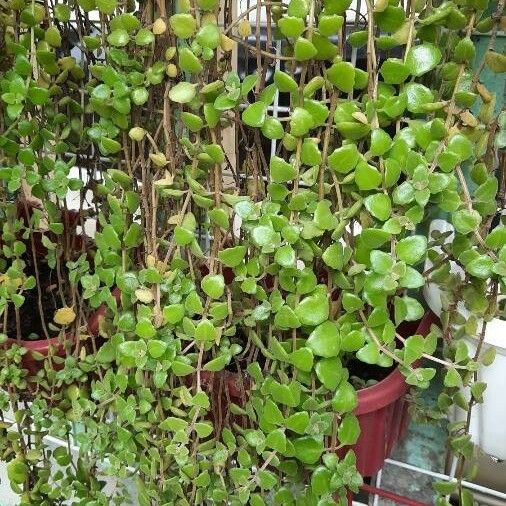
Often called the Pillow Plant or Succulent Swedish Ivy, Plectranthus prostratus is a charming, low-maintenance trailer that looks like a cascade of tiny, plump hearts. Native to South Africa, this petite succulent is a favorite for "living curtains" in bright windows and is widely loved for its "set it and forget it" personality.
🔍 How to Identify
- 🍃 Foliage Shape: The leaves are very small, heart-shaped, and incredibly thick—almost like tiny green pebbles or cushions.
- 🎨 Coloring: While primarily a lime to forest green, the undersides of the leaves and the delicate stems often take on a beautiful reddish-purple hue when exposed to bright light.
- 🌿 Growth Habit: It has a distinct "prostrate" or creeping habit, meaning it will spill over the edges of a pot in long, dense chains that can reach several feet in length.
🏡 In Your Garden
- 💧 Thirst Management: Unlike its thinner-leaved Mint-family cousins, this plant stores a significant amount of water in its leaves. It hates "wet feet," so it's vital to let the soil dry out completely to prevent the stems from turning to mush.
- ☀️ Light & Stress: It thrives in bright, indirect light. If you notice the leaves turning slightly bronze or purple, don't panic—this is "sun-stressing," a natural defense that many growers actually find more attractive than the standard green.
- ✂️ Easy Multiplication: Because it is so eager to grow, any small piece that snaps off can be tucked back into the soil, where it will usually root within days without any special hormones or equipment.
⚠️ Safety & Toxicity
- 🐾 Status: Generally considered non-toxic to humans and common pets.
- 👅 Details: While not inherently poisonous like a Lily or Sago Palm, the sap can occasionally cause mild skin irritation for those with sensitive skin, and if a pet eats a large amount, they may experience a mild upset stomach due to the plant's essential oils.
✨ Fun Fact
Despite its succulent appearance, the Pillow Plant is a member of the Lamiaceae (Mint) family. If you gently bruise a leaf, you might catch a faint, herbal scent reminiscent of its cousins, Basil and Oregano!

Detailed Care Instructions
To grow a Plectranthus Prostratus plant, also known as Swedish Ivy or Creeping Charlie, follow these steps:
- Choose a suitable location: Plectranthus Prostratus thrives in bright, indirect light, so select a spot near a window with filtered sunlight. It can also handle partial shade.
- Select the right soil: Use well-draining potting soil that retains some moisture but doesn't become waterlogged. A mixture of peat moss, perlite, and regular potting soil works well.
- Provide proper watering: Water the plant when the top inch of soil feels dry to the touch. Avoid overwatering, as it can lead to root rot. Always drain any excess water from the bottom of the pot.
- Maintain humidity: Plectranthus Prostratus appreciates some humidity. You can increase humidity levels by placing a tray of water near the plant or misting it with water occasionally.
- Control temperature: Keep the plant in a temperature range of 60-75°F (15-24°C) during the day and above 55°F (12°C) at night. Avoid exposure to cold drafts or extreme temperatures.
- Fertilize: Apply a balanced liquid fertilizer diluted to half strength every 2-4 weeks during the growing season (spring and summer). Do not fertilize during the dormant winter months.
- Pruning and pinching: Regularly pinch back the stems to encourage bushier growth. You can also pinch off any leggy or straggling growth. Pruning can help maintain a dense and compact plant.
- Propagation: Plectranthus Prostratus is easily propagated through stem cuttings. Cut a 4-6 inch stem just below a node, remove the lower leaves, and plant it in moist soil. Maintain high humidity until the cutting roots. Within a few weeks, the cutting should develop roots and start growing.
- Repotting: As the plant grows, you may need to repot it into a larger container every 1-2 years. Choose a pot with drainage holes, and use fresh potting soil during repotting.
- Pest control: Monitor the plant for common houseplant pests such as aphids, mealybugs, or spider mites. If you notice any infestation, treat it with insecticidal soap or neem oil.
By following these guidelines, you should be able to successfully grow a healthy Plectranthus Prostratus plant.

Place in a window with dappled sun or a spot in the middle of a room. Or directly in a window facing west or east.

To properly water this plant, it is important to take into consideration the surrounding environment and soil conditions. First, it is important to make sure the soil is moist but not waterlogged. This can be achieved by checking the soil with a moisture meter or by checking the top layer of soil with a finger. If the soil feels dry, it is time to water.
When watering, it is important to pour the water slowly onto the soil, making sure to distribute it evenly around the plant. It is best to water the plant in the morning or evening when the sun is not as intense, as this will prevent the water from quickly evaporating. Proper drainage is also important for this plant, so make sure the pot or container it is in has proper drainage holes.
Overall, it is important to monitor the soil moisture levels and adjust watering accordingly. In general, this plant prefers consistently moist soil, but overwatering can lead to root rot and other issues. By following these tips and taking the time to properly water this plant, it should thrive and grow healthy.
To fertilize this plant, use a balanced, water-soluble fertilizer with a 10-10-10 or 20-20-20 NPK ratio. Dilute the fertilizer according to package instructions and apply to the soil once every two weeks during the growing season. Avoid over-fertilization as it can lead to burning of the leaves and roots. Water the plant thoroughly after fertilizing to help distribute the nutrients evenly in the soil.
When selecting soil for this plant, it is important to choose a well-draining soil that is able to retain moisture, while also preventing water-logged roots. A soil that is rich in nutrients, such as compost or fertilizers, is recommended as this plant requires ample nutrients to thrive. Additionally, it is important to select a soil that has a pH level that is suitable for this plant's specific growing requirements. Overall, the ideal soil for this plant will be able to provide a balanced amount of moisture, nutrients, and oxygen to encourage healthy root development and growth.
To propagate this plant, you can take tip cuttings from the parent plant. Choose a healthy stem that is around 4 to 6 inches long and has several sets of leaves. Make a clean cut just below a node using a sharp and sterilized knife or scissors.
Remove the lower set of leaves, leaving only two to three sets of leaves at the top. Dip the cut end into a rooting hormone powder to promote root growth, then plant it in a well-draining potting mix. Water the cutting thoroughly and place it in a warm and bright location with indirect sunlight.
Cover the cutting with a plastic bag or a clear plastic container to create a humid environment that will help the cutting to root. After about one to two weeks, check for root development by gently tugging on the stem. If there is resistance, it means that roots have developed.
After the roots have developed, gradually remove the plastic covering and move the newly propagated plant into a larger pot with fresh soil. Keep the soil moist but not waterlogged and provide it with indirect sunlight. Over time, the plant will grow into a mature specimen.
Common pests of the plectranthus prostratus include Mealybugs, spider mites, thrips. Make a habit of checking your plectranthus prostratus frequently for pests so that any infestations can be caught and managed early.








