Plant Overview
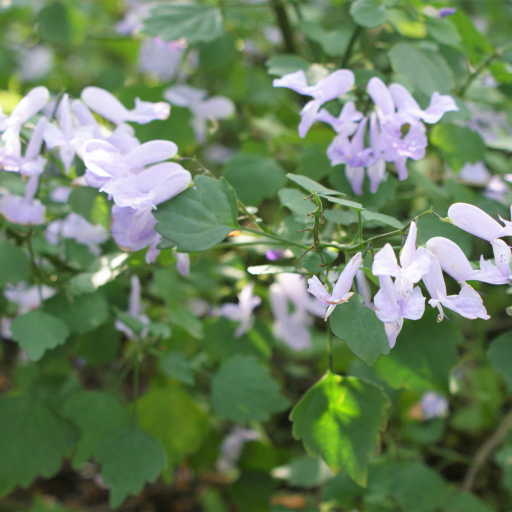
The Plectranthus saccatus, affectionately known as the Stoep Flower or Cape-Primrose Spur-flower, is a South African treasure that brings a splash of royal purple to the darkest corners of a garden. Its common name "Stoep Flower" comes from the Afrikaans word for "veranda," celebrating its long history as a beloved resident of shaded porches and cool balconies. This semi-succulent perennial is prized for its elegant, "saccate" (pouch-like) blooms and its ability to thrive where most flowering plants struggle: in the deep shade.
🔍 How to Identify
- 💜 The Flowers: Large, trumpet-shaped blooms that range from pale lilac to deep purple. If you look closely at the base of the flower, you’ll notice a distinct little "pouch" or swelling that gives the plant its name.
- 🍃 The Foliage: Its leaves are bright green, broadly ovate, and have neatly scalloped (crenate) edges. The texture is slightly fleshy and soft, giving the plant a lush, forest-floor appearance.
- 📐 Growth Habit: This is a sprawling, soft shrub. It rarely grows tall, instead choosing to spread outwards, making it an excellent choice for cascading over the edges of pots or hanging baskets.
🏡 In Your Garden
- ☁️ Shade Specialist: Because this plant originates from the edges of South African coastal forests, it evolved to capture filtered light. In your home, it will protest if placed in direct afternoon sun, which can scorch its delicate leaves.
- 💧 The "Goldilocks" Soil: While it is semi-succulent and can store some water in its stems, it prefers soil that mimics a forest floor—rich in organic matter but incredibly well-draining. It hates "wet feet," so ensure your pot has plenty of drainage holes.
- ✂️ Post-Bloom Refresh: To keep it from looking "leggy" or sparse, give it a light trim after the flowering season ends. This encourages a bushier, more compact shape for the next year.
⚠️ Safety & Toxicity
- ✅ Safe Status: The Plectranthus saccatus is generally considered non-toxic to humans and common household pets like cats and dogs.
- ✋ Mild Irritation: While not poisonous, the sap of many Plectranthus species can occasionally cause mild skin irritation in sensitive individuals. It’s always a good idea to wash your hands after a heavy pruning session.
✨ Fun Fact
The specific epithet saccatus is Latin for "bag-like." This refers specifically to the base of the flower, which looks like a tiny inflated sack—a clever botanical feature designed to accommodate the specific long-tongued insects that pollinate it in the wild!

Detailed Care Instructions
To grow Plectranthus Saccatus plant, also known as the Coleus Forskohlii or Indian Coleus, follow these steps:
- Choose the right location: Plectranthus Saccatus prefers bright, indirect sunlight. Find a spot near a window where it can receive a few hours of morning or evening sun while being protected from the intense midday rays.
- Prepare the soil: Use well-draining potting soil or a mixture of equal parts compost, sand, and peat moss. This plant doesn't tolerate wet feet, so ensuring proper drainage is essential.
- Propagation: You can propagate Plectranthus Saccatus from stem cuttings. Take a 4-6 inch cutting and remove the lower leaves. Dip the cut end in a rooting hormone, then plant it in a small pot filled with soil. Water it thoroughly and place it in a warm, bright location. Keep the soil consistently moist until new growth appears.
- Watering: Water the plant regularly, allowing the top inch of soil to dry out between waterings. Overwatering can lead to root rot, so be careful not to let the plant stand in water.
- Fertilization: Feed your Plectranthus Saccatus plant with a balanced, water-soluble fertilizer every two weeks during the growing season (spring and summer). Follow the package instructions for application rates.
- Pruning: Trim back the plant regularly to encourage bushy growth. Pinching off the tips of the stems will help to promote lateral branching and a fuller plant shape.
- Repotting: As your plant grows, you may need to repot it into a larger container. Only move it up to a pot one or two sizes larger, using fresh potting soil each time. Repotting is best done in the spring.
- Pest control: Keep an eye out for common houseplant pests like aphids, spider mites, and mealybugs. If you notice any infestations, remove the bugs by hand or use an appropriate insecticidal soap.
By following these guidelines and providing this plant with the right conditions, you can successfully grow Plectranthus Saccatus into a healthy and beautiful plant.

Place in a window with dappled sun or a spot in the middle of a room. Or directly in a window facing west or east.

Plectranthus saccatus is a type of plant that is known for its beautiful, green foliage and fragrant leaves. It is a delicate plant that requires careful watering to maintain its health and beauty. Here are some tips on how to water your Plectranthus saccatus plant:
1. Do not overwater your plant as this can lead to root rot and other diseases. Make sure to let the soil dry out slightly before watering again.
2. Water your plant deeply and evenly, making sure that the water reaches all the way to the roots.
3. Use room-temperature water as cold water can shock the roots and cause damage.
4. Water your plant early in the morning or in the evening to avoid evaporation and to allow the plant to absorb the water slowly.
5. If your plant is in a pot, make sure that the pot has proper drainage to avoid waterlogging.
6. Avoid getting water on the leaves as this can cause sunburn or fungal infections.
By following these tips, you can ensure that your Plectranthus saccatus plant is healthy and thriving.
To fertilize this plant, you should use a balanced fertilizer with equal parts nitrogen, phosphorus, and potassium. Apply the fertilizer once a month during the growing season, which is typically spring and summer. Be sure to dilute the fertilizer according to the manufacturer's instructions and apply it evenly across the soil. Avoid fertilizing during the plant's dormant period in the fall and winter.
When choosing soil for Plectranthus Saccatus plant, it's important to consider a few factors. The soil should be well-draining and not retain too much moisture, as this can lead to root rot. A mix of sand, peat moss, and perlite can help to improve drainage.
Additionally, the soil should be nutrient-rich and have a slightly acidic pH level, between 6.0 and 6.5. This can be achieved by mixing a high-quality potting mix with compost or other organic matter to add nutrients.
It's also important to ensure that the soil is properly aerated, as Plectranthus Saccatus plant roots need oxygen to thrive. Using soil that is too compacted or heavy can restrict oxygen flow and harm the plant.
Overall, choosing a well-draining, nutrient-rich soil with a slightly acidic pH level and good aeration is key to growing a healthy Plectranthus Saccatus plant.
To propagate this plant, one can take stem cuttings from the mother plant. Select a healthy stem that is about six inches long and has at least four leaves. Remove the bottom two sets of leaves, leaving two at the top. Dip the cut end of the stem in rooting hormone and plant it in a pot filled with well-draining soil. Water the soil and cover the pot with a clear plastic bag to create a humid environment. Place the pot in a bright, indirect light and keep the soil moist. After a few weeks, the cutting should start to root. Once the new plant has grown several new leaves, it can be transplanted into a larger pot or outside in a garden.
Common pests of the black swedish ivy include Mealybugs, spider mites, thrips. Make a habit of checking your black swedish ivy frequently for pests so that any infestations can be caught and managed early.








