Plant Overview
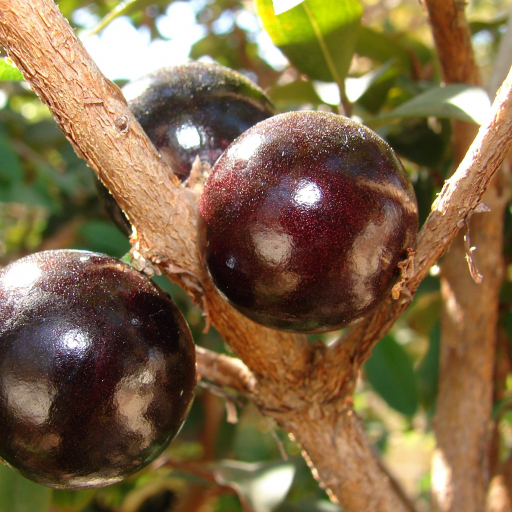
Known as the "Brazilian Grape Tree," the Jabuticaba is a botanical marvel that looks like something out of a surrealist painting. Unlike most trees that hide their fruit among the leaves, this tree wears its harvest like dark pearls encrusted directly onto its trunk. In its native Brazil, it is a backyard staple, cherished for its sweet, jelly-like fruit and its striking, multi-colored peeling bark.
🔍 How to Identify
- 🌳 The Trunk: The most defining feature is "cauliflory," where clusters of small white flowers and dark fruits sprout directly from the main trunk and thickest branches.
- 🍃 The Foliage: It features small, elegant, lance-shaped leaves that emerge with a salmon-pink tint before maturing into a deep, glossy green.
- 🍇 The Fruit: Round, thick-skinned berries that transition from green to a deep, royal purple-black. The interior is a translucent, white pulp with a flavor profile similar to a muscadine grape.
🏡 In Your Garden
- 💧 Thirst for Life: This tree is exceptionally "thirsty." Because it evolved in moist forest understories, it lacks a deep taproot and can go into shock if the soil dries out completely; keeping the roots consistently moist is the secret to a happy tree.
- 🧪 Acidic Soil Nuance: Jabuticaba is an acid-loving plant. If your soil is too alkaline, the leaves will often turn yellow (chlorosis), as the tree struggles to uptake iron.
- 🐢 The Waiting Game: It is a notoriously slow grower. A tree grown from seed can take 8 to 15 years to produce its first fruit, which is why many hobbyists prefer to buy "grafted" specimens to skip the decade-long wait.
⚠️ Safety & Toxicity
- ✅ Status: Entirely safe and highly edible.
- 🍇 For Humans: The fruit is a powerhouse of antioxidants. While the skin is edible, it is very high in tannins; most people squeeze the sweet pulp into their mouths and discard the tart, thick skin.
- 🐾 For Pets: This plant is non-toxic to dogs and cats, making it an excellent choice for a "food forest" in a pet-friendly yard.
✨ Fun Fact
In Brazil, there is a popular saying: "Jabuticaba só dá no Brasil" (Jabuticaba only happens in Brazil). While it can grow elsewhere now, the phrase is used as a metaphor for anything—from a law to a social quirk—that is uniquely and strangely specific to Brazilian culture!

Detailed Care Instructions
| Color | Glossy Green Foliage With Yellowish-White Flowers And Purple Fruit |
| Soil Ph | 5.5-6.5 |
| Humidity | Normal |
| Lighting | Full Sun |
| Toxicity | Toxic |
| Soil Type | Well-Drained Humus-Rich, Acidic Soil |
| Bloom Time | Seasonal Bloomer |
| Difficulty | Medium |
| Plant Type | Broadleaf Evergreen |
| Hibernation | Cold Period |
| Mature Size | 10 To 25 Feet Tall And 8 To 20 Feet Broad |
| Native Area | Southeastern Brazil |
| Temperature | 22°C - 32°C |
| Sun Exposure | Full Sun To Light Shade |
| Hardiness Zones | 10-12 |
To grow a Plinia cauliflora plant, also known as the jabuticaba, follow these steps:
- Obtain a healthy jabuticaba plant: You can either purchase a young plant from a nursery or obtain seeds to germinate them yourself.
- Choose a suitable location: Jabuticaba plants prefer full sun but can tolerate partial shade. Ensure the location has well-draining soil and is sheltered from strong winds.
- Prepare the soil: Jabuticaba plants grow well in slightly acidic soil. Amend the soil with compost and organic matter to improve drainage and fertility.
- Planting: Dig a hole that's slightly wider and deeper than the plant's root ball. If planting multiple jabuticaba plants, space them at least 15 feet apart. Place the plant in the hole and backfill with soil, ensuring the crown of the plant is level with the ground.
- Watering: Jabuticabas prefer consistent moisture but can tolerate periods of drought. Water the plant deeply once or twice a week, ensuring the soil remains evenly moist but not waterlogged.
- Mulching: Apply a layer of organic mulch around the base of the plant to retain moisture, suppress weeds, and regulate soil temperature.
- Fertilizing: Jabuticabas are light to moderate feeders. Fertilize the plant annually in early spring by applying a balanced slow-release fertilizer according to the package instructions.
- Pruning: Prune the plant to remove dead or diseased branches, promote airflow, and maintain its shape. Pruning can be done anytime during the plant's dormant period.
- Protection from frost: If you live in an area with frosty winters, cover young jabuticaba plants with frost blankets or bring potted plants indoors during cold spells.
- Harvesting: Jabuticaba fruits are usually ready for harvest within 5-7 years after planting. They ripen on the plant and are best consumed shortly after picking as they don't have a long shelf life.
By following these guidelines and providing proper care, you can successfully grow a Plinia cauliflora plant and enjoy its delicious fruit.

Place in a bright room that is sun drenched almost all day. Or directly in a south-facing window.

Plinia Cauliflora, also known as Jabuticaba, is a fruit-bearing plant that requires regular watering. To water this plant, use a watering can or hose and aim the water at the base of the plant, avoiding the foliage. Water the plant deeply, but allow the soil to dry out slightly between waterings. Overwatering can cause root rot, so ensure that the soil has proper drainage. During hot or dry weather, it may be necessary to water more frequently. It is important to monitor the soil moisture level regularly and adjust watering accordingly. Watering in the early morning or late afternoon can also help reduce evaporation and ensure the plant gets enough water.
To fertilize the Plinia cauliflora plant, use a high-quality, balanced fertilizer with equal parts nitrogen, phosphorus, and potassium. Apply the fertilizer every 6-8 weeks during the growing season, and reduce frequency during the dormant season. Be careful not to over-fertilize as this can disrupt growth and damage roots. Always follow the instructions on the fertilizer packaging and dilute if necessary. Water the plant before and after fertilizing to ensure proper absorption of nutrients.
The Plinia cauliflora plant thrives in well-draining soil that is rich in organic matter. It requires a pH range of 4.5 to 5.5, which is slightly acidic. A mixture of peat moss, perlite, and pine bark or coconut coir can be used to create a loose and aerated soil that is suitable for the plant's root system. It is important to avoid using heavy clay soils or soils that retain too much moisture, as this could lead to root rot. Additionally, adding fertilizers that are high in nitrogen can encourage vegetative growth at the expense of fruit production. Therefore, it is recommended to use a balanced fertilizer or one that is higher in phosphorus and potassium.
To propagate this plant, you will need a cutting from a healthy and mature plant. Choose a stem that is at least 4-6 inches long, with a few leaves on it.
Using a clean, sharp knife, cut the stem at a 45-degree angle just below a node (where a leaf or branch comes out), making sure not to damage the stem or any nearby growth. Remove any leaves from the bottom third of the stem.
Prepare a pot with well-draining soil, such as a mix of perlite and peat moss. Make a small hole in the soil and insert the stem cutting, making sure it is planted deep enough so that the bottom of the stem is covered with soil.
Water the cutting thoroughly and place it in a warm, humid location with bright indirect light. You can cover the pot with a plastic bag or container to help retain moisture.
Check the cutting regularly and water as needed to keep the soil moist but not waterlogged. In a few weeks, you should see new growth on the stem, indicating that it has successfully rooted and is ready to be transplanted into its own pot.
Common pests of the jaboticaba tree include Scale insect, mealybugs, spider mites, aphids. Make a habit of checking your jaboticaba tree frequently for pests so that any infestations can be caught and managed early.








