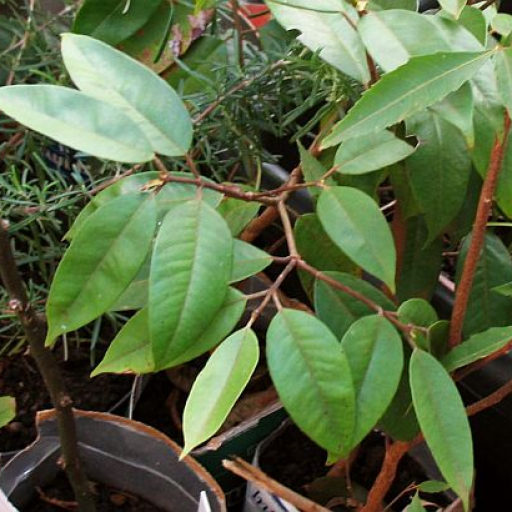
Plant Overview
Known as the "Cambucá," this Brazilian treasure is often whispered about by fruit collectors as the "Golden Jabuticaba." It is one of the most prestigious native fruits of the Atlantic Forest, once a staple in the markets of colonial Rio de Janeiro. Today, it is a rare botanical gem, prized for its velvet-textured fruit and its status as a majestic, slow-growing legacy tree.
🔍 How to Identify
- 🍂 Leaf Structure: Large, elongated, lance-shaped leaves that grow in opposite pairs. They have a deep green, leathery texture and a prominent central vein that gives the foliage a lush, tropical appearance.
- 🟡 The Fruit: Round, slightly ribbed berries about the size of a golf ball. They transition from green to a vibrant, glowing orange-yellow when ripe, growing directly against the branches and trunk.
- 🪵 Peeling Bark: The trunk is a work of art, featuring smooth, mottled bark that peels away in thin, papery flakes to reveal a creamy-colored inner layer, similar to its cousin, the Guava.
🏡 In Your Garden
- 💧 Thirsty Roots: In the wild, the Cambucá thrives in moist, alluvial soils near riverbanks. It has a low tolerance for drought; if the soil dries out completely, the tree may drop its leaves in protest. Consistent moisture is the key to success.
- ⏳ A Lesson in Patience: This is not a tree for the impatient. It is notoriously slow-growing and can take 10 to 15 years to produce its first harvest. However, a mature tree is incredibly long-lived and becomes a centerpiece of any landscape.
- 🌱 Acidic Ambitions: It performs best in rich, organic, slightly acidic soil. Because it has a sensitive taproot, it "hates" being moved once established—choose its forever home in your garden carefully.
⚠️ Safety & Toxicity
- 😋 Edible Status: The fruit is safe and delicious! The pulp has a unique, melting consistency with a flavor often described as a mix of papaya, mango, and pineapple.
- 🐾 General Safety: There are no recorded toxicities for humans or pets. However, like many members of the Myrtaceae family, the seeds and leaves are high in tannins; while not "poisonous," the seeds are very bitter and should be discarded rather than eaten.
✨ Fun Fact
The name "Cambucá" comes from the indigenous Tupi word Kambuká, which translates to "the act of sucking." This refers to the traditional way of eating the fruit: you pop a hole in the thick skin and "suck" out the sweet, jelly-like pulp inside!

Detailed Care Instructions
When watering this plant, it is important to pay attention to the soil moisture levels. It prefers consistently moist soil, but not waterlogged conditions. Water thoroughly and deeply enough to ensure water reaches the roots. Allow the top inch of soil to dry out before watering again. During the growing season, which is usually spring and summer, this plant may require more frequent watering. However, during the dormant season, watering should be reduced. It is also important to avoid getting water on the leaves as this can lead to fungal growth or other issues. Use room temperature water to avoid shocking the plant's roots.
For Plinia Edulis, it is recommended to use well-draining soil that is slightly acidic with a pH between 4.5 to 5.5. The soil should be rich in organic matter such as compost or peat moss, and should be kept consistently moist, but not waterlogged. It is also important to consider the type of container in which the plant will be grown, as a smaller container may require more frequent watering. Additionally, adding a slow-release fertilizer or a balanced organic fertilizer can enhance the overall growth and health of the plant.








