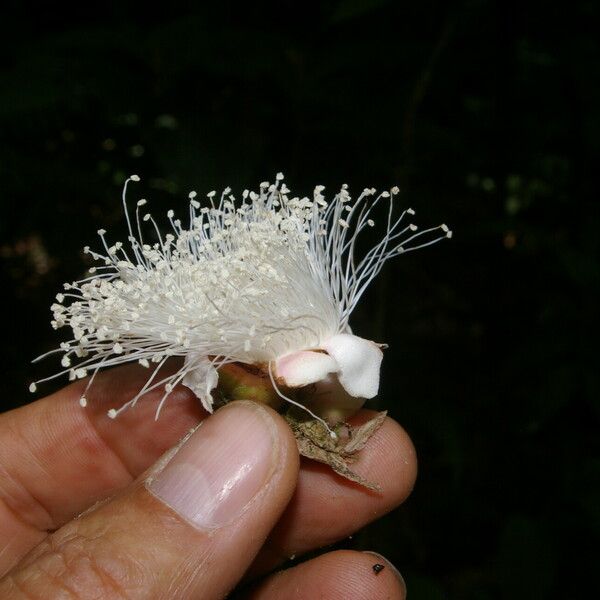
Plant Overview
Often called the Nicaraguan Jaboticaba or "Guavabito," this rare tropical treasure is a close relative of the famous Brazilian Jaboticaba. It is celebrated for its surreal appearance, where clusters of fruit erupt directly from the woody trunk like shiny purple jewels. Native to the humid rainforests of Central America, it remains a "holy grail" for rare fruit collectors due to its unique growth habit and refreshing, sweet-tart flavor.
🔍 How to Identify
- 🌳 Trunk Fruiting: Look for flowers and fruits growing directly on the main trunk and older branches (a rare trait called cauliflory), rather than on the tips of new twigs.
- 🍃 Narrow Foliage: The leaves are lance-shaped, glossy, and noticeably longer and more pointed than the more common Brazilian species (Plinia cauliflora).
- 🟣 Jewel-like Berries: The fruit is a small, round berry that transitions from a light green to a deep, dark purple-black when perfectly ripe.
🏡 In Your Garden
- 🧪 Acidic Preferences: This plant is a "calcifuge," meaning it cannot tolerate lime or alkaline soil. It requires acidic, well-draining soil rich in organic matter to avoid iron deficiency and yellowing leaves.
- 💧 High Humidity Needs: As a denizen of the Nicaraguan tropics, it craves high humidity and consistent moisture. It has very little tolerance for drought and should never be allowed to dry out completely.
- ⏳ A Lesson in Patience: This is a slow-growing tree. While it makes a beautiful ornamental or large container plant, it may take several years of careful nurturing before you see your first harvest.
⚠️ Safety & Toxicity
- ✅ Status: Non-toxic and Edible.
- 😋 Details: The fruit is safe for humans, including children, and is often eaten fresh or turned into gourmet jams.
- 🐾 Pets: It is generally considered non-toxic for dogs and cats. However, the skin of the fruit is high in tannins, and the large seeds inside could pose a choking hazard to smaller animals.
✨ Fun Fact
- 🐝 Pollinator Party: The white, fuzzy flowers that emerge from the bark have a delicate, sweet scent that is irresistible to native stingless bees and butterflies, turning the tree trunk into a vertical garden of activity during the blooming season!

Detailed Care Instructions








