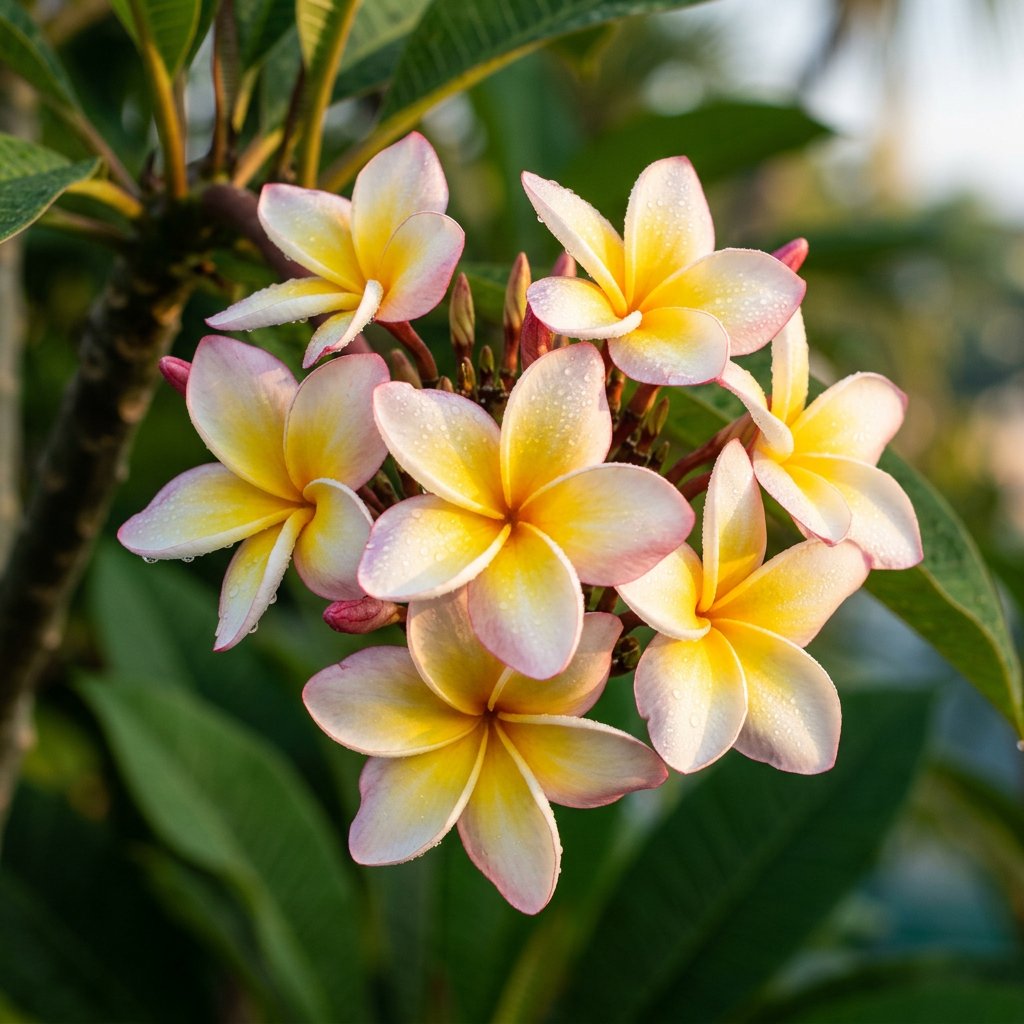
Plant Overview
Often called the "Frangipani" or the "Temple Tree," Plumeria rubra is the quintessential scent of the tropics. Known for its spiraled, pinwheel-like blooms, it is a staple in Hawaiian leis and a common sight in Buddhist and Hindu temples across Asia. These hardy shrubs are as famous for their intoxicating fragrance—which is strongest at night—as they are for their architectural, sculptural branches.
🔍 How to Identify
- 🌸 The Blooms: Flowers are waxy, five-petaled, and grow in clusters at the ends of branches. They typically feature a vibrant "sunset" gradient, blending shades of deep pink, rose-red, and gold.
- 🍃 The Foliage: Long, lance-shaped leaves with prominent veins. They are arranged spirally at the branch tips, creating a lush, green canopy during the warm growing season.
- 🌳 The Skeleton: Thick, greyish-green stems that appear almost succulent. When the leaves drop in winter, the plant reveals a unique, "knobby" branch structure that looks like a piece of modern art.
🏡 In Your Garden
- ☀️ Sun Worshipper: This plant lives for the light. To produce those iconic blooms, it needs at least 6 to 8 hours of direct sun daily; without it, the stems become "leggy" and the plant will refuse to flower.
- 💧 The Winter Nap: Plumeria is deciduous. Don't panic when it drops all its leaves in late autumn—it is simply entering dormancy. During this time, stop watering almost entirely to prevent root rot, as the plant cannot process moisture while it is "sleeping."
- 🪴 Drainage is Key: Because of its thick, water-storing stems, it is highly susceptible to "wet feet." Use a cactus or citrus potting mix to ensure water moves quickly away from the roots.
⚠️ Safety & Toxicity
- 🚫 Sap Irritant: Like many members of the Apocynaceae family, the plant bleeds a thick, white milky latex when cut. This sap can cause skin irritation or rashes, especially for those with latex allergies.
- 🐾 Pets & Kids: All parts of the plant are considered mildly toxic. If ingested, the alkaloids can cause stomach upset, vomiting, and diarrhea in cats, dogs, and small children.
✨ Fun Fact
The common name "Frangipani" comes from a 16th-century Italian nobleman, Marquis Muzio Frangipani, who created a popular almond-scented perfume used to fragrance leather gloves. When European explorers first encountered this plant in the New World, they were so struck by its similar scent that they named the tree after the perfume!

Detailed Care Instructions
| Color | Green Foliage |
| Soil Ph | Acidic To Alkaline |
| Lighting | Full Sun |
| Soil Type | Clay, Loam, Or Sand Texture |
| Bloom Time | Seasonal Unless In Tropical Climate |
| Plant Type | Deciduous Tree |
| Mature Size | Height Up To 20 Feet, Width To 25 Feet |
| Native Area | Mexico To Panama |
| Sun Exposure | Full Sun To Partial Shade |
| Hardiness Zones | 10-12 |
To grow a Plumeria Rubra plant, follow these steps:
- Choose a suitable location: Plumeria Rubra plants require at least 6-8 hours of sunlight daily, so choose a spot in your garden or balcony that receives ample sunlight.
- Prepare the soil: Plumeria Rubra plants prefer well-draining soil. Mix equal parts of potting soil and perlite or sand to create a loose, well-draining soil mixture.
- Planting: If you have a Plumeria cutting, make sure to let it dry for a few days before planting. Dig a hole in the prepared soil and plant the cutting or small Plumeria Rubra tree, making sure that at least one node or bud is buried in the soil. Firmly press the soil around the plant to secure it.
- Watering: Initially, water the plant thoroughly to settle the soil. After that, water the plant when the top few inches of soil feel dry. Avoid overwatering or letting the plant sit in standing water, as this can cause root rot.
- Fertilizing: Apply a balanced, slow-release fertilizer formulated for flowering plants every 2-3 months during the growing season. Follow the manufacturer's instructions for the appropriate dosage.
- Pruning: Prune your Plumeria Rubra plant during the dormant season, typically in late winter or early spring. This will promote a more compact and bushy growth habit. Remove any dead or diseased branches and shape the plant as desired.
- Winter care: Plumeria Rubra is not cold hardy and cannot tolerate frost. If you live in a region with cold winters, move the plant indoors or to a greenhouse before the first frost. Keep it in a cool, bright location and reduce watering, as the plant will go dormant during this time.
- Pests and diseases: Plumeria Rubra plants are generally resistant to pests and diseases. However, they can occasionally be affected by issues such as aphids or fungal infections. Regularly inspect the plant for any signs of pests or diseases, and take appropriate measures if needed.
By following these steps and providing proper care, you can successfully grow a Plumeria Rubra plant and enjoy its beautiful flowers.

Place in a bright room that is sun drenched almost all day. Or directly in a south-facing window.

When it comes to watering this plant, ensure that the soil is dry before you water it. Always water the plant at the base to avoid wetting the leaves and flowers, as this can lead to rotting. Only use a moderate amount of water, and avoid over-watering, as this can cause root rot. Additionally, it is recommended to water the plant in the morning, as this will give it time to dry out during the day. Overall, it's important to maintain proper drainage to prevent water retention in the soil.
To fertilize Plumeria Rubra, you can start by using a well-balanced fertilizer with an N-P-K ratio of 10-30-10. This can be applied once every two weeks during the growing season. You can also use a fertilizer high in phosphorus, as this will help with flower development. Be sure to water the plant well before and after fertilizing to prevent root burn. It is also important to avoid fertilizing the plant during the dormant season, as it can result in leaf drop and unhealthy growth.
Plumeria Rubra plant requires well-draining soil that is rich in nutrients. It is essential to provide the right type of soil to ensure healthy growth and development of the plant. The soil should have a neutral or slightly acidic pH level, ranging from 6.0 to 7.5. The ideal soil type is a loamy or sandy loam soil that is free from any rocks or debris that could obstruct drainage. The soil should also be able to retain moisture but not be too wet or waterlogged so that the roots do not rot. A high-quality potting mix, enriched with compost, perlite, and peat moss, is highly recommended to provide all the necessary nutrients for healthy growth. It is also advisable to fertilize the soil with a balanced fertilizer regularly to ensure optimal growth and flowering.
There are a few methods for propagating this plant.
One method is by taking stem cuttings. Choose a healthy stem that is at least 12 inches long and 1/4 to 1/2 inch in diameter. Cut the stem at an angle just below a leaf node. Remove the leaves from the bottom half of the stem and let the cuttings dry for a few days.
Next, dip the cut end of the stem in rooting hormone powder and plant it in a well-draining potting mix. Water the soil and cover the pot with a plastic bag to create a humid environment. Place the pot in a warm and bright location, but not in direct sunlight.
After a few weeks, new growth should appear indicating that the cutting has rooted. Once the roots are established, the plant can be transplanted into a bigger pot or outside in the garden.
Another method is by collecting seeds. Allow the plant to produce its fragrant blooms, and once they have wilted and turned brown, the seed pods can be harvested. The pods should be left to dry out for a few days before being cracked open to collect the seeds.
Sow the seeds in a well-draining potting mix and cover them with a thin layer of soil. Water the soil and keep it moist but not waterlogged. Place the pot in a warm and bright location, but not in direct sunlight.
The seeds should germinate in a few days to a few weeks, and once they have grown to a certain size, they can be transplanted into individual pots or directly into the garden.
Common pests of the red frangipani include Scale insect, mealybugs, spider mites, thrips, whiteflies. Make a habit of checking your red frangipani frequently for pests so that any infestations can be caught and managed early.








