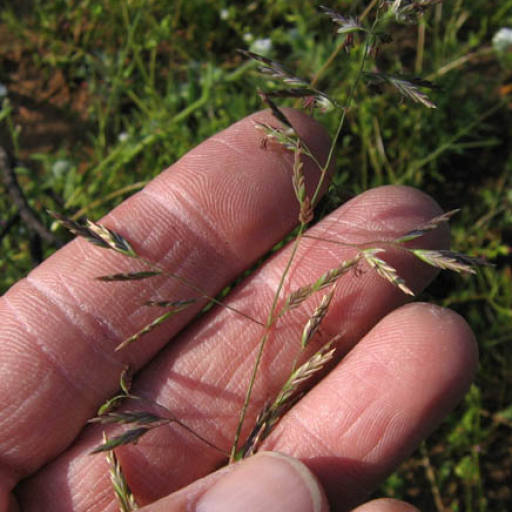
Plant Overview
Commonly known as Sandberg Bluegrass or Pine Bluegrass, Poa secunda is the resilient "early bird" of the North American grasslands. While other plants are still shivering in the late winter chill, this hardy bunchgrass is already waking up, painting arid steppes and rocky slopes with a vibrant, hopeful green. It is a vital survivor that has perfected the art of "drought-dodging" by finishing its entire growth cycle before the harsh summer heat even arrives.
🔍 How to Identify
- 🛶 The "Boat-Tip" Leaves: Like most members of the Poa family, the leaf blades are narrow and folded, ending in a distinct tip that looks exactly like the prow of a tiny green canoe.
- 🌾 Compact Tufts: It grows in tight, dense bunches rather than spreading out like a lawn. These tufts are usually small, often reaching only 6 to 12 inches in height.
- 💜 Color-Shifting Seeds: The flower clusters (panicles) start as a pale green or deep purple and eventually transition into a shimmering straw-gold as the seeds mature in late spring.
🏡 In Your Garden
- ⛰️ The Ultimate Xeriscape Plant: This grass is a champion for rock gardens or "no-water" landscapes. It evolved to thrive in thin, poor, and rocky soils where more delicate ornamental grasses would quickly wither.
- 😴 Summer Slumber: It is important to know that Poa secunda is a "cool-season" specialist. By mid-July, the plant will turn brown and appear dead. Don't pull it out! It is simply going dormant to protect itself from the sun, waiting patiently for the autumn rains to return.
⚠️ Safety & Toxicity
- ✅ Status: Non-toxic and generally safe.
- 🦌 Wildlife Friendly: This plant is a "buffet" for nature. It is a critical early-spring food source for elk, deer, and bighorn sheep. It is perfectly safe for domestic pets and livestock, though its small size means it doesn't provide a huge amount of bulk forage.
✨ Fun Fact
Poa secunda is a master of time management. Because it completes its flowering and seed production so early in the year, it often escapes the devastating wildfires that sweep through its habitat later in the summer, making it one of the most stable species in fire-prone ecosystems.

Detailed Care Instructions
To grow Poa Secunda plant, also known as Sand Bluegrass, you can follow these steps:
- Climate and location: Poa Secunda requires full sun to partial shade and grows well in areas with cool to medium temperatures. It is known for its ability to grow in sandy and dry soil conditions.
- Soil preparation: Make sure the soil is well-draining and sandy or loamy. Loosen the soil to a depth of about 6 inches using a garden fork or tiller. Remove any weeds or grass from the area where you plan to grow the plant.
- Seeds or plugs: You can grow Poa Secunda from seeds or plugs. If using seeds, scatter them on the prepared soil evenly. If using plugs, dig small holes and place the plugs in them.
- Watering: Water the seeds or plugs immediately after planting. Keep the soil moist but not waterlogged. Water regularly, especially during dry spells, to ensure the plant develops strong roots.
- Fertilizing: Apply a slow-release nitrogen-based fertilizer in early spring and early fall to promote healthy growth. Follow the manufacturer's instructions for the correct application rate.
- Maintenance: Mow the Poa Secunda grass to a height of about 2-3 inches to maintain a neat appearance. Avoid mowing too short, as it can weaken the grass and make it susceptible to diseases.
- Weed control: Remove any weeds that may compete with Poa Secunda for nutrients and water. Use manual weeding or apply a pre-emergent herbicide specifically approved for Poa Secunda.
- Disease and pest control: Poa Secunda is generally resistant to many pests and diseases. However, if you notice any signs of disease or infestation, treat accordingly with appropriate fungicides or insecticides. Consult a local garden center for recommended products.
- Overseeding: To maintain a dense and healthy lawn, consider overseeding Poa Secunda in the fall. This will fill in any bare spots and improve overall appearance.
Remember to check with local agricultural extension offices or consult an experienced gardener for specific growing recommendations and tips for your region.

Place in a bright room that is sun drenched almost all day. Or directly in a south-facing window.

To water this particular plant, it is important to understand its watering needs. This plant prefers to be watered deeply and infrequently, rather than receiving small amounts of water frequently. This means that it is best to wait until the top inch or so of soil is dry before watering again.
When watering, it is important to water at the base of the plant, rather than from overhead. This will help prevent water from sitting on the foliage, which can lead to various diseases.
Additionally, it is important to ensure that the plant is not sitting in water as this can also lead to root rot. Make sure that the pot or planting area has good drainage to prevent this from happening.
In general, this plant prefers to be kept moist but not waterlogged. It is also important to note that during periods of high heat or drought, the plant may require more frequent watering to prevent it from drying out.
To fertilize this plant, apply a balanced slow-release fertilizer with an N-P-K ratio of 10-10-10 or 15-15-15 in early spring and again in late summer. Use a spreader to apply the fertilizer evenly across the area where the plant is growing, and then water thoroughly after application. Be sure to follow the manufacturer's instructions and do not over-fertilize, as this can damage the plant. It's also important to avoid fertilizing during drought conditions, as the plant may not be able to absorb the nutrients properly.
Poa Secunda is a type of grass that is native to western North America. It grows best in well-draining soil that is rich in organic matter. The soil pH should be between 5.5 and 6.5. A sandy loam or silt loam soil texture is considered ideal for growing Poa Secunda. The grass prefers a soil that is moist but not waterlogged, so proper drainage is important. It is recommended to incorporate compost or other organic matter into the soil before planting to improve soil structure and fertility. Fertilizing the soil before planting can also help to promote healthy growth. It is important to avoid using soil that is contaminated with chemicals or other pollutants that could harm the plant.
To propagate this plant, you will need to obtain seeds or division of its roots. If you choose to propagate using seeds, you should sow them in well-draining soil during the fall or early spring. You can expect the seeds to germinate within 10-14 days if kept moist and in a warm, sunny location.
To propagate using division, you will need to gently dig up the plant and separate the clumps of roots. Choose healthy roots with new growth and replant them in moist, well-draining soil. Provide consistent moisture and avoid disturbing the roots for a few weeks after replanting to allow for proper establishment.
Whether using seeds or division, it's important to keep the soil consistently moist while the plant is establishing itself. This can take several weeks to several months, depending on the method used. Once the plant is established, it will require moderate watering and full sun or partial shade, depending on your climate.








