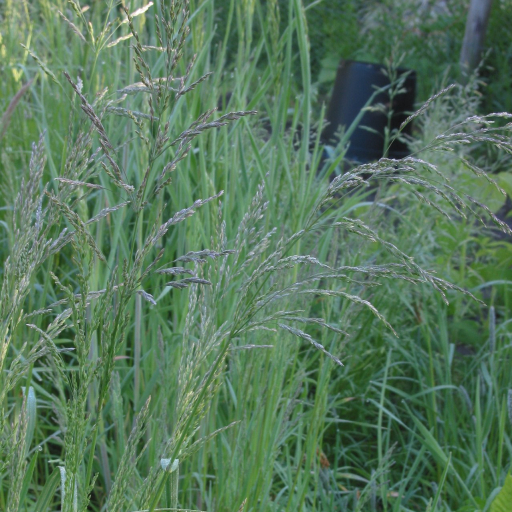
Plant Overview
Known as "Rough Bluegrass" or "Rough-stalked Meadow-grass," this cool-season grass is a master of the damp, shaded corners of the garden. While it is a relative of the prized Kentucky Bluegrass, it behaves more like a rebellious cousin, creeping along the ground to form dense, apple-green carpets. In the turf world, it is often viewed as a "beautiful weed" because of its ability to thrive exactly where traditional lawn grasses fail.
🔍 How to Identify
- 🛶 Boat-Shaped Tips: Like all members of the Poa genus, the leaf tips are curved upwards, resembling the prow of a tiny green canoe.
- ✨ Glossy Undersides: If you flip a leaf blade over, the underside has a distinct, light-reflecting sheen that looks almost metallic in the sunlight.
- 🖐️ Rough Texture: Its name comes from the "scabrous" (rough) feel of the lower leaf sheaths; if you rub the stem downward, it feels like fine sandpaper.
- 🏙️ The Ligule: Where the leaf meets the stem, there is a prominent, pointed white membrane (ligule) that is much longer than those found on other common grasses.
🏡 In Your Garden
- ☁️ The Shade Specialist: This grass is the ultimate solution for "problem areas" under dense tree canopies or on the north side of buildings where the sun rarely reaches.
- 💧 Moisture Lover: It thrives in boggy or poorly drained soil. If you have a spot in your yard that stays perpetually squishy, Poa trivialis will likely claim it as its own.
- ☀️ Summer Dormancy: Because it has very shallow roots, it hates the heat. During a hot, dry summer, it may turn brown and appear dead, only to "wake up" and turn vibrant green again as soon as the autumn rains arrive.
⚠️ Safety & Toxicity
- ✅ Safe for All: This grass is non-toxic and is frequently used as forage for livestock. It poses no threat to curious dogs, cats, or children.
- 🤧 Pollen Potential: Like most grasses, it produces fine wind-borne pollen during its late spring flowering stage, which can trigger hay fever for those with seasonal allergies.
✨ Fun Fact
In the 1800s, Poa trivialis was considered one of the most valuable grasses in Europe for high-quality hay production, specifically because it stays lush and green in the cool, misty climates of the British Isles.

Detailed Care Instructions
To grow Poa Trivialis, also known as rough bluegrass, follow these steps:
- Choose the right location: Poa Trivialis prefers cool, shady areas with well-drained soil. If possible, choose an area with partial shade or where direct sunlight is limited.
- Prepare the soil: The soil should be loose, well-draining, and slightly acidic. Remove any weeds, rocks, or debris from the planting area. You can also add organic matter, such as compost, to improve soil fertility and drainage.
- Sow seeds or lay sod: Poa Trivialis can be grown from seeds or by laying sod. If using seeds, broadcast them evenly over the prepared soil, and lightly rake them in. If using sod, simply unroll the pieces of sod onto the soil and press them down firmly.
- Water regularly: After sowing seeds or laying sod, water the area thoroughly to help the seeds germinate or establish the sod. Keep the soil consistently moist, but avoid overwatering as it can lead to disease or root rot.
- Fertilize appropriately: Apply a slow-release fertilizer specifically formulated for cool-season grasses in early spring and late summer. Follow the manufacturer's instructions for the appropriate amount to apply based on the size of your lawn.
- Mow at the right height: Maintain proper mowing height for Poa Trivialis, which is around 2-2.5 inches (5-6 cm). Avoid cutting the grass too short as it can stress the plant and make it more prone to disease or weed invasion.
- Control weeds: Regularly inspect your lawn and manually remove any weeds that appear. You can also use herbicides labeled safe for use on Poa Trivialis to control persistent weeds.
- Aerate the soil: Poa Trivialis benefits from periodic aeration to alleviate soil compaction and promote root development. Use a core aerator to remove small plugs of soil from the lawn, allowing air, water, and nutrients to penetrate the root zone.
- Overseed in fall: Rough bluegrass tends to thin out during hot summer months. To keep a dense and healthy lawn, overseed Poa Trivialis in the fall. Lightly rake the soil, sow the seeds, and water well. The cooler temperatures and increased moisture in the fall promote better seed establishment.
- Practice proper lawn care: Regularly remove any dead or decaying grass, and rake up fallen leaves to prevent suffocation and disease. Avoid heavy foot traffic when the grass is wet or frozen, as it can damage the plant.
With proper care and maintenance, your Poa Trivialis lawn should thrive and provide you with a beautiful, lush groundcover.

Place in a window with dappled sun or a spot in the middle of a room. Or directly in a window facing west or east.

To water this plant, it is important to not let the soil become completely dry, but also avoid consistently wet or waterlogged soil. When the top inch of soil feels slightly dry to the touch, it is time to water. Water deeply, making sure the water penetrates the root zone. It is best to avoid overhead watering as this can lead to fungal diseases. Instead, water at the base of the plant. In hot or dry weather, the plant may require more frequent watering. Additionally, it is important to make sure the plant has good drainage to prevent water from sitting and causing root rot.
To ensure optimal growth and health of this plant, apply a balanced fertilizer every six to eight weeks during the growing season. Use a fertilizer with a ratio of 3-1-2 or similar, and apply at a rate of one pound per 100 square feet of soil surface area. Be sure to water thoroughly after fertilizing to help distribute the nutrients evenly throughout the root zone. Avoid over-fertilization, as this can lead to excessive growth and turf damage. Monitor plant growth and adjust fertilizer application rates as needed to maintain a healthy balance of nutrients and growth.
The ideal soil for the plant in question is one that is well-draining and rich in nutrients. It should have a pH level of around 6.0 to 7.0 and be able to retain moisture without becoming waterlogged. A soil that is too heavy with clay may cause the roots to rot, while soil that is too sandy may dry out too quickly. Adding organic matter such as compost or peat moss can help with soil texture and nutrient content. It is also important to avoid using soil that has been treated with herbicides or other chemicals that may harm the plant.
To propagate this plant, start by collecting its seeds when they are mature and dry. Sow the seeds in well-draining soil in a location that receives partial sunlight. Water the soil regularly, but make sure not to overwater it.
Another way to propagate this plant is through division. Dig up an established plant and carefully separate the clumps of roots and rhizomes. Replant the divided clumps in a new location and water them regularly.
It is also possible to propagate this plant through stem cuttings. Cut a healthy stem from the plant and remove the lower leaves. Dip the cut end in rooting hormone and plant it in moist soil. Keep the soil moist and in a bright, indirect light until the cutting has rooted.








