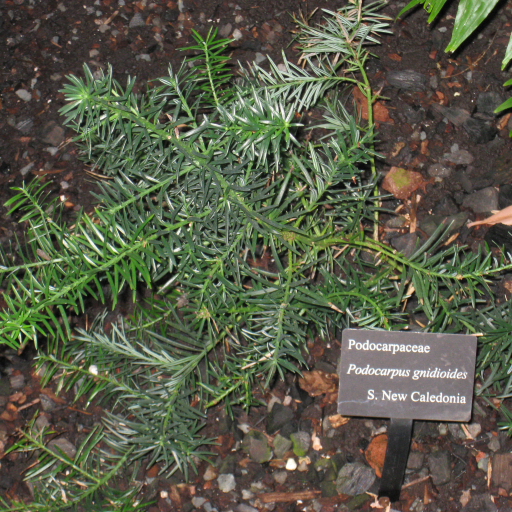
Plant Overview
Podocarpus gnidioides, often called the "Heath-leaf Podocarpus," is a rare and striking conifer native to the ancient, mineral-rich soils of New Caledonia. Unlike its towering cousins in the pine family, this plant masquerades as a delicate Mediterranean shrub, closely resembling Rosemary or Heath. It is a living relic of the supercontinent Gondwana, bringing a sense of prehistoric mystery to any specialized plant collection.
🔍 How to Identify
- 🌿 Needle-like Foliage: The leaves are very small, stiff, and densely packed along the stems. They look more like the "needles" of a heath plant than a typical broad-leafed shrub.
- 🪴 Compact Growth: It naturally forms a low, mounded, or spreading shrub shape. It rarely grows into a tall tree, making it a favorite for "living sculptures" or bonsai.
- 🫐 Modified Cones: Instead of woody pinecones, it produces small, fleshy, berry-like structures (receptacles) that turn a deep reddish-purple when mature, attracting birds in its native habitat.
🏡 In Your Garden
- 🪨 Mineral Specialist: In the wild, this plant thrives in ultramafic soils—ground that is unusually high in heavy metals. In your garden, it demands exceptional drainage and prefers slightly acidic, rocky soil over heavy potting mix.
- ⏳ Patience Required: This is a slow-growing species. Because it takes its time to establish, it doesn't need frequent pruning, but it does hate being moved. Choose its "forever home" carefully to avoid transplant shock to its sensitive roots.
⚠️ Safety & Toxicity
- 🐾 Mildly Toxic: While not considered deadly, most Podocarpus species contain podocarpic acid. Ingesting the leaves or the fleshy "berries" can cause nausea, vomiting, or diarrhea in both humans and pets.
- 🧤 Skin Sensitivity: Some gardeners report mild skin irritation when pruning the foliage. It is always a good idea to wear gloves if you have sensitive skin.
✨ Fun Fact
This plant is a true "heavy metal" fan! In its native New Caledonia, it has evolved to thrive in soil so rich in nickel and magnesium that it would be toxic to almost any other plant on Earth.

Detailed Care Instructions
Podocarpus gnidioides, also known as yellowwood, is a slow-growing evergreen tree or shrub that can be grown in well-drained soil in full sun to partial shade. Here are some tips on how to grow Podocarpus gnidioides successfully:
- Soil: Podocarpus gnidioides prefers well-drained, fertile soil. Make sure the soil is not too compacted, as this can lead to poor drainage and root rot.
- Light: Plant your Podocarpus gnidioides in a location that receives full sun to partial shade. Avoid planting them in deep shade, as this can lead to leggy growth and reduced flowering.
- Watering: Water your Podocarpus gnidioides regularly, especially during hot, dry periods. Avoid overwatering, as this can lead to root rot. Keep the soil consistently moist but not waterlogged.
- Pruning: Prune your Podocarpus gnidioides to maintain its shape and size. Remove any dead or diseased branches, as well as any crossing or crowded branches. Pruning can also help promote healthy growth and flowering.
- Fertilizing: Feed your Podocarpus gnidioides with a balanced liquid fertilizer every spring and summer to promote healthy growth and flowering. Follow the instructions on the fertilizer label for the best results.
- Mulching: Apply a layer of organic mulch, such as pine straw or shredded bark, around the base of your Podocarpus gnidioides to help retain moisture, suppress weeds, and improve soil health.
- Propagation: Podocarpus gnidioides can be propagated from seeds or cuttings. Seeds can be sown in a well-drained potting mix, while cuttings can be taken from healthy, mature branches and rooted in a rooting hormone before planting.
By following these tips, you can successfully grow Podocarpus gnidioides and enjoy its attractive foliage and bright yellow flowers.
Podocarpus Gnidioides plants require regular watering to thrive, but it is important not to overwater them. One way to water these plants is to check the soil moisture level before watering. Stick your finger into the soil about an inch deep to see if it feels dry or moist.
When watering, use room-temperature water and aim to water the soil directly at the base of the plant, avoiding getting water on the foliage. Allow the water to fully soak the soil, but be sure not to let the plant sit in standing water.
During the growing season, typically spring and summer, water more frequently, keeping the soil consistently moist but not waterlogged. In the winter months, reduce watering to allow the soil to partially dry out between waterings.
It is also a good idea to provide some humidity for Podocarpus Gnidioides plants by misting the foliage occasionally or placing a humidity tray nearby. This can help prevent the plant from drying out in indoor environments.
When fertilizing the plant, use a balanced, slow-release fertilizer specifically formulated for evergreen plants. Apply the fertilizer in the early spring before new growth appears. Follow the manufacturer's instructions for the correct dosage and application method. Water the plant thoroughly after fertilizing to help the nutrients penetrate the soil and reach the roots. Avoid over-fertilizing, as this can lead to nutrient imbalance and damage to the plant.
Podocarpus gnidioides plants thrive best in well-drained, acidic soil with a pH level between 5.0 and 6.5. It is important to choose a soil that is rich in organic matter to provide essential nutrients for the plant's growth and development. A mix of peat moss, pine bark, and perlite or sand can create the ideal growing medium for Podocarpus gnidioides. This combination promotes good drainage while retaining moisture, which is crucial for the plant's overall health. Avoid using heavy clay soil or overly compacted soil, as this can lead to waterlogged conditions and root rot. Regularly amending the soil with organic matter and fertilizing as needed will help to ensure the Podocarpus gnidioides plant thrives in its environment.
Podocarpus gnidioides can be propagated through several methods such as taking softwood cuttings or seeds.
To propagate through softwood cuttings, choose a healthy stem from the plant and cut it at a 45-degree angle just below a node. Remove any leaves from the bottom half of the cutting and dip the cut end in rooting hormone. Plant the cutting in a well-draining and moist soil mix and place it in a warm and humid environment. Keep the soil consistently moist and monitor the cutting for root development.
Alternatively, Podocarpus gnidioides can also be propagated from seeds. Collect ripe seeds from the plant and sow them in a seed-starting mix in a warm and well-lit area. Keep the soil moist but not waterlogged and monitor the seeds for germination. Transplant the seedlings into individual pots once they have developed a few sets of true leaves.
Propagation of Podocarpus gnidioides may take some time and patience, but with the right conditions and care, you can successfully propagate this plant and expand your garden collection.








