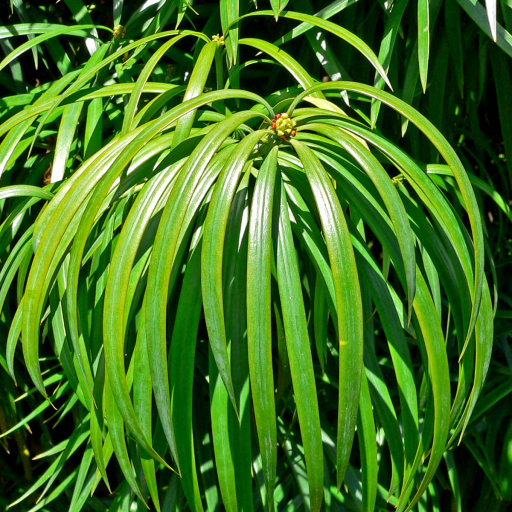
Plant Overview
Often called the Henkel's Yellowwood or the "Drooping Yellowwood," this South African native is the ballerina of the conifer world. With its long, slender leaves that cascade downward like a green waterfall, it brings a sense of ancient, primeval elegance to any landscape. It is a slow-growing legacy plant that transforms from a neat, bushy container shrub into a majestic, towering specimen over several decades.
🔍 How to Identify
- 🍃 The Foliage: The leaves are remarkably long (up to 7 inches) and narrow, sporting a deep, glossy emerald green color that stays vibrant and lush throughout the year.
- 💧 The "Weeping" Habit: Unlike other upright conifers, the branchlets and leaves of this species hang gracefully downward, giving the entire tree a soft, pendulous silhouette.
- 🪵 The Bark: In its youth, the bark is smooth and greyish-khaki, but as the tree reaches maturity, the trunk becomes dark grey and begins to peel in long, vertical strips.
🏡 In Your Garden
- 🏞️ Patience is a Virtue: Because this tree grows slowly and maintains a neat shape, it is an excellent choice for large ornamental containers on a patio for many years before needing to be moved to the ground.
- 🌊 Thirsty Roots: Originating from moist mountain forests, it doesn't handle drought as well as its cousins. It craves consistent moisture and deep, rich soil to prevent the leaf tips from browning.
- 🛡️ The Ultimate Screen: Its dense, evergreen growth habit makes it an elite choice for a high-end privacy screen or windbreak, providing a much more sophisticated "wall of green" than standard hedging plants.
⚠️ Safety & Toxicity
- 🚫 Mildly Toxic: While the tree is physically soft to the touch, the seeds (enclosed in fleshy receptacles) and leaves contain diterpenes that are toxic if ingested.
- 🐾 Pets & Children: Keep an eye on curious dogs and toddlers. Eating the fallen "berries" or leaves can cause digestive upset, including vomiting, diarrhea, and lethargy.
✨ Fun Fact
🦕 A Living Relic: The Podocarpus genus is incredibly ancient, dating back to the supercontinent of Gondwana. This tree's direct ancestors were likely being grazed upon by herbivorous dinosaurs millions of years before the first flowering plants ever evolved!

Detailed Care Instructions
| Soil Ph | Acidic, Neutral |
| Toxicity | Toxic |
| Soil Type | Loamy, Sandy, Moist But Well-Drained |
| Bloom Time | No Blooms |
| Plant Type | Evergreen Conifer |
| Mature Size | 25 To 35 Feet In Height |
| Sun Exposure | Full Sun To Partial Shade |
| Hardiness Zones | 8-11 |
To grow Podocarpus Henkelii plants, follow these steps:
- Choose a suitable location: Podocarpus Henkelii plants prefer bright but indirect sunlight. Select a spot in your garden or indoor space that has good light conditions, away from direct sunlight or extreme temperatures. The plant can also tolerate light shade.
- Soil preparation: Prepare a well-draining soil mix for your plant. Use a combination of perlite, sand, and regular potting soil to create a loose and well-draining mixture. Ensure that the soil remains slightly acidic with a pH level of around 5.5 to 6.5.
- Planting: If growing from seeds, sow them in your prepared soil mix, barely covering them with soil, as these seeds need light to germinate. Keep the soil consistently moist (but not waterlogged) until seedlings emerge. If growing from an established plant, dig a hole slightly larger than the root ball and place the plant in the hole. Backfill with soil and gently tamp it down to secure the plant.
- Watering: Regular and consistent watering is important for Podocarpus Henkelii plants. Water the plant deeply and allow the soil to dry out slightly between watering sessions. Avoid over-watering, as this can lead to root rot.
- Fertilization: Feed your Podocarpus Henkelii plant with a balanced, slow-release fertilizer during the growing season (spring and summer). Follow the instructions on the fertilizer package for the right dosage. Avoid fertilizing during winter or dormancy periods.
- Pruning: Prune your Podocarpus Henkelii plant to maintain its desired shape and size. Generally, pruning is done in late winter or early spring before new growth starts. Remove any dead or diseased branches and shape the plant as desired.
- Mulching: Apply a layer of organic mulch around the base of the plant to conserve moisture, suppress weed growth, and provide some insulation. Avoid piling the mulch against the trunk of the plant, as it can cause rot.
- Winter care: If you live in an area with frost or freezing temperatures, protect your Podocarpus Henkelii plant by covering it with a frost blanket or bringing it indoors during winter. Ensure the plant is placed in a cool but well-lit area.
- Monitoring for pests and diseases: Keep an eye out for common pests like scale insects and aphids. Treat any infestations with appropriate organic or chemical insecticides. Monitor for signs of diseases such as root rot or fungal infections, and take necessary actions to address them promptly.
By following these steps, you should be able to successfully grow a Podocarpus Henkelii plant.

Place in a bright room that is sun drenched almost all day. Or directly in a south-facing window.

To water this plant, you should ensure that the soil is moist but not waterlogged. You can accomplish this by watering the plant deeply once a week, but be sure to let the soil dry out slightly before watering again. It's important not to let the soil completely dry out, as this can be damaging to the plant. Additionally, make sure the plant is getting adequate drainage, as it can be susceptible to root rot if the soil stays too wet for too long.
To fertilize the plant, apply a balanced fertilizer with equal amounts of nitrogen, phosphorus, and potassium. Mix the fertilizer with water according to the package instructions and water the soil around the base of the plant. Avoid getting fertilizer on the leaves or stem, as it could cause damage. Fertilize once every two to three months during the growing season, and reduce the frequency during winter. Over-fertilization can lead to leaf burn or root damage, so it's important to follow the instructions carefully.
Podocarpus Henkelii plants thrive in well-draining soil that is not too acidic or basic. The soil needs to be rich in nutrients, but not too dense or compacted. A mixture of sand, loam, and compost can create the ideal soil composition for Podocarpus Henkelii plants. The soil should also be slightly moist, but not waterlogged, as excess water can lead to root rot and other problems. It is important to monitor the soil moisture regularly and adjust watering accordingly. When planting the Podocarpus Henkelii, it is essential to ensure that the soil is properly prepared and that there is adequate drainage to prevent water buildup around the roots.
To propagate this plant, you can take stem cuttings of about 4-6 inches long. Make sure to choose a healthy stem with leaves. Remove the bottom set of leaves and dip the cut end in rooting hormone. Plant the cutting in a pot with well-draining soil and keep it moist by covering it with a plastic bag or dome. Place the pot in a shaded area and wait for the roots to develop. Once the roots have established, you can transplant the new plant into a larger pot or directly into the ground.








