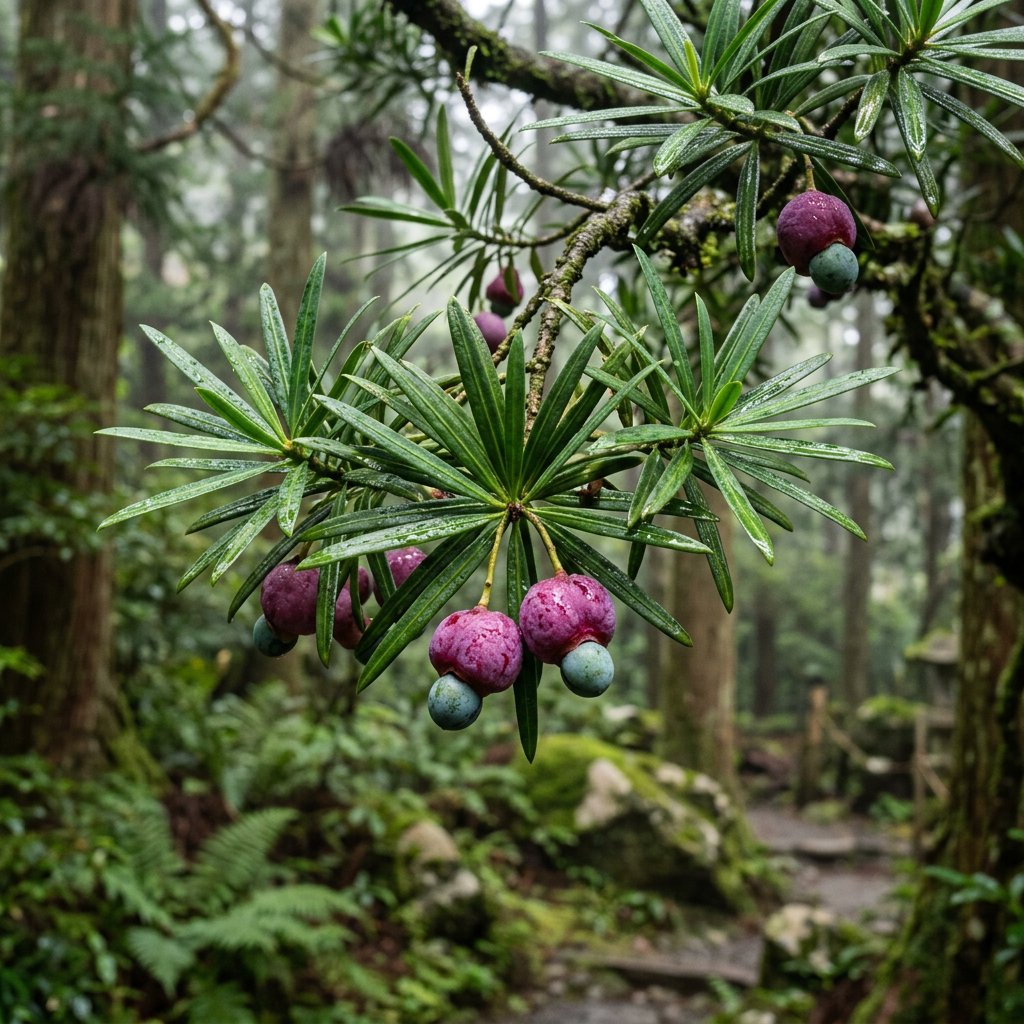
Plant Overview
Often called the Buddhist Pine or Yew Plum Pine, this elegant evergreen is a staple in Zen gardens and coastal landscapes alike. Despite its common names, it isn't a true pine, but a member of an ancient lineage of conifers that dates back to the age of dinosaurs. Its stately, upright growth and resilience make it a favorite for both indoor bonsai enthusiasts and seaside gardeners seeking a touch of permanent greenery.
🔍 How to Identify
- 🍃 Foliage: Unlike typical pine needles, the leaves are flat, leathery, and strap-shaped, resembling narrow ribbons of deep, glossy green.
- 🎋 Growth Habit: It naturally grows in a narrow, columnar shape, though it is highly adaptable and can be pruned into hedges, globes, or elaborate "cloud" shapes.
- 🫐 Seed Cones: Female plants produce unique, fleshy purple "cones" that look like small berries sitting atop a red or green base, appearing in late summer or autumn.
🏡 In Your Garden
- 🏯 Design Utility: Because of its dense foliage and slow growth, it is the premier choice for privacy screens or formal topiary. It provides a structured, architectural feel that anchors a garden design.
- 💧 Drainage Nuance: While it is a tough, salt-tolerant plant, it absolutely loathes "wet feet." It requires well-draining soil because its roots are particularly prone to rot if kept in standing water.
- 🛋️ Indoor Adaptability: It is one of the few conifers that can thrive as a houseplant. It prefers bright, indirect light and appreciates a boost in humidity, especially during dry winter months.
⚠️ Safety & Toxicity
- 🚫 Toxic Status: Most parts of the plant, especially the seeds within the fleshy fruit, are considered toxic.
- 🐾 Pets & Kids: Ingestion can cause significant gastrointestinal distress, including vomiting and diarrhea, in dogs, cats, and humans. It is best placed where curious pets and toddlers cannot reach the attractive "berries."
✨ Fun Fact
💰 In many Asian cultures, the Podocarpus is considered a "wealth-attracting" tree. In Feng Shui, it is believed that planting a Buddhist Pine in the garden brings good luck, health, and financial prosperity to the household, which is why older, well-shaped specimens often command very high prices.

Detailed Care Instructions
| Humidity | Normal |
| Lighting | Part Sun |
| Soil Type | Loose, Very Well-Drained, Rich Potting Mix |
| Difficulty | Medium |
| Temperature | 15°C - 24°C |
| Hardiness Zones | Min 7A |
To grow Podocarpus Macrophyllus, also known as the Japanese Yew, you can follow these steps:
- Choose a suitable location: Select a spot that receives partial to full shade. These plants prefer well-drained soil and can tolerate a wide range of pH levels.
- Prepare the soil: Dig a hole that is roughly the same depth and width as the plant's root ball. Mix some organic matter, like compost or peat moss, into the soil to improve its fertility and drainage.
- Plant the Podocarpus: Gently remove the plant from its nursery container and loosen the root ball. Place it in the prepared hole, ensuring that the top of the root ball is level with the soil surface. Backfill the hole with soil, pressing it firmly around the base of the plant.
- Water regularly: Podocarpus Macrophyllus plants require consistent moisture to establish themselves. Water the plant thoroughly after planting and continue to water it regularly, keeping the soil moist, but not waterlogged. Mulching around the base of the plant can help retain moisture.
- Prune as needed: Regular pruning helps maintain the desired shape of the plant and encourages denser growth. Prune Podocarpus Macrophyllus in early spring before new growth appears.
- Fertilize sparingly: These plants don't usually require frequent fertilization. However, if the soil is nutrient-poor, you can apply a balanced, slow-release fertilizer in early spring.
- Protect from extreme cold: In areas with cold winters, young Podocarpus Macrophyllus plants might need protection from frost and freezing temperatures during their first few years. You can cover them with burlap or use a frost cloth to shield them.
- Monitor for pests and diseases: Although these plants are generally pest-resistant, occasional issues with scale insects, aphids, or powdery mildew may occur. Inspect the plant regularly and take appropriate action if infestations or infections are observed.
Remember to research your specific growing zone and conditions to ensure the best care for your Podocarpus Macrophyllus plant.

Place in a window with dappled sun or a spot in the middle of a room. Or directly in a window facing west or east.

To ensure optimal growth and health, it is recommended to water the plant thoroughly but infrequently. The frequency of watering will depend on several factors, including the size of the container or the plant, the surrounding temperature and humidity, and the soil type.
The soil should be allowed to dry out slightly between watering to prevent root rot. It is essential to water the plant at the base to minimize the risk of splashing water on the foliage, which can lead to disease development.
When watering, pour enough water to ensure that it penetrates the soil fully to the root zone. This is especially important during the growing season. During the winter months, the plant may need less frequent watering as growth slows down.
It is important to note that overwatering can be detrimental to the health of the plant, leading to root rot, and could eventually cause the plant to die. Therefore, monitoring soil moisture is crucial to maintain a balance in watering.
- Choose a fertilizer specifically formulated for evergreen plants.
- Dilute the fertilizer according to the package instructions.
- Apply the fertilizer evenly around the base of the plant.
- Water the plant thoroughly after applying the fertilizer.
- Fertilize the plant every 4 to 6 weeks during the growing season (spring and summer).
- Reduce fertilization during the fall and winter months when the plant is dormant.
For the best results when planting this particular species of plant, it is important to use a specific type of soil that is rich in nutrients. The soil should be well-draining to prevent water from sitting at the roots, which can lead to root rot. A mixture of sand, compost, and a good quality potting soil is recommended, although other amendments such as perlite or vermiculite may also be added. It is important to avoid using soil that contains high levels of salts, as this can be harmful to the plant and may cause yellowing of the leaves. Overall, the soil used for this plant should be nutrient-rich, well-draining, and free from harmful salts.
To propagate this plant, start by taking stem cuttings in the spring or early summer. Use a clean, sharp pair of pruning shears to cut a stem that is about 6 inches long and has several leaves attached. Remove the bottom set of leaves, leaving only 2-3 sets of leaves on the stem. Dip the cut end of the stem into rooting hormone powder to promote root growth.
Fill a 4-inch pot with a well-draining potting mix and create a hole in the center for the stem cutting. Insert the stem cutting into the hole and gently press the soil around it to hold it in place. Moisten the soil with water, but avoid overwatering.
To encourage rooting, place the pot in a warm, bright location but out of direct sunlight. Mist the cutting with water regularly to keep it hydrated and cover it with a clear plastic bag to create a mini greenhouse. This will help to maintain humidity and prevent the cutting from drying out.
Check the soil frequently to make sure it stays moist, but not soggy. After about 6-8 weeks, gently tug on the stem cutting to test for root growth. If there is resistance, you can transplant the new plant into a larger pot or outdoors in a suitable location.
Common pests of the yew plum pine include Mealybugs, spider mites, aphids. Make a habit of checking your yew plum pine frequently for pests so that any infestations can be caught and managed early.








