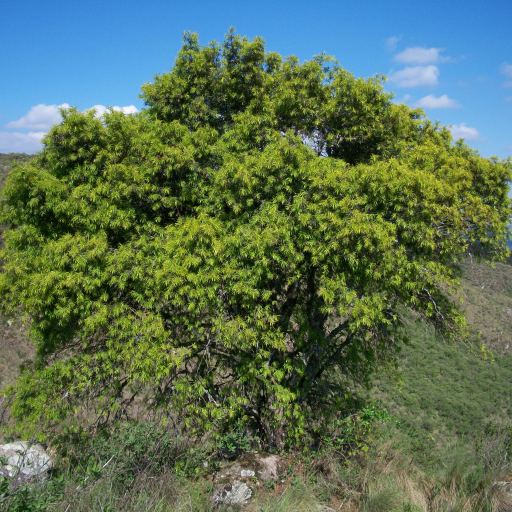
Plant Overview
Known as the Pino del Cerro or Parlatore's Podocarp, this South American evergreen is a majestic survivor from the ancient cloud forests of the Andes. Unlike traditional pines that carry woody cones, this "yellow-wood" conifer produces striking, fleshy structures that look more like berries than cones. It is a slow-growing symbol of resilience, often found clinging to misty mountain slopes in Argentina and Bolivia.
🔍 How to Identify
- 🍃 Leaf Shape: Features flat, narrow, lance-shaped needles that are a deep, glossy green. They are much softer to the touch than the sharp needles of a Spruce or True Pine.
- 🌲 Growth Habit: In its youth, it maintains a neat, pyramidal shape, but as it matures over decades, it develops a massive, spreading crown with thick, fissured bark.
- 🍒 The "Fruit": It produces a distinctive red or deep purple fleshy base (called an aril) that holds a single green seed. This unique look is a hallmark of the Podocarpus family.
🏡 In Your Garden
- ☁️ Atmospheric Needs: This tree is a "mist lover." While it is hardy, it thrives best in environments with high humidity or consistent rainfall, mimicking its native cloud forest habitat.
- 🌱 Patience Required: Because it is exceptionally slow-growing, it is a popular choice for high-end bonsai or as a "legacy tree" that will provide shade for future generations. It develops a deep taproot, so choose its permanent spot wisely; it dislikes being moved once established.
⚠️ Safety & Toxicity
- 🐾 Mildly Toxic: While the fleshy red part of the "fruit" is often eaten by birds in the wild, the seeds and foliage contain diterpenes.
- 👶 Precaution: It is best to keep this plant away from curious pets and small children. Ingestion of the seeds can cause nausea, vomiting, or digestive upset. The sap may also cause mild skin irritation for those with sensitive skin.
✨ Fun Fact
The Podocarpus parlatorei is a "living fossil" that acts as a primary skyscraper for the rare Tucumán Amazon parrot. The birds rely almost exclusively on these trees for nesting and food, making the conservation of this tree vital for the parrot's survival!

Detailed Care Instructions
Here are some tips for growing Podocarpus Parlatorei plant:
- Location: Podocarpus Parlatorei prefers to grow in a well-draining soil and a location that provides partial to full sun. Select a spot in your garden that receives at least 4-6 hours of sunlight per day.
- Soil: The plant prefers slightly acidic to neutral soil with good drainage. Amend the soil with organic matter like compost or peat moss to improve its structure.
- Watering: Keep the soil consistently moist but not waterlogged. Water the plant deeply once or twice a week during the growing season, and reduce watering in winter months.
- Fertilizing: Feed the plant with a balanced fertilizer in spring and summer to promote healthy growth. Avoid over-fertilizing as it can lead to nutrient burn.
- Pruning: Trim the plant regularly to maintain its shape and size. Pruning also helps to promote new growth and keep the plant healthy.
- Propagation: Podocarpus Parlatorei can be propagated from seeds or cuttings. Take softwood cuttings in spring or early summer and plant them in a well-draining potting mix.
- Pests and diseases: Keep an eye out for common pests like aphids, scale insects, and spider mites. Treat any infestations promptly with insecticidal soap or neem oil.
With proper care and attention, Podocarpus Parlatorei can thrive and add beauty to your garden.
Podocarpus Parlatorei plants should be watered thoroughly, allowing the water to soak through the soil and reach the roots. It is important to water consistently but not excessively, as these plants prefer slightly moist soil. It is recommended to check the moisture level of the soil before watering, as overwatering can lead to root rot. Watering frequency may vary depending on the temperature and humidity levels in the plant's environment. It is also important to avoid watering the foliage, as wet leaves can lead to disease and pest issues. Additionally, using room temperature water is ideal for watering these plants.
To fertilize the Podocarpus Parlatorei plant, apply a balanced fertilizer with equal parts nitrogen, phosphorus, and potassium in early spring. Use a slow-release fertilizer to prevent nutrient runoff. Follow the manufacturer's instructions for the proper application rate. Water the plant thoroughly after fertilizing to help the nutrients penetrate the soil and reach the roots. Avoid over-fertilizing, as this can harm the plant. Repeat the fertilization process once or twice a year to promote healthy growth and development.
Podocarpus Parlatorei plants thrive in well-draining soil that is rich in organic matter. A good soil mix for these plants would consist of a combination of peat moss, pine bark, perlite, and sand. This will provide the proper balance of nutrients, aeration, and drainage that the plant needs to grow and develop successfully. Avoid using heavy clay soils or those that retain too much moisture, as this can lead to root rot and other issues. It is also important to regularly monitor the soil moisture levels and adjust watering accordingly to prevent waterlogging.
Podocarpus Parlatorei can be propagated through both seeds and cuttings.
To propagate through seeds, you can collect ripe seeds from the plant and sow them in a well-draining potting mix. Keep the soil consistently moist and provide indirect sunlight. The seeds should germinate in a few weeks to a few months.
To propagate through cuttings, take 4-6 inch cuttings from the plant, making sure to include at least one node. Remove the lower leaves and dip the cut end in rooting hormone. Insert the cutting into a well-draining soil mix and keep it moist. Place the cutting in a warm, humid environment with indirect sunlight. The cutting should root in a few weeks to a few months.
Regardless of the method you choose, it's important to keep the soil moist but not waterlogged, and provide the right amount of sunlight for successful propagation.








