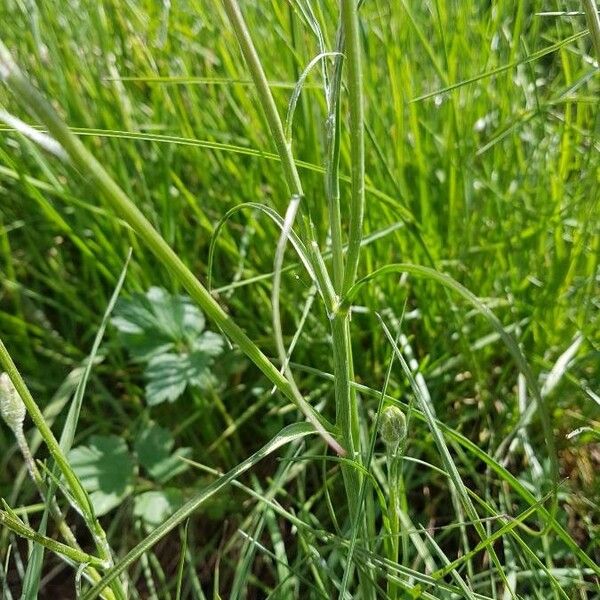
Plant Overview
Often called the Purple Viper’s-grass, Podospermum purpureum is a hidden gem of the Eurasian grasslands. Its delicate, lilac-hued blooms might look fragile, but this plant is a rugged perennial built for sun-drenched meadows and dry, rocky slopes. In historical folklore, its close relatives were rumored to be an antidote for snakebites, earning it a reputation as a "viper's healer" in traditional herbals.
🔍 How to Identify
- 🌸 Lilac Sunbursts: The flower heads are composed entirely of ray florets (the strap-shaped "petals"). They range from pale pink to deep lilac and often emit a faint, honey-like fragrance.
- 🌿 Grassy Foliage: True to its common name, the leaves are long, slender, and grass-like. They mostly sprout from the base, giving the plant a tufted, elegant appearance.
- 🦷 Toothed Petals: If you look closely at the ends of the purple florets, you’ll see five tiny teeth at the tips—a classic structural hallmark of this botanical family.
🏡 In Your Garden
- ☀️ Sun Seeker: This plant is an "extreme heliophile," meaning it craves direct sunlight. It will rarely bloom or thrive if tucked away in the shade of a larger shrub or a fence.
- 🌱 Taproot Resilience: It possesses a thick, sturdy taproot that allows it to survive long periods of drought. Because of this deep root, it hates being transplanted; once you find a sunny spot for it, try not to move it.
- 🦋 Meadow Ecology: It is a wonderful addition to a wild-flower garden or a "no-mow" zone, as it provides essential nectar for native bees and butterflies during the mid-summer heat.
⚠️ Safety & Toxicity
- ✅ Generally Safe: There are no known major toxicities associated with Podospermum purpureum for humans or common household pets.
- 🧴 Latex Sap: Like many of its cousins in the dandelion family, the stems contain a milky white sap (latex). While not poisonous, this sap can be sticky and may cause mild skin irritation for individuals with extreme sensitivities or plant-related allergies.
✨ Fun Fact
- 🦶 The name Podospermum comes from the Greek words pous (foot) and sperma (seed). This refers to the curious, thickened "stalk" at the base of the seeds that makes them look like they are standing on a tiny foot!

Detailed Care Instructions

Place in a bright room that is sun drenched almost all day. Or directly in a south-facing window.

To water this plant, first check the soil moisture by inserting your finger about one inch into the soil. If it feels dry, it is time to water. Use a watering can or hose with a gentle stream to water the soil around the base of the plant, avoiding getting the leaves wet. Water until the soil is evenly moist but not soaking. Allow the soil to dry out slightly between waterings, but do not let it become completely dry. Adjust the watering schedule according to the plant's needs, which may vary depending on factors like temperature, humidity, and sunlight.
The Podospermum Purpureum plant grows best in a well-draining soil that is fertile and has a neutral to alkaline pH level. It is recommended to use a mixture of loamy soil and sand, with added perlite to improve drainage. Organic matter, such as compost or worm castings, can also be added to improve soil structure and nutrient availability. It is important to avoid using heavy, clay soils or those with a high acidic content. The soil should be kept moist but not waterlogged, and the plant should be fertilized regularly to encourage healthy growth.








