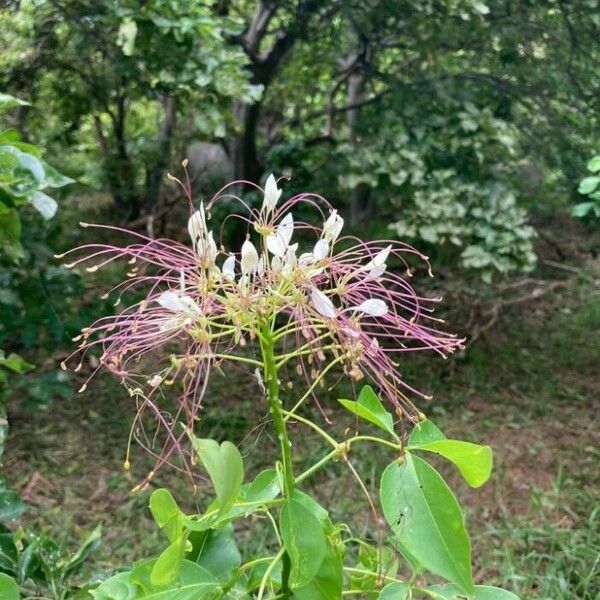
Plant Overview
Known as the Mexican Clammyweed, this striking wildflower is a tall, architectural beauty native to the arid landscapes of the Southwestern United States and Mexico. It earns its peculiar common name from the sticky, glandular hairs that coat its stems and leaves, giving the plant a "clammy" or tacky feel to the touch. Often mistaken for its cousin, the Spider Flower, it brings a wild, airy elegance to sun-drenched gardens.
🔍 How to Identify
- 🌸 The Blooms: Large, four-petaled flowers that transition from white to a soft pinkish-purple, featuring dramatically long, upright stamens that extend far beyond the petals.
- 🌿 The Foliage: Leaves are palmately compound, typically divided into three narrow leaflets that resemble a bird's foot.
- Sticky The Texture: The entire plant is covered in fine, resinous hairs that feel moist or sticky, which helps the plant retain moisture and deter crawling insects.
🏡 In Your Garden
- ☀️ Sun & Soil: This is a true sun-worshipper that thrives in sandy, gravelly, or well-draining soils where other plants might wither. It is exceptionally drought-tolerant once established.
- 🦋 Pollinator Magnet: Because of its long, protruding reproductive parts, it is a favorite for hawk moths and specialized bees that are attracted to its nectar in the late afternoon and evening.
⚠️ Safety & Toxicity
- ✋ Status: Generally non-toxic but can be a physical irritant.
- 🐾 Details: There are no widespread reports of high toxicity to pets or humans; however, the "clammy" resinous sap can cause mild skin irritation or dermatitis in sensitive individuals. The sticky texture is also naturally unpalatable to most foraging livestock and pets.
✨ Fun Fact
The "clammy" secretions of Polanisia uniglandulosa aren't just for show—they contain chemical compounds that act as a natural flypaper, trapping small insects that might otherwise try to eat the plant's developing seeds!

Detailed Care Instructions
Polanisia uniglandulosa, commonly known as Mexican erva-de-bugre or Mexican tea, is a perennial plant native to Central and South America. Here are a few steps to help you grow Polanisia uniglandulosa:
- Climate and soil: Polanisia uniglandulosa thrives in warm climates with well-drained soil. It prefers full sun exposure but can tolerate partial shade.
- Seed collection: Collect mature seeds from existing plants or purchase them from a reliable seed supplier. Make sure the seeds are fresh and viable.
- Germination: Scarify the seeds before planting to enhance germination. You can do this by lightly sanding the seeds or nicking them with a knife. Soaking the seeds in warm water overnight can also aid in germination.
- Planting: Plant the scarified seeds in pots or directly i

To water this plant, it is important to first determine its specific watering needs based on factors such as its growth stage, soil type, and environmental conditions. Generally, it is important to maintain consistent moisture levels in the soil without overwatering, which can lead to root rot or other issues. This can be achieved by using a well-draining soil, monitoring the soil moisture regularly, and adjusting watering frequency and amount as necessary. It may also be helpful to water the plant in the morning or evening to reduce evaporation and ensure that the water reaches the roots. Additionally, providing adequate drainage by using a pot with drainage holes or planting in a raised bed can help prevent waterlogging and promote healthy growth.
To fertilize this plant, it is best to use a well-balanced fertilizer with equal amounts of nitrogen, phosphorus, and potassium. Apply the fertilizer every two weeks during the growing season, which typically lasts from spring through summer. Be sure to follow the recommended dosage and apply it to the soil around the base of the plant, rather than directly on the leaves or stems. Additionally, it is important to keep the soil moist but not waterlogged, as excess moisture can lead to root rot.
Polanisia Uniglandulosa plant thrives well in soil that is fertile, rich in nutrients, and well-draining. It prefers soil that is slightly acidic with a pH level ranging from 6.0 to 6.5. The plant requires soil that can retain moisture and is not heavy or compacted. A mix of organic matter such as compost, peat moss, and aged manure can improve soil structure and fertility. It is advisable to avoid using soil that is sandy, dry, or clay-like, as it may impede the plant's growth and development. Regularly check the soil moisture level to determine when to water the plant. Adequate soil preparation is crucial to ensuring the proper growth and development of the Polanisia Uniglandulosa plant.
To propagate this plant, start by collecting seeds from mature plants. Once the seeds are collected, clean them by removing any debris or damaged seeds. Soak the seeds in warm water for 24 hours to soften the hard seed coat.
Prepare a seedling tray with well-draining soil mix. Fill the tray with soil and then press the seeds into the soil surface, making sure they are evenly spaced and not touching.
Cover the tray with a clear plastic dome or plastic wrap to create a humid environment. Place the tray in a warm and bright location, but avoid direct sunlight as it may damage the delicate seedlings.
Keep the soil moist but not waterlogged. Once the seedlings have grown large enough, carefully transplant them into individual pots filled with a well-draining soil mix. Continue to keep the soil moist and provide adequate light.
After a few months, the young plants should be strong enough to be planted in their permanent location outdoors. Choose a sunny location with well-draining soil and space the plants according to their mature size. Water the plants regularly during the growing season and provide adequate nutrients with regular fertilization.








