Plant Overview
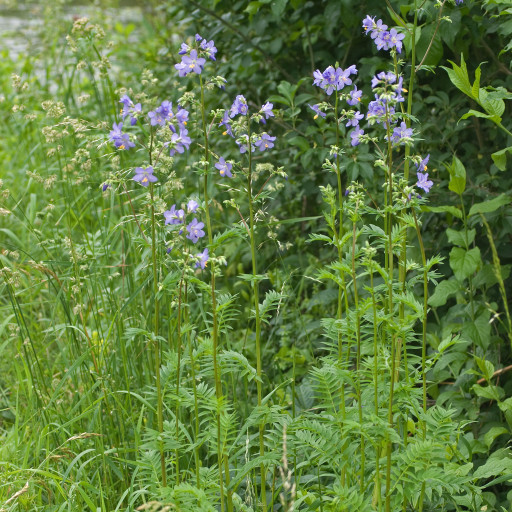
Known as "Jacob’s Ladder" or "Greek Valerian," this perennial is a darling of the traditional cottage garden. Its most famous nickname comes from its elegant, symmetrical foliage, which resembles the rungs of a ladder reaching toward the sky—a reference to the biblical dream of Jacob. With its clusters of cool, violet-blue bells, it adds a touch of serene, woodland magic to any shaded corner.
🔍 How to Identify
- 🌿 The "Ladder" Leaves: The most distinct feature is the pinnate foliage. Each leaf consists of many small, paired leaflets arranged horizontally along a central stem, perfectly mimicking a miniature ladder.
- 🔔 Cup-Shaped Blooms: In late spring to early summer, the plant sends up stalks topped with clusters of soft lavender, blue, or occasionally white flowers.
- 💛 Golden Centers: Look closely inside the blooms to find bright orange-yellow anthers that provide a striking contrast against the cool-toned petals.
🏡 In Your Garden
- 💧 The Moisture Balance: Jacob’s Ladder is a bit of a "Goldilocks" plant. It thrives in soil that stays consistently moist but will suffer from root rot if the ground is soggy or poorly drained.
- ⛅ Heat Sensitivity: While it loves a bright spot, it "melts" in intense afternoon sun. In warmer climates, it must be kept in partial to full shade to prevent the delicate fern-like leaves from scorching or turning crisp.
- ✂️ Post-Bloom Refresh: Once the flowers fade, cutting the stems back to the base can often encourage a second, smaller flush of growth and prevents the plant from looking "leggy" by mid-summer.
⚠️ Safety & Toxicity
- ✅ Status: Generally Non-Toxic.
- 🐾 Pet Note: While not considered poisonous to cats or dogs, some gardeners report that cats are strangely attracted to the scent of the roots (similar to catnip). This can lead to your pet digging up or rolling on your plants, so keep an eye on curious felines!
- 👶 Human Safety: It is considered safe for humans to handle and grow in areas where children play.
✨ Fun Fact
In the language of flowers, Jacob's Ladder has historically symbolized "come down" or "descend." Despite its heavenly name, it was once used in ancient herbalism for various ailments, though today it is strictly valued for its ethereal beauty.

Detailed Care Instructions
| Color | Mostly Blue And Purple; White, Pink, And Yellow Cultivars Also Available |
| Soil Ph | 6.2 To 7.0 |
| Lighting | Part Sun |
| Soil Type | Rich, Well-Drained |
| Bloom Time | Spring, Summer |
| Plant Type | Herbaceous Perennial Flower |
| Mature Size | 12 To 24 Inches Tall And 12 To 24 Inches Wide |
| Native Area | Northern Asia, Europe; Has Naturalized In Eastern North America |
| Sun Exposure | Part Shade To Full Shade |
| Hardiness Zones | 3 To 8, Usda |
To grow Polemonium caeruleum (Jacob's ladder) plant, follow these steps:
- Choose an appropriate location: Polemonium caeruleum prefers partial shade to full shade. It can tolerate some morning sun but should be protected from intense afternoon sun. Ensure that the soil is well-drained.
- Prepare the soil: Before planting, amend the soil with organic matter such as compost or aged manure to improve drainage and fertility. Remove any weeds or grass from the planting area.
- Planting: Dig a hole that is slightly wider and deeper than the plant's root ball. Place the plant in the hole, ensuring that the top of the root ball is level with the soil surface. Gently backfill the hole with soil, firming it around the plant.
- Watering: Water the newly planted Polemonium caeruleum thoroughly after planting. Water regularly, keeping the soil evenly moist, but not soggy. Avoid overwatering, as it can lead to root rot.
- Mulching: Mulch around the plants with organic mulch, such as wood chips or straw, to help retain moisture, suppress weeds, and regulate soil temperature. Leave some space around the stem to avoid moisture accumulation.
- Pruning: Remove dead flowers or spent stems to encourage the plant to produce more blooms. Cut back the entire plant to the base after flowering to promote new growth and prolong the plant's lifespan.
- Fertilization: Polemonium caeruleum generally does not require heavy fertilization. However, you can apply a balanced, slow-release fertilizer in early spring to provide some additional nutrients.
- Staking: If your Polemonium caeruleum grows tall and tends to flop, you may need to provide support by staking the stems to prevent them from bending or breaking. Use stakes and ties that are inconspicuous and secure but do not damage the plant.
- Division: Every few years, you can divide the clumps of Polemonium caeruleum to control their size and rejuvenate older plants. Divide in early spring or fall, ensuring each new division has sufficient roots and shoots.
With proper care and maintenance, your Polemonium caeruleum plant should grow well and produce beautiful blue or purple flowers in late spring or early summer.

Place in a window with dappled sun or a spot in the middle of a room. Or directly in a window facing west or east.

To properly water this plant, first check the soil moisture level by inserting your finger a few inches into the soil. If the soil is dry, give the plant a deep watering to ensure the roots are receiving enough moisture. It's best to water the plant at the base and avoid getting the leaves wet. The frequency of watering will depend on the climate and the soil type, but generally, the plant should be watered when the top inch of soil feels dry to the touch. Overwatering can cause root rot, so it's important not to overdo it.
To fertilize this plant, use a balanced, slow-release fertilizer in the early spring when new growth appears. Apply the fertilizer according to package instructions, being careful not to over-fertilize as this can burn the plant. Water the plant after fertilizing to help the nutrients absorb into the soil. Avoid fertilizing in the fall or winter as this can stimulate new growth that may not have time to harden off before cold weather sets in.
The ideal soil type for this plant is a well-draining, loamy soil that is slightly acidic to neutral in pH. The soil should be rich in organic matter, as this plant is a heavy feeder and requires regular fertilization to maintain healthy growth. It is important to avoid using soils that are compacted or waterlogged, as this can lead to root rot and other diseases. When planting, be sure to amend the soil with compost or other organic matter to provide additional nutrients and promote good drainage. Additionally, regular applications of mulch around the base of the plant can help to conserve moisture and prevent weeds from taking hold.
First, identify healthy and mature plants that can be used as a source for propagation. This can be done by observing the plant's leaves, stems, and height. Once a healthy plant has been identified, prepare a potting mix by combining perlite, peat moss, and vermiculite. Take cuttings from the mature plants by using clean and sharp pruning shears. Cut 4-6 inch long stem pieces from the plant, making sure to avoid any damaged or diseased parts. Remove the lower leaves from the cutting, leaving only a few at the top. Dip the cut end of the stem in rooting hormone and insert them into the potting mix. Place the pot in a well-lit area, but avoid placing it in direct sunlight. Keep the potting mix moist and avoid letting it dry out completely. After a few weeks, roots should begin to form. At this point, the new plants can be transplanted to a larger container or directly planted into the ground.
Common pests of the jacob's-ladder include Aphids, larvae. Make a habit of checking your jacob's-ladder frequently for pests so that any infestations can be caught and managed early.








