Plant Overview
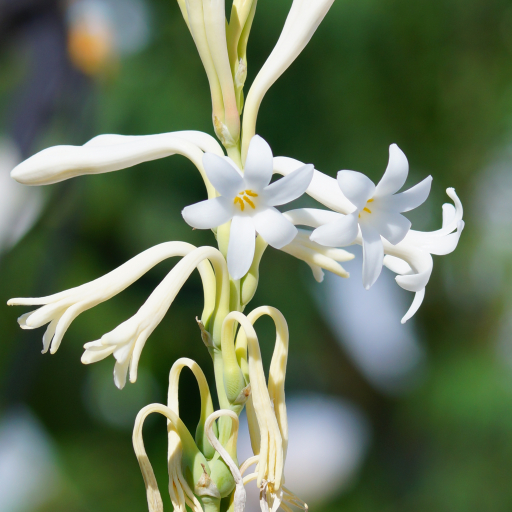
Known as the "Queen of the Night" or "Rajnigandha," the Tuberose is a legendary bloom that has captivated poets and perfumers for centuries. Native to Mexico, it isn't actually a rose at all; it belongs to the Agave family and grows from underground tubers. Its scent is so intoxicatingly powerful that a single stem can perfume an entire home once the sun goes down.
🔍 How to Identify
- 🌸 Flower Spikes: Tall, elegant racemes that can reach up to 3 feet in height, topped with clusters of star-shaped blossoms.
- 🍃 Foliage: Long, narrow, grass-like leaves that are bright green and mostly concentrated at the base of the plant.
- 🤍 Petal Texture: The flowers are famous for their thick, waxy, and creamy white petals that feel almost like delicate porcelain to the touch.
🏡 In Your Garden
- ☀️ Heat Seekers: These plants are true tropicals. They require "warm feet" to begin growing, so if your soil is still cool from winter, they will remain dormant until the summer heat truly arrives.
- 💧 The Drainage Dance: Because they grow from fleshy tubers, they are highly susceptible to rot. They crave rich, loamy soil but demand that excess water drains away quickly to keep the bulb healthy.
- ⏳ Patience for Blooms: Tuberose can be a bit of a "late bloomer." It often takes several months of warm weather before the flower spike emerges, but the olfactory reward is well worth the wait.
⚠️ Safety & Toxicity
- 🐾 Pet Friendly: Polianthes tuberosa is generally considered non-toxic to cats, dogs, and horses, making it a wonderful fragrant addition to a pet-friendly yard.
- 👃 Sensory Sensitivity: While not chemically toxic, the fragrance is exceptionally potent. In small, unventilated rooms, the intense scent can be overwhelming and may trigger headaches or respiratory irritation in sensitive individuals.
✨ Fun Fact
- 👑 Liquid Gold: Tuberose absolute is one of the most expensive natural materials in the perfume industry. It takes over 3,600 pounds of hand-picked blossoms to produce just one pound of the essential oil used in high-end luxury scents!

Detailed Care Instructions
| Humidity | Normal |
| Lighting | Part Sun |
| Difficulty | Medium |
| Hibernation | Cold Period |
| Mature Size | 2 To 3 Feet Tall |
| Native Area | South America |
| Sun Exposure | Full Sun |
| Hardiness Zones | 8-10 |
To grow Polianthes Tuberosa plants, also known as tuberose, you can follow these steps:
- Planting: Plant tuberose bulbs in spring after the last frost or in early summer. Choose a location that receives full sun to ensure proper growth and flowering.
- Soil: Tuberose plants prefer well-draining soil with a pH ranging from 6.0 to 7.5. Ensure the soil is loose and fertile, amending it with organic matter if needed.
- Bulb Preparation: Soak the tuberose bulbs in warm water for a few hours before planting. This helps to activate the growth process.
- Planting Depth: Dig holes about 2-3 inches deep and space them 6-8 inches apart. Place each bulb with the pointed end facing upwards.
- Watering: Keep the soil consistently moist but not waterlogged. Water regularly, especially during dry spells, to encourage healthy growth.
- Fertilizing: Apply a balanced, slow-release fertilizer during planting or use a liquid fertilizer every few weeks during the growing season, following the manufacturer's instructions.
- Staking: As tuberose plants can grow tall and top-heavy, it is beneficial to stake them to support their stems and prevent them from falling over.
- Pruning: Remove any yellowing or dead leaves regularly to maintain the plant's health and appearance. Snip off spent flower stalks after they have finished blooming.
- Pests and Diseases: Tuberose plants are generally resistant to most pests and diseases. However, keep an eye out for common garden pests like aphids, spider mites, or thrips. If detected, treat them with insecticidal soap or neem oil.
- Overwintering: In cold climates, tuberose plants need to be dug up before the first frost. Carefully lift the bulbs from the soil, clean off excess soil, and store them in a cool, dry place until spring. Replant them after the danger of frost has passed.
By following these guidelines, you can successfully grow Polianthes Tuberosa plants and enjoy their fragrant, white blooms during the summer months.

Place in a bright room that is sun drenched almost all day. Or directly in a south-facing window.

To water this plant, ensure that the soil around its base remains consistently moist but not waterlogged. Water the plant deeply at least once a week during the growing season, increasing the frequency during periods of high heat or extended dryness. Avoid misting the leaves, as this can encourage the growth of fungal diseases. Instead, apply water directly to the soil around the plant's base, avoiding wetting the foliage as much as possible. In addition, make sure any excess water can drain away from the roots to prevent them from becoming waterlogged.
To provide adequate nutrients for your Polianthes Tuberosa plant:
- Begin by selecting a balanced fertilizer suitable for flowering plants.
- Dilute the fertilizer according to the package instructions, typically mixing it with water.
- Apply the diluted fertilizer around the base of the plant, avoiding direct contact with the leaves or flowers.
- Take care not to over-fertilize, as this can lead to burning the roots or causing excessive vegetative growth.
- Fertilize your Polianthes Tuberosa plant every two to four weeks during the growing season, which is usually spring and summer.
- During the dormant period, reduce or stop fertilization to allow the plant to rest.
- Regularly monitor the plant's overall health and adjust the fertilizing schedule or nutrient concentration if necessary.
- Lastly, always follow the specific fertilization recommendations on the fertilizer packaging for optimum results.
Polianthes Tuberose is a perennial flowering plant that requires well-draining soil that has a neutral pH. The soil should be rich in organic matter and should be able to retain moisture without becoming waterlogged. A mixture of sandy loam soil and organic compost is the ideal soil type for this plant. The soil should also be deeply aerated to allow for good root development and drainage. The plant thrives in full sunlight and needs good air circulation, which means that planting it in a raised bed or a container is a good option. It is important to note that Polianthes Tuberose is not tolerant of frost and should be planted in an area with a minimum temperature of 15°C (59°F).
To propagate this plant, you will need to carefully cut off one of the healthy stem with a sharp knife. Be sure to use clean tools to avoid introducing any diseases or pests to the plant. Once you have the stem, remove any lower leaves and dip the cut end in rooting hormone before placing it in a well-draining soil mix. Keep the soil moist but not overly wet and place the cutting in a warm, bright location away from direct sunlight. Over the coming weeks, roots should begin to grow from the cut end and new leaves will start to emerge. Once the cutting has established roots, you can transplant it into a larger container or into your garden bed.
Common pests of the tuberose include Mealybugs, spider mites, aphids, thrips, snails. Make a habit of checking your tuberose frequently for pests so that any infestations can be caught and managed early.








