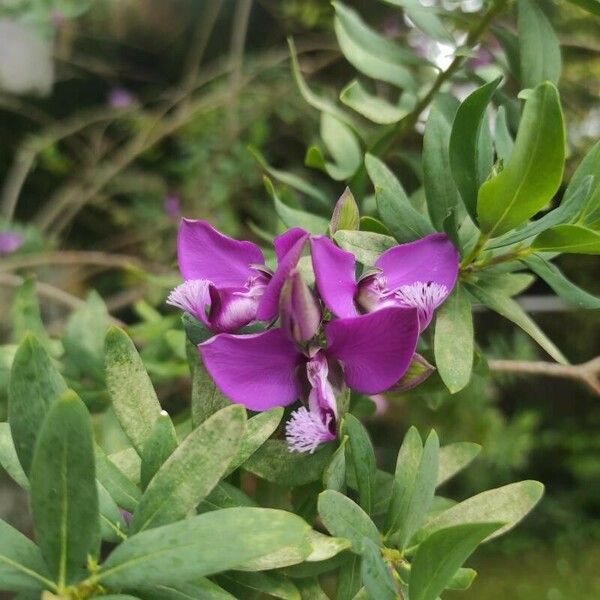
Plant Overview
Often called the "Sweet Pea Shrub" due to its uncanny resemblance to the classic climbing flower, this evergreen beauty is a hybrid masterpiece. Originating from a cross of South African species, it provides a splash of electric purple almost year-round in Mediterranean climates. It is the go-to choice for gardeners who want high-impact color without the high-maintenance drama.
🔍 How to Identify
- 🌸 Orchid-like Flowers: The blossoms feature two winged sepals and a unique, feathery purple crest that looks like a miniature butterfly or a ruffled sweet pea.
- 🍃 Dainty Foliage: The leaves are small, oval, and a soft grey-green. They are arranged densely along the stems, giving the shrub a lush, full appearance even when not in bloom.
- 🌳 Mounded Habit: It naturally grows into a neat, rounded "gumdrop" shape, typically reaching about 3 to 4 feet in height and width.
🏡 In Your Garden
- ☀️ Sun-Loving Hybrid: This plant is a true sun-worshipper. While it tolerates light shade, its "ever-blooming" reputation depends on getting plenty of direct light to fuel its energy-intensive flowering.
- 💧 Drainage is Key: It is remarkably drought-tolerant once established but cannot survive in "wet feet." If your soil is heavy clay, plant it in a raised bed or a pot to ensure water moves away from the roots quickly.
- ✂️ The "Haircut" Rule: To keep it from becoming leggy, give it a light pruning after a heavy flowering flush. Since it blooms on new growth, this encourages a fresh explosion of purple buds.
⚠️ Safety & Toxicity
- 🐾 Pet Safety: Generally considered non-toxic to dogs and cats. It doesn't contain the harsh alkaloids found in some other ornamental shrubs.
- 👶 Child Friendly: It is a safe choice for family gardens as it lacks thorns, prickles, or skin-irritating sap. However, as with any ornamental plant, ingestion should be discouraged.
✨ Fun Fact
The genus name Polygala comes from the Greek words for "much milk." Ancient Greeks and Romans believed that cows grazing on these plants would produce a significantly higher volume of milk, leading to the common name "Milkwort."

Detailed Care Instructions
To grow Polygala × Dalmaisiana, also known as Milkwort Willow, follow these steps:
- Choose the right location: Polygala × Dalmaisiana prefers a sunny spot with well-draining soil. Ensure that the location receives at least 6-8 hours of sunlight per day.
- Prepare the soil: Before planting, prepare the soil by removing any weeds, rocks, or debris. Improve the soil quality by incorporating organic matter like compost or well-rotted manure.
- Planting: Dig a hole slightly wider and deeper than the plant's root ball. Place the plant in the hole, making sure the top of the root ball is level with the soil surface. Backfill the hole with soil and gently firm it around the plant.
- Watering: After planting, water the plant thoroughly. Provide regular watering throughout the growing season, especially during dry spells. Be careful not to overwater, as it can lead to root rot.
- Mulching: Apply a layer of organic mulch around the base of the plant to conserve moisture, suppress weed growth, and regulate soil temperature. Leave a gap around the stem to prevent excessive moisture buildup.
- Pruning: Polygala × Dalmaisiana may benefit from occasional pruning to maintain its shape and promote bushier growth. Prune any dead or damaged branches in late winter or early spring.
- Fertilization: Apply a slow-release balanced fertilizer in early spring to provide essential nutrients for healthy growth. Follow the packaging instructions for the recommended amount.
- Maintenance: Monitor the plant for any signs of pests or diseases. Common pests that may affect Polygala × Dalmaisiana include aphids, scale insects, and spider mites. Treat infestations promptly with the appropriate organic or chemical control methods.
- Winter care: Polygala × Dalmaisiana is hardy to USDA zones 7-10. In colder regions, provide winter protection by covering the plant with a layer of mulch or moving it indoors into a cool, bright location.
By following these steps, you can successfully grow Polygala × Dalmaisiana and enjoy its beautiful foliage and vibrant flowers.
Polygala × Dalmaisiana is a type of plant that requires regular and consistent watering to thrive. Here are some guidelines on how to water this plant:
- Determine the moisture level: Before watering, check the moisture level of the soil by inserting your finger into the soil up to the first knuckle. If it feels dry, it indicates the need for watering.
- Watering frequency: Water the Polygala × Dalmaisiana plant when the top inch (2.5 cm) of soil is dry. Typically, this plant requires watering once or twice a week, depending on the weather conditions and humidity levels.
- Watering method: When watering, it is important to provide a thorough soaking to the plant's root system. Use a watering can or a gentle hose with a low-pressure setting to avoid damaging the delicate foliage and flowers.
- Water quantity: Aim to provide enough water to sufficiently moisten the soil around the plant's root zone. Ensure the water penetrates the soil to a depth of at least 6-8 inches (15-20 cm). This encourages deep root growth and helps the plant withstand dry periods.
- Avoid overwatering: Although Polygala × Dalmaisiana requires regular watering, it is essential not to overwater the plant. Overwatering can lead to root rot and other fungal diseases. Always allow the top inch (2.5 cm) of soil to dry out before watering again.
- Mulching: Apply a layer of organic mulch, such as wood chips or bark, around the plant. Mulch helps to retain soil moisture, prevent evaporation, and reduce weed growth. It acts as insulation, keeping the soil temperature steady and protecting the plant's root system.
- Rainwater collection: Whenever possible, collect rainwater for watering your Polygala × Dalmaisiana plant. Rainwater is often preferred over tap water as it is free from chemicals and minerals that may affect the plant's health.
- Monitoring: Regularly monitor the plant's foliage and overall health. If the leaves start to wilt or turn yellow, it may indicate underwatering or overwatering. Adjust the watering frequency accordingly to maintain optimal moisture levels.
Remember, each plant's water requirements can vary depending on factors such as climate, sunlight exposure, and pot/container size. Observing the plant's response and adapting the watering routine accordingly is key to ensuring its proper growth and well-being.
To fertilize Polygala × Dalmaisiana plant, follow these instructions:
- Use a balanced, water-soluble fertilizer formulated for flowering plants. Choose a fertilizer with a ratio of nitrogen (N), phosphorus (P), and potassium (K) such as 10-10-10 or 14-14-14.
- Dilute the fertilizer according to the package instructions. Generally, mix 1 tablespoon of fertilizer per 1 gallon of water.
- Water the plant thoroughly before applying the fertilizer to ensure the soil is moist.
- Pour the diluted fertilizer solution evenly around the base of the plant, taking care not to splash the leaves to avoid potential burn.
- Avoid over-fertilizing as it can lead to excessive leaf growth instead of flowers. Follow the recommended frequency of fertilizing, usually every two to four weeks during the growing season.
- If the plant shows signs of nutrient deficiency, such as pale foliage or stunted growth, consider applying a slow-release granular fertilizer. Follow the package instructions for application rates and methods carefully.
- Ensure the plant receives adequate sunlight, water, and appropriate environmental conditions for optimal growth and blooming.
Remember to read and follow the specific instructions mentioned on the fertilizer packaging, as different products might have variations in application rates and frequency.
The Polygala × Dalmaisiana plant thrives best in a well-drained soil that is slightly acidic in nature. It requires a soil that is rich in organic matter and nutrients. Additionally, the soil should have a good water holding capacity while still allowing excess water to drain away to prevent water logging. It is important to choose a soil that is loose and friable, allowing for proper root development and oxygen circulation. This plant prefers a soil that is not overly compacted and can easily be penetrated by roots. Overall, a well-balanced, nutrient-rich soil that promotes good drainage and aeration is ideal for the healthy growth of the Polygala × Dalmaisiana plant.
Polygala × dalmaisiana, commonly known as Dalmais' milkwort, is a perennial plant that can be propagated by various methods. Here is a detailed explanation of how to propagate this plant:
- Propagation by Seeds:
- Collect mature seeds from the plant when the seed pods have fully dried and turned brown.
- Sow the seeds in seed trays or pots filled with well-draining seed-starting mix.
- Cover the seeds lightly with a thin layer of soil and lightly mist the surface with water.
- Place the tray or pots in a warm location with indirect sunlight.
- Keep the soil evenly moist but not soggy.
- Germination usually takes around 2-4 weeks.
- Once the seedlings have developed a few true leaves, they can be transplanted into individual pots or a prepared garden bed.
- Propagation by Cuttings:
- Take stem cuttings from established, healthy plants during the active growth period (usually spring or early summer).
- Choose a non-flowering stem that is around 4-6 inches long.
- Make a clean cut just below a leaf node using sharp, sterilized pruning shears.
- Remove any leaves from the lower half of the cutting.
- Dip the cut end in a rooting hormone powder or gel to promote root growth.
- Plant the cutting in a pot or tray filled with a well-draining rooting medium, such as a mix of peat moss and perlite.
- Water the cutting lightly and place it in a warm, brightly lit area, but avoid direct sunlight.
- Mist the cutting regularly to maintain high humidity around the leaves.
- After a few weeks, check for root development by gently tugging the cutting. If resistance is felt, roots have likely formed.
- Once roots have developed, transplant the cutting into a larger pot or a prepared garden bed.
- Propagation by Division:
- Choose a mature, healthy Dalmais' milkwort plant that has developed multiple clumps or crowns.
- Gently dig up the plant, being careful not to damage the roots.
- Shake off excess soil, and then gently separate the clumps or crowns into smaller sections with a clean, sharp knife or garden spade.
- Each section should have a good amount of roots and foliage.
- Plant the divided sections in well-prepared soil in pots or directly in the garden bed.
- Water the newly divided plants thoroughly and keep them well-watered until they establish.
Remember to provide the propagated plants with appropriate care, including regular watering, fertilization, and protection from extreme temperatures, to ensure their healthy growth.








