Plant Overview
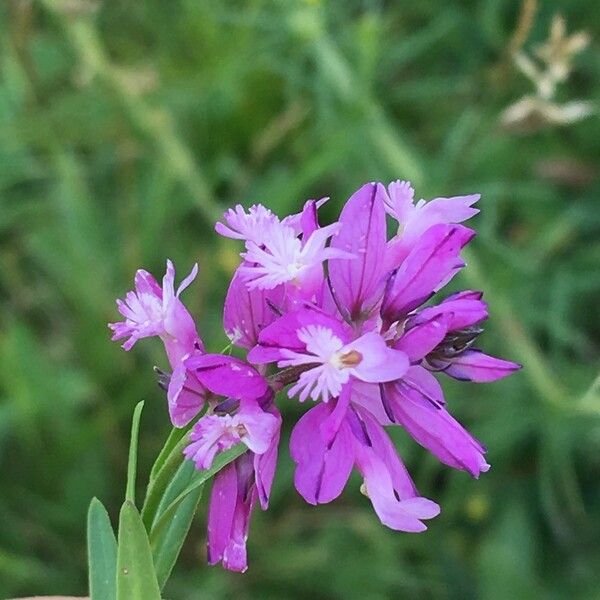
Known as the "Large Milkwort," this vibrant perennial is the showstopper of its genus. Native to the sun-drenched meadows of Central and Southeast Europe, it carries a legacy tied to ancient agriculture. Its name comes from the Greek words poly (much) and gala (milk), stemming from a centuries-old belief that grazing on these flowers would help cows produce more milk.
🔍 How to Identify
- 🌸 Butterfly Flowers: The blooms are deep pink to violet-purple, arranged in a dense, upright spike. They look remarkably like small pea flowers or tiny butterflies.
- 🛡️ Winged Sepals: The most striking feature is its two large, petal-like sepals that fan out to protect the inner floral parts.
- 🌿 Slender Foliage: The leaves are narrow, lance-shaped, and grow alternately along the stem, providing a minimalist green backdrop to the vivid flowers.
🏡 In Your Garden
- ☀️ Sun Worshipper: This plant thrives in "hot" spots. It is perfectly adapted to dry, rocky slopes and calcareous (limestone) soils where other plants might wither.
- 🏗️ Taproot Strength: Because it develops a deep, sturdy taproot, it is incredibly drought-tolerant once established. However, this means it hates being moved; choose its forever home carefully to avoid transplant shock.
- 🦋 Pollinator Magnet: In a garden setting, it acts as a neon sign for bees and butterflies, who are specifically evolved to navigate its complex flower structure.
⚠️ Safety & Toxicity
- 🟢 General Status: Non-toxic to touch and generally considered low-risk.
- 🧼 Saponin Content: Like many Milkworts, the plant contains saponins. While not "poisonous" in the traditional sense, if a pet or child eats a significant amount, it can lead to a bitter taste and mild stomach irritation or nausea.
- 🧤 Skin Care: While not an irritant, it is always best practice to wear gloves when pruning any wild-style perennial to avoid minor scratches from dried stems.
✨ Fun Fact
Ancient herbalists didn't just give these to cows; human nursing mothers would often seek out Milkwort infusions in hopes of boosting their own milk supply, though modern science views this more as a charming myth than a medical reality!

Detailed Care Instructions
To grow Polygala major, also known as the sweet pea shrub, follow these steps:
- Climate: Determine if your climate is suitable for the plant. Polygala major thrives in Mediterranean or subtropical regions, with mild winters and warm, dry summers. It prefers a sunny location or partial shade.
- Soil: Provide well-draining soil with a slightly acidic to neutral pH level. If your soil is heavy or clay-like, amend it with organic matter such as compost or peat moss to improve drainage.
- Propagation: Polygala major can be propagated from seeds or cuttings. Seeds can be sown in spring or autumn, while cuttings can be taken in late spring or early summer. For seeds, sow them directly into the soil, covering them lightly with a thin layer of soil. For cuttings, take 4-6 inch stem cuttings, remove lower leaves, dip the cut ends in rooting hormone, and plant them in a well-draining potting mix.
- Watering: Water regularly, keeping the soil slightly moist but not waterlogged. During the hottest months, water deeply but less frequently, allowing the top layer of soil to dry out between waterings.
- Fertilizer: Feed Polygala major with a balanced, slow-release fertilizer in spring and autumn. Follow the manufacturer's instructions for dosage and application.
- Pruning: Prune the plant in late winter or early spring to maintain its shape and promote healthy growth. Remove any dead, damaged, or crowded branches. Pruning can also help to encourage more flowers.
- Mulching: Apply a layer of organic mulch around the base of the plant to retain moisture, suppress weed growth, and maintain a more consistent soil temperature.
- Pest and Disease Control: Monitor the plant regularly for pests such as aphids, scale insects, or spider mites. If needed, treat with appropriate organic pest control methods or insecticidal soap. Polygala major is generally resistant to diseases.
By providing the right growing conditions and regular care, you can enjoy the beautiful flowering Polygala major plant in your garden.

Place in a bright room that is sun drenched almost all day. Or directly in a south-facing window.

Polygala Major is a plant that requires regular watering to thrive. One important factor to consider when watering this plant is the soil moisture level. It is important to ensure that the soil is evenly moist but not waterlogged. Overwatering can cause root rot and ultimately kill the plant.
To water Polygala Major, one should use room temperature water. It is best to water the plant in the morning or early evening when the sun is not too strong. This enables the plant to absorb the water properly and avoid evaporation.
One should water the plant thoroughly, to make sure that the water reaches the deeper roots of the plant. This can be achieved by watering the plant slowly and allowing the water to soak in.
It is important to avoid getting water on the plant's foliage, as this can cause damage and disease. To achieve this, it is best to water the plant at the base and not the leaves.
Regularly checking the soil moisture level is essential in ensuring that the plant is getting enough water. If the soil is dry, then it is time to water. However, if the soil is still moist, then it is best to wait and check again later.
Overall, watering Polygala Major is not complicated. It requires regular attention to ensure that the soil is evenly moist, and the foliage is not wet. With the right watering technique, this plant can grow well and produce beautiful blooms.
To fertilize Polygala Major plant, use a high-quality balanced fertilizer with equal parts of nitrogen, phosphorus, and potassium. Apply the fertilizer once every two weeks during the growing season, that is from spring to fall. Mix the fertilizer according to the manufacturer's instructions and apply it to the soil, avoiding contact with the plant's leaves. Additionally, make sure the soil remains moist and well-drained.
Polygala Major plant, also known by its scientific name, requires a well-draining and nutrient-rich soil. The soil pH should be between 5.5 to 6.5, which is slightly acidic. It is also important that the soil is not compacted and has good aeration to allow proper root development. A combination of sandy loam and organic matter can be used, and adding perlite or pumice can improve drainage. It is recommended to avoid heavy clay soils and waterlogged soils, as these can lead to root rot. The plant prefers slightly moist soil, but it is important not to overwater, as this can also cause root rot. A general-purpose fertilizer can be applied during the growing season to provide additional nutrients.
To propagate this plant, you first need to choose a healthy and mature stem that is at least 6 inches long. Then, using a sharp and sterilized garden or pruning shears, cut the stem at a slant just below a node or leaf.
Next, remove all the leaves from the lower 2/3 of the stem and gently scrape the bark at the bottom of the stem with a knife to expose the cambium layer.
Then, dip the cut end of the stem into rooting hormone powder, making sure to cover the exposed cambium layer, and gently tap off any excess powder.
After that, prepare a pot with a well-draining potting soil mix, and make a hole in the soil with a pencil or your finger. Insert the cut end of the stem into the hole and gently firm the soil around it.
Finally, water the soil thoroughly, mist the cutting with water, and cover it with a clear plastic bag or a plastic dome to create a humid environment. Place the pot in a warm and bright location, but out of direct sunlight.
Make sure to monitor the cutting daily and mist it with water as needed to keep the soil moist but not soggy. After a few weeks, you should see new growth emerging from the stem. After the new growth appears, you can remove the plastic cover and continue to care for the young plant as you would with a mature Polygala Major.








