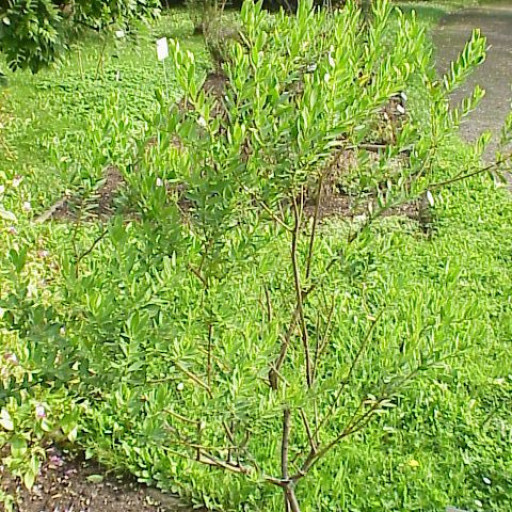
Plant Overview
Often called the "September Bush" because it bursts into a purple haze just as spring hints at its arrival in its native South Africa, Polygala myrtifolia is a gardener’s darling. Its vibrant, pea-like flowers have earned it the nickname "Sweet Pea Shrub," though it is far hardier and more drought-resistant than a true sweet pea. This evergreen beauty is a magnet for bees and butterflies, acting as a bustling nectar station for your local ecosystem.
🔍 How to Identify
- 🌸 The "Winged" Flowers: The blossoms appear in small clusters at the ends of branches, featuring two large purple "wings" (sepals) and a unique, crest-like brush of white or purple hairs in the center.
- 🍃 Myrtle-like Foliage: True to its name, the leaves are oval-shaped, smooth, and look remarkably like Myrtle leaves. They are typically a soft, matte green, providing a dense, year-round backdrop.
- 🌳 Growth Habit: It naturally forms a rounded, bushy mound. Depending on the variety, it can stay a compact garden shrub or grow into a small, elegant tree reaching up to 10 feet.
🏡 In Your Garden
- ☀️ Sun Seeker: This plant is a sun-lover; the more light it gets, the more prolific its blooms will be. It is incredibly wind and salt-tolerant, making it a "gold medal" plant for tough coastal gardens where salt spray kills more delicate species.
- ✂️ The "Leggy" Look: If left to its own devices, it can become sparse or "leggy" at the base. A light trim after its main flowering flush encourages a denser, more compact shape and keeps the blooms coming.
⚠️ Safety & Toxicity
- 🐾 Low Risk: Polygala myrtifolia is generally considered non-toxic to humans and common pets. It is a safe choice for family-friendly backyards.
- 🧤 Sap Sensitivity: Like many garden shrubs, the sap can occasionally cause mild skin irritation for those with very sensitive skin. It is best to wear gloves when performing heavy pruning.
✨ Fun Fact
- 🥛 The "Milk" Mystery: The genus name Polygala comes from the Greek words poly (much) and gala (milk). This stems from an ancient Roman belief that cows grazing on these plants would produce a significantly higher volume of milk!

Detailed Care Instructions
| Humidity | Normal |
| Lighting | Full Sun |
| Difficulty | Medium |
| Hibernation | Cold Period |
| Hardiness Zones | 9 - 11 |
To grow a Polygala Myrtifolia plant, also known as the Sweet Pea Shrub, you can follow these steps:
- Choose a suitable location: Find a spot in your garden or indoors where the plant will receive adequate sunlight. The Polygala Myrtifolia prefers full sun or partial shade.
- Prepare the soil: Ensure the soil is well-draining and fertile. Mix in organic matter such as compost or well-rotted manure to improve soil quality.
- Planting: Dig a hole that is slightly wider and deeper than the rootball of the plant. Gently remove the plant from its container and place it in the hole. Make sure the top of the rootball is level with or slightly above the soil surface.
- Watering: Water the plant thoroughly after planting to settle the soil around the roots. Keep the soil consistently moist but not waterlogged. Once established, reduce watering frequency.
- Mulching: Apply a layer of organic mulch around the base of the plant to help conserve moisture, suppress weeds, and regulate soil temperature.
- Pruning: Prune the plant regularly to maintain its shape and promote bushier growth. Remove any dead, damaged, or diseased branches. Pruning can be done after flowering.
- Fertilization: Feed the plant with a balanced, slow-release fertilizer during the growing season to ensure healthy growth. Follow the instructions on the fertilizer packaging for application rates.
- Pest and disease control: Monitor the plant for pests like aphids or whiteflies and treat them accordingly. Ensure good air circulation around the plant to prevent diseases like powdery mildew.
- Winter protection: In colder regions, provide winter protection by covering the plant or moving it indoors before the first frost.
- Propagation: The Polygala Myrtifolia plant can be propagated from cuttings. Take a 6-8 inch stem cutting in spring or summer, dip it in rooting hormone, and plant it in a pot filled with moist soil. Place the pot in a warm, bright location and keep the soil evenly moist until roots develop.
With proper care and attention, your Polygala Myrtifolia plant should grow and thrive, adding beauty to your garden with its attractive flowers and foliage.

Place in a window with dappled sun or a spot in the middle of a room. Or directly in a window facing west or east.

To water this particular plant, it is important to first assess its soil moisture levels. You can do this by sticking your finger about an inch into the soil. If it feels dry, it's time to water.
When watering, it is important to avoid getting any water on the leaves or flowers, as this can cause damage or encourage fungal growth. Instead, aim to water directly onto the soil at the base of the plant.
Be mindful not to overwater the plant, as this can lead to root rot. Allow the soil to dry out slightly between waterings, and adjust your watering frequency depending on the weather and season.
In general, it is best to water deeply and less frequently, rather than lightly and frequently, to encourage strong root growth and avoid waterlogged soil.
To fertilize this plant, apply a balanced slow-release fertilizer in the spring and late summer. Be sure to follow the package instructions for the correct amount and method of application. Avoid applying fertilizer to dry soil. Water the plant before and after fertilizing to ensure proper absorption. Keep in mind that over-fertilizing can result in excessive growth and weakened plant health.
Polygala Myrtifolia is a plant species that requires well-draining soil and does not tolerate waterlogging. The ideal soil for this plant should be a mixture of sand, perlite, and peat moss in equal proportions. Additionally, it is important to ensure that the soil has a slightly acidic to neutral pH between 5.5 and 7.0. The plant prefers soil that is rich in organic matter, and therefore, adding compost or organic fertilizer to the soil can be beneficial. It is important to monitor the moisture level of the soil and avoid over-watering the plant. Also, the plant requires regular pruning to promote healthy growth and proper shape.
Firstly, select a healthy stem from the plant that is around 4-6 inches long. Clip the stem from the plant using a pair of clean and sharp scissors.
Next, gently strip off all the leaves from the bottom half of the stem. This will expose the nodes and help with root formation.
Dip the bottom of the stem into rooting hormone powder, making sure to shake off any excess. This will help promote root growth.
Prepare a pot with well-draining soil and make a small hole with a pencil. Place the stem in the hole and carefully pack soil around it, making sure it is firmly in place.
Water the soil well but be careful not to overwater. Place the pot in a warm and brightly lit spot, but avoid direct sunlight.
It is essential to keep the soil consistently moist until roots have formed, which can take up to 6-8 weeks. After this time, you can begin to gradually reduce watering.
New growth should appear within 4-6 weeks, and you can slowly introduce fertilization to encourage growth.
Once the plant has established a healthy set of roots, it can be transplanted to a larger pot or to your garden.
Common pests of the myrtle-leaf milkwort include Scale insect, mealybugs, spider mites. Make a habit of checking your myrtle-leaf milkwort frequently for pests so that any infestations can be caught and managed early.








