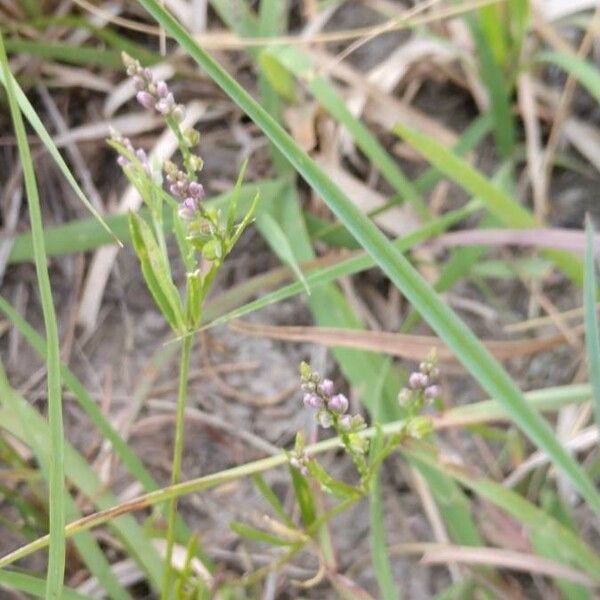
Plant Overview
Commonly known as the Whorled Milkwort, this delicate annual wildflower is a master of subtlety. Often found hiding in plain sight within North American prairies and open woodlands, it belongs to a genus whose name literally translates to "much milk." Ancient Greeks believed that grazing on these plants would help cows produce more milk, giving this tiny plant a legendary reputation far larger than its physical size.
🔍 How to Identify
- 🌿 Whorled Foliage: True to its name, the narrow, lance-shaped leaves are arranged in distinctive "whorls" (circles) of 3 to 7 around the stem, particularly near the base.
- 🌸 Slender Flower Spikes: The flowers are tiny and grouped into narrow, pointed cones at the tips of the stems. They usually appear greenish-white, though they can sometimes carry a faint blush of purple or pink.
- 📏 Wire-like Stems: The plant is remarkably slender and "wirily" built, usually standing between 6 to 12 inches tall, making it look like a delicate piece of green lace in the grass.
🏡 In Your Garden
- 🌱 The Native Niche: As a native wildflower, it isn't a "showy" garden centerpiece, but it is a fantastic choice for a native meadow or a rock garden. It thrives in well-drained, somewhat poor soil where more aggressive plants might struggle.
- ☀️ Sun Seeker: It prefers the "liminal spaces"—the edges of forests or sunny patches in a meadow. If you are trying to grow it, avoid heavy mulching, as its small seeds need to make contact with the soil to germinate the following spring.
⚠️ Safety & Toxicity
- 🟢 Status: Generally considered non-toxic to humans and common household pets.
- 👅 Bitter Defense: While not considered dangerous, Milkworts contain saponins, which give the plant a very bitter taste. This is nature’s way of telling herbivores (and curious toddlers) that it isn't meant for snacking. It is not an edible herb.
✨ Fun Fact
The "Milkwort" family is famous for its unique flower structure. What look like petals are actually two enlarged, colorful sepals (the "wings"), while the actual petals are fused into a tiny, fringed tube that looks like a miniature head of hair!

Detailed Care Instructions
To grow Polygala Verticillata (Whorled Milkwort), follow these steps:
- Optimal Growing Conditions:
- Choose a sunny location with well-draining soil. The plant prefers sandy or loamy soil.
- The ideal temperature range for Polygala Verticillata is between 65°F to 80°F (18°C to 27°C).
- Provide regular moisture but ensure the soil doesn't become waterlogged.
- Choose a sunny location with well-draining soil. The plant prefers sandy or loamy soil.
- Planting:
- Start by preparing your planting area. Remove any weeds or grass and loosen the soil.
- Dig a hole that is slightly larger than the plant's root ball.
- Gently place the plant in the hole, making sure it is at the same depth as it was in the pot.
- Fill the hole with soil and pat it down gently to remove any air pockets.
- Start by preparing your planting area. Remove any weeds or grass and loosen the soil.
- Watering:
- Water the plant thoroughly after planting to settle the soil around the roots.
- After the initial watering, water the plant regularly, keeping the soil consistently moist but not overly saturated.
- Water the plant thoroughly after planting to settle the soil around the roots.
- Mulching and Fertilizing:
- Apply a layer of organic mulch such as wood chips or straw around the base of the plant. Mulch helps retain moisture and suppresses weed growth.
- Polygala Verticillata doesn't require much fertilization. However, you can apply a slow-release balanced fertilizer once a year in spring to promote healthy growth.
- Apply a layer of organic mulch such as wood chips or straw around the base of the plant. Mulch helps retain moisture and suppresses weed growth.
- Pruning:
- Prune your Polygala Verticillata plant to maintain its shape and remove any dead or damaged branches.
- Pruning can be done after flowering to encourage new growth and maintain the plant's compact form.
- Prune your Polygala Verticillata plant to maintain its shape and remove any dead or damaged branches.
- Propagation:
- Propagate Polygala Verticillata through seeds or stem cuttings.
- To propagate through seeds, collect the seeds and sow them in well-draining soil. Keep the soil moist until germination occurs.
- For stem cuttings, take 4-6 inch (10-15 cm) cuttings from healthy plants during spring or early summer. Place the cuttings in a moist rooting medium and provide bottom heat for better rooting.
With proper care and maintenance, your Polygala Verticillata plant should thrive and grow well.
- Propagate Polygala Verticillata through seeds or stem cuttings.

Place in a bright room that is sun drenched almost all day. Or directly in a south-facing window.

Polygala Verticillata is a type of plant that requires regular watering to ensure its optimal growth and health. Here are some detailed instructions on how to water this plant effectively:
1. Determine the watering needs: It is important to understand the watering requirements of Polygala Verticillata. This typically includes providing consistent moisture to the plant's root zone while avoiding overwatering that may cause root rot.
2. Observe the soil moisture: Before watering, check the moisture level of the soil. Insert your finger about an inch or two deep into the soil around the plant. If it feels dry, it is an indication that the plant needs watering.
3. Water in the morning: It is best to water the Polygala Verticillata plant in the morning. This allows the water to soak into the soil and reach the roots before the heat of the day evaporates it. Watering in the evening can cause the plant to remain damp overnight, increasing the risk of fungal diseases.
4. Water at the base: Direct the water towards the base of the plant rather than watering the leaves or flowers. This ensures that the water reaches the roots, where it is needed most.
5. Slow, deep watering: When watering, aim for slow and deep watering to promote healthy root development. Avoid quick, shallow watering that only wets the surface of the soil and doesn't penetrate deep enough. This can encourage shallow root growth and make the plant more susceptible to drought.
6. Ensure proper drainage: Make sure that the plant is potted in a container or planted in a garden bed with well-draining soil. This prevents water from sitting around the roots, preventing waterlogged conditions that could harm the plant.
7. Monitor environmental conditions: Be mindful of the weather and adjust your watering routine accordingly. Hot and dry conditions may require more frequent watering, whereas cooler or rainy periods may necessitate less watering.
8. Use the right amount of water: Water the plant thoroughly, ensuring the soil is evenly moist but not soggy. Avoid excessive watering, as it can lead to root rot and other water-related issues. However, do not let the plant completely dry out between watering sessions.
By following these detailed instructions on watering Polygala Verticillata, you can provide it with the appropriate moisture levels to support its growth and overall wellbeing.
Fertilizing instructions for Polygala Verticillata plants:
- Select a balanced, slow-release fertilizer with equal or near-equal proportions of nitrogen (N), phosphorus (P), and potassium (K).
- Start fertilizing in the spring, when new growth appears.
- Dilute the fertilizer according to the package instructions, using a watering can or sprayer for liquid fertilizers. For granular fertilizers, follow the recommended dosage and sprinkle evenly around the base of the plant.
- Apply the fertilizer to moist soil to prevent root burn, ensuring it reaches the plant's root zone.
- Repeat the fertilization every six to eight weeks during the growing season, avoiding any application during periods of drought or extreme heat.
- If the plant exhibits signs of nutrient deficiency, such as pale leaves or stunted growth, consider administering a water-soluble fertilizer diluted to half-strength to provide a quick nutrient boost.
- Avoid over-fertilizing, as excessive nutrients can lead to burned roots or foliage damage. Follow the recommended dosage and frequency specified for the selected fertilizer.
- Water the plant thoroughly after fertilizing to allow the nutrients to penetrate the soil and reach the roots.
- Regularly monitor the plant's overall health and adjust the fertilizing regimen accordingly based on its specific needs and growth rates.
Remember to always read and follow the instructions provided on the fertilizer packaging for best results.
Polygala Verticillata is best grown in a well-draining soil that is rich in organic matter. It prefers a slightly acidic to neutral pH range (around 6.0 to 7.0). The soil should be loose and crumbly, allowing water to drain easily but still retaining some moisture for the plant's roots.
To create an ideal soil mix for Polygala Verticillata, you can start with a basic potting mix that contains a blend of peat moss, perlite, and vermiculite. This mix provides good moisture retention while allowing excess water to drain away.
Additionally, you can enhance the soil by adding organic matter such as compost or well-rotted manure. This will improve the soil's fertility and help retain moisture. Mix in these organic amendments evenly throughout the soil to ensure uniform distribution.
Avoid using heavy clay soils as they tend to retain too much water and may lead to root rot. Sandy soils, on the other hand, drain too quickly and do not hold enough moisture for the plant.
It's important to note that Polygala Verticillata is native to specific regions and may have specific soil preferences based on its natural habitat. Therefore, it is always helpful to research the plant's native environment and try to replicate those conditions in your soil mix.
Polygala Verticillata, a perennial plant, can be propagated through various methods including seed propagation, division, and stem cuttings. Here's a detailed guide on how to propagate this plant:
- Seed Propagation:
- Collect mature seeds from the plant once the seed pods turn brown and crack open.
- Clean the seeds by removing any debris or dried plant material.
- Fill a seed tray or small pots with a well-draining potting mix.
- Sow the seeds on the surface of the soil and lightly press them into the mix.
- Mist the soil surface with water to provide moisture.
- Cover the tray or pots with a plastic bag or a propagator to create a humid environment.
- Place the seeds in a warm and bright location, but not under direct sunlight.
- Keep the soil consistently moist by misting with water whenever needed.
- Germination can take anywhere from a few weeks to a couple of months, so be patient.
- Collect mature seeds from the plant once the seed pods turn brown and crack open.
- Division:
- Choose a mature Polygala Verticillata plant that has formed multiple clumps or shoots.
- Dig up the plant gently using a garden fork or shovel, being careful not to damage the roots.
- Shake off excess soil to reveal the root system.
- Depending on the size of the plant, divide it into two or more sections ensuring each division has a healthy set of roots and shoots.
- Trim any damaged or excess roots.
- Replant the divisions in well-prepared soil or individual pots filled with a suitable growing medium.
- Water the divisions thoroughly after replanting and keep the soil evenly moist during the initial weeks until they establish.
- Choose a mature Polygala Verticillata plant that has formed multiple clumps or shoots.
- Stem Cuttings:
- Take stem cuttings from a healthy Polygala Verticillata plant during the active growing season, preferably in spring or early summer.
- Cut a 4-6 inch long section of a stem just below a node (the point where leaves emerge).
- Remove the leaves from the lower half of the cutting, leaving a few leaves at the top.
- Dip the cut end of the stem in a rooting hormone powder or gel to stimulate root growth (optional but can enhance success rates).
- Plant the cutting in a pot filled with a well-draining rooting medium such as a mixture of perlite and peat moss or a specialized rooting mix.
- Water the cutting thoroughly and place it in a warm location with bright, indirect light.
- Cover the cutting with a plastic bag or use a propagator to create a humid environment.
- Mist the cutting occasionally to maintain moisture levels.
- Roots should start forming within 4-8 weeks.
- Once well-rooted, transplant the cutting into a larger pot or directly into the garden.
Remember to provide proper care for the newly propagated Polygala Verticillata plants including regular watering, well-draining soil, and suitable sunlight exposure to ensure their healthy growth and establishment.
- Take stem cuttings from a healthy Polygala Verticillata plant during the active growing season, preferably in spring or early summer.








