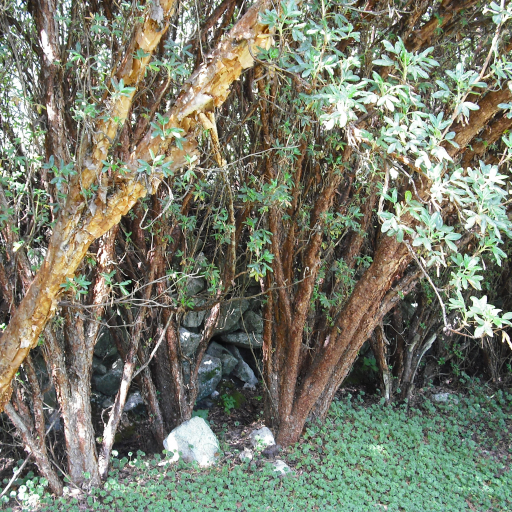
Plant Overview
Known as the "Guardian of the Andes," the Polylepis racemosa—or Queñua—is a true high-altitude champion. Native to the rugged mountains of Peru and Bolivia, this tree forms some of the highest-growing forests in the world, often thriving at elevations where other trees simply cannot survive. Its most enchanting feature is its shaggy, reddish-bronze bark, which looks like stacks of ancient, weathered parchment.
🔍 How to Identify
- 🍂 Paper-Thin Bark: The trunk is covered in multiple layers of reddish-brown bark that peel away in delicate, tissue-like sheets. This "multi-layered" skin acts as a thermal blanket against freezing mountain nights.
- 🌿 Scalloped Foliage: It features small, compound leaves with deeply notched or scalloped edges. The leaves often have a slightly leathery texture and a silvery sheen underneath to help retain moisture.
- 🎋 Hanging Racemes: The "racemosa" part of its name refers to its flowers, which grow in long, drooping clusters. These tiny, greenish-yellow blossoms are subtle but add a graceful, weeping effect to the canopy.
🏡 In Your Garden
- 🏔️ Mountain Mimicry: If you are growing this outside the Andes, it requires exceptionally well-draining, rocky soil. It hates "wet feet" and will suffer in heavy clay. Think of its home: steep, windswept slopes where water never sits still.
- 🌬️ Climate Resiliency: This is one of the most frost-hardy trees available. However, because it is adapted to thin, cool mountain air, it may struggle in humid, tropical lowlands where the nights stay very warm.
⚠️ Safety & Toxicity
- ✅ Non-Toxic Status: Polylepis racemosa is generally considered non-toxic to humans, cats, and dogs.
- 👐 Delicate Texture: While the bark isn't poisonous, it is very fragile. Frequent handling or "peeling" the bark manually can stress the tree and leave it vulnerable to pests, so it’s best treated as a visual masterpiece rather than a tactile one.
✨ Fun Fact
The name Polylepis comes from the Greek words poly (many) and lepis (layers), referring to its distinctive peeling bark. These layers aren't just for show—they trap air to create a "puffy jacket" effect, allowing the tree to survive temperatures as low as -15°C (5°F)!

Detailed Care Instructions








