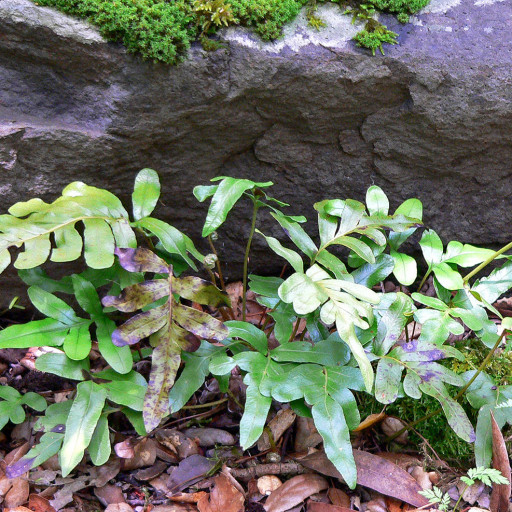
Plant Overview
Often called the Leather-leaf Fern or Scouler’s Polypody, this resilient evergreen is the rugged survivor of the Pacific coastline. Unlike its delicate, feathery cousins, this fern is built to withstand the salty mists and heavy winds of the "fog belt" ranging from British Columbia down to California. In the wild, it creates lush, emerald carpets draped over old-growth Sitka spruces or tucked into rocky crevices overlooking the ocean.
🔍 How to Identify
- 🌿 The Fronds: Unlike thin, papery ferns, these leaves are incredibly thick, waxy, and leathery to the touch—an adaptation that prevents water loss in salty air.
- 🟢 Leaf Shape: The fronds are typically oblong and divided into rounded segments (pinnae) that look almost like blunt fingers.
- 🟠 The Sori: On the underside of the leaves, you’ll find large, prominent, golden-orange circular spots. These are the spore clusters, and they are surprisingly large compared to other polypodies.
🏡 In Your Garden
- ☁️ Humidity is Key: Because this fern thrives in the coastal fog belt, it craves high humidity. If you live inland, it will appreciate frequent misting or a spot near a water feature to mimic its misty ocean home.
- 🪵 The "Air Plant" Habit: In nature, it is often an epiphyte (growing on trees) or a lithophyte (growing on rocks). In a garden setting, it hates "wet feet." Use a very well-draining, gritty, or bark-heavy soil mix to keep its creeping rhizomes from rotting.
- 🧂 Salt Tolerance: This is one of the few ferns that can handle salt spray, making it a "must-have" for coastal gardeners looking for a lush, prehistoric aesthetic near the beach.
⚠️ Safety & Toxicity
- ✅ Non-Toxic Status: Polypodium scouleri is generally considered non-toxic to humans, cats, and dogs. It is a safe choice for household interiors and high-traffic garden paths.
- 🧤 Skin Sensitivity: While not poisonous, the thick spores and fuzzy rhizomes can occasionally cause mild irritation to those with very sensitive skin if handled excessively during propagation.
✨ Fun Fact
This fern is a master of "fog-tripping." It can actually absorb moisture directly from the heavy coastal fog through its leaves, allowing it to stay green and vibrant even during dry summer spells when other forest plants begin to wilt.

Detailed Care Instructions
To grow Polypodium Scouleri, also known as the Leatherleaf Fern, you can follow these steps:
- Choose a suitable location: Polypodium Scouleri prefers partial to full shade, so find a spot in your garden or indoor area that receives indirect sunlight or filtered light.
- Prepare the soil: The fern prefers well-draining soil that is rich in organic matter. Add compost or peat moss to improve the soil's texture and fertility.
- Planting: Dig a hole in the prepared soil that is slightly larger than the plant's root ball. Place the Polypodium Scouleri in the hole, ensuring that the top of the root ball is level with the soil surface. Backfill the hole with soil and gently tamp it down around the base of the plant.
- Watering: Water the plant thoroughly after planting and keep the soil consistently moist. Mist the foliage regularly to provide the necessary humidity.
- Mulching: Apply a layer of organic mulch, such as shredded bark or leaf compost, around the base of the plant. Mulching helps retain moisture, suppresses weeds, and maintains a cool environment for the roots.
- Maintenance: Prune away any damaged or dead fronds as necessary. Polypodium Scouleri does not require heavy pruning, and excessive pruning can harm the plant.
- Fertilization: You can fertilize the fern with a balanced, slow-release fertilizer in spring or early summer. Follow the package instructions for the proper amount to use.
- Protect from extreme temperatures: Polypodium Scouleri is generally hardy but can be damaged by extreme cold or heat. If you live in an area with harsh winters, protect the plant with a layer of mulch or move it indoors during the coldest months.
By following these care instructions, you can successfully grow Polypodium Scouleri and enjoy its beautiful fronds.

Place in a window with dappled sun or a spot in the middle of a room. Or directly in a window facing west or east.

Polypodium Scouleri is a type of plant that requires a consistent watering schedule for optimal growth and health. It is important to ensure that the soil is damp, but not waterlogged, as too much water can lead to root rot and other issues. One way to check if the plant needs watering is to insert your finger into the soil and see if it feels dry or moist.
When watering Polypodium Scouleri, it is important to use room temperature or lukewarm water and to avoid getting water on the leaves as this can cause damage or disease. Watering from the top can also cause the soil to become compacted, which can prevent oxygen from reaching the roots.
Instead, it is recommended to water Polypodium Scouleri from the bottom by placing the plant in a tray or saucer filled with water. Allow the plant to absorb water through the drainage holes for about 10-15 minutes before removing it from the tray and emptying any excess water. This method promotes healthy root growth and allows the plant to take up water at its own pace.
The frequency of watering Polypodium Scouleri will depend on various factors, such as the size of the plant, the type of soil, and the humidity levels in the environment. As a general rule, it is better to underwater than overwater this plant. Aim to water Polypodium Scouleri when the top 1-2 inches of soil feel dry to the touch, but avoid waiting until the soil becomes completely dry. With proper watering techniques and care, Polypodium Scouleri can thrive and add beauty to any indoor or outdoor space.
To fertilize this plant, use a balanced fertilizer that has equal amounts of nitrogen, phosphorus, and potassium. During the growing season, apply the fertilizer every two weeks at a half-strength dosage. Dilute the fertilizer with water and apply it directly to the soil. Avoid getting the fertilizer on the leaves, as this can cause burns. During the dormant season, fertilize the plant once a month. In addition to fertilization, ensure that the plant is receiving adequate water, light, and humidity to promote healthy growth.
The Polypodium Scouleri plant prefers a well-draining soil that is rich in organic matter. It is best to use a potting mix that is specifically formulated for ferns or acid-loving plants. The soil should have a pH range of 5.5 to 6.5. It is also important to ensure that the soil is moist but not waterlogged, as the plant is susceptible to root rot. Adding perlite or sand to the soil mix can help improve drainage. Additionally, the plant is tolerant of a variety of soil types, including loamy, sandy, and clay soils.
Propagation of this plant can be done through spores or by dividing mature specimens. To propagate using spores, collect the spores from mature fronds and sow them on a suitable growing medium. Keep the growing medium moist and humid, and they will eventually germinate and develop into new plants. To propagate by division, carefully remove a mature plant from its pot or soil and gently separate the roots. Depending on the size of the plant, several new plants can be created from one mature specimen. Be sure to plant them in appropriate soil and provide proper care to ensure their success.
Common pests of the leathery polypody include Spider mites, aphids. Make a habit of checking your leathery polypody frequently for pests so that any infestations can be caught and managed early.








