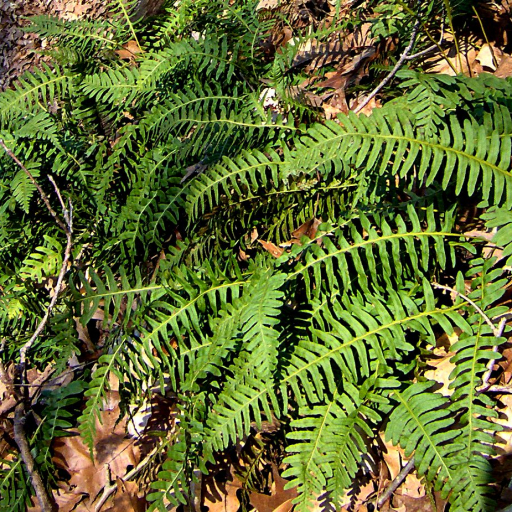
Plant Overview
Known as the Rock Polypody or "Rock-cap Fern," this resilient little plant is a true survivor of the North American wilderness. Often found clinging to mossy boulders or ancient logs, it looks like a miniature primeval forest growing in the cracks of the earth. Unlike many ferns that wither at the first sign of frost, the Rock Polypody stays vibrant and green throughout the winter, providing a splash of life against the gray stones.
🔍 How to Identify
- 🌿 The Fronds: The leaves are leathery, smooth, and deeply lobed. Unlike many other ferns where the leaflets are completely separate, these lobes are joined at the central stem, giving them a "comb-like" appearance.
- 🟢 The Underside: If you flip a leaf over, you’ll see large, circular dots called sori. These are the spore cases, and notably, they lack the thin protective "lid" (indusium) found on most other ferns.
- 🦶 The Rhizome: It spreads via a creeping, scaly rootstock that winds its way through moss and crevices, earning it the name Polypodium, which translates to "many feet."
🏡 In Your Garden
- 🪨 The Perfect Perch: This isn't a plant for standard garden soil; it is a "lithophyte," meaning it prefers to grow on rocks. To keep it happy at home, tuck it into a stone wall, a rockery, or a mossy log where its roots can breathe.
- 💧 Drought Strategy: While it loves humidity, the Rock Polypody has a fascinating way of dealing with dry spells—its leaves will curl inward to conserve moisture, looking almost dead, only to "unfurl" and look brand new as soon as it rains.
⚠️ Safety & Toxicity
- ✅ Status: Generally Non-Toxic.
- 🐾 Details: This fern is not known to be poisonous to cats, dogs, or horses. However, because it is not a culinary plant, it is best to keep it out of reach of curious nibblers to prevent minor stomach upset or damage to the plant's slow-growing fronds.
✨ Fun Fact
Indigenous peoples once used the sweet-tasting rhizomes of this fern as a natural cough suppressant and to treat sore throats. Because of its sugar content, it was sometimes referred to as "Liquorice Fern," though it is distinct from its Western cousin that shares the same nickname!

Detailed Care Instructions
| Humidity | Normal |
| Lighting | Part Sun |
| Toxicity | Poisonous |
| Difficulty | Medium |
| Temperature | 21°C - 27°C |
| Hardiness Zones | 3 - 8 |
To grow Polypodium Virginianum plants, you can follow these steps:
- Choose the right location: Polypodium Virginianum plants prefer shade or partially shaded areas with moist, well-draining soil. They can tolerate a range of soil types but prefer acidic to neutral soils.
- Prepare the soil: Before planting, ensure that the soil is loose and well-draining. You can amend the soil with organic matter like compost or peat moss to improve its fertility and drainage.
- Dig a hole: Dig a hole slightly larger and deeper than the root ball of your Polypodium Virginianum plant.
- Plant the fern: Place the plant in the hole, making sure that the top of the root ball is level with the surrounding soil. Gently backfill the hole with soil, firming it lightly around the roots.
- Watering: Give the plant a deep watering after planting to help settle the soil and establish the roots. Keep the soil consistently moist, but not waterlogged, throughout the growing season. Regular watering is especially important during dry periods.
- Mulching: Apply a layer of organic mulch, such as wood chips or leaf mold, around the base of the plant. Mulching helps retain soil moisture, prevent weed growth, and maintain a stable temperature for the roots.
- Fertilization: Polypodium Virginianum plants generally don't require a lot of fertilization, but you can apply a slow-release balanced fertilizer in spring to provide any necessary nutrients.
- Pruning: Trim back any dead or yellow fronds to maintain a neat appearance and encourage healthy growth.
- Protection: In colder regions, provide winter protection by applying a layer of mulch or leaf litter over the plant to insulate the roots from freezing temperatures.
- Propagation: Polypodium Virginianum plants can be propagated by spores or division. Spores are tiny dust-like structures found on the underside of fronds, which can be collected and sown on a suitable potting medium. Division involves separating the plant into smaller clumps and replanting them.
Remember to regularly monitor for pests and diseases, such as scale insects or fungal infections, and take appropriate measures to control them if necessary. With proper care and suitable growing conditions, your Polypodium Virginianum plant should thrive and grow well.

Place in a dark room with little light, like a dark bedroom or a spot far away from a window or directly in a north-facing window.

Polypodium Virginianum is a type of plant that requires adequate watering to thrive. The ideal way to water this plant is to give it a deep soaking once a week. This will allow the water to penetrate deep into the soil where the plant’s roots can absorb it.
To water Polypodium Virginianum, start by filling a watering can or a bucket with water. Slowly pour the water at the base of the plant, taking care not to splash it on the leaves. Watering the leaves can lead to fungal growth and other issues.
Make sure to water the plant slowly so that the water can be absorbed into the soil. You should continue watering until the soil feels moist to the touch. If you are using a watering can, try to water the soil directly around the base of the plant. This will ensure that the roots get the water they need.
In addition to watering, it is important to ensure that the soil around the plant stays moist. You can do this by adding a layer of mulch around the plant. Mulch helps to retain moisture in the soil, which will reduce the need for frequent watering.
Overall, watering Polypodium Virginianum is easy as long as you follow these simple steps. By giving your plant adequate water, you can ensure that it grows healthy and strong.
- Choose a well-draining potting mix: Prepare a potting mix that is rich in organic matter, such as compost or peat moss. Avoid heavy soils that retain excess moisture.
- Select an appropriate container: Use a pot with drainage holes to prevent waterlogging. Ensure it is large enough to accommodate the plant's root system comfortably.
- Place the plant in partial shade: Polypodium Virginianum prefers indirect or partial sunlight. Locate it near a window where it receives bright, filtered light.
- Water properly: Keep the soil consistently moist but not waterlogged. Water thoroughly when the top inch of soil feels dry. Pour water evenly across the soil surface until it drains from the bottom of the pot. Discard any excess water.
- Apply a balanced liquid fertilizer: Use a balanced, water-soluble fertilizer specifically formulated for houseplants. Follow the manufacturer's instructions for dilution and frequency. Typically, once every two to four weeks during the growing season is sufficient.
- Apply fertilizer during active growth: Only fertilize when the plant is actively growing, generally from spring to early fall. Reduce or stop fertilization during colder months as the plant's growth slows down.
- Avoid overfertilization: Excessive amounts of fertilizer can lead to salt buildup in the soil, which hinders nutrient absorption. Use fertilizers in moderation to prevent nutrient imbalance and potential harm to the plant.
- Monitor the plant's response: Observe the health and appearance of the plant. If it shows signs of nutrient deficiency (e.g., yellowing leaves), consider adjusting the fertilization frequency or concentration.
- Remove dead or yellowing fronds: Periodically remove any dead or yellowing fronds to maintain the plant's appearance and overall health.
Note: It is always recommended to refer to specific care instructions or consult a local gardening expert for detailed guidance tailored to the particular species and individual plant needs.
For optimal growth of the plant, it is recommended to use a well-draining soil mix that contains a mixture of organic and inorganic materials. The pH level of the soil should be neutral to slightly acidic. The soil should be kept moist, but not waterlogged. The plant prefers to be in a shady area with some indirect sunlight. It is important to avoid exposing the plant to direct sunlight or high temperatures, as this can cause damage to the plant. Additionally, the plant should be fertilized regularly with a balanced fertilizer to ensure healthy growth.
Polypodium Virginianum is a fern species that can be propagated through various methods such as spore propagation, division, and rhizome cuttings. Here are the steps to propagate this plant:
- Spore Propagation:
- Collect mature fronds (leaf-like structures) from the parent plant.
- Place the fronds in a paper bag and let them dry for a few days until the spores are released.
- Prepare a planting tray or pot with suitable potting mix that is moist but well-draining.
- Sprinkle the spores on top of the soil surface and gently mist them with water to settle in place.
- Cover the tray or pot with a clear plastic bag or dome to create a humid environment.
- Place the tray or pot in a warm area with indirect light and maintain consistent moisture by misting regularly.
- After a few weeks, tiny ferns called gametophytes will start to develop.
- Keep providing appropriate care until the gametophytes grow into mature ferns.
- Collect mature fronds (leaf-like structures) from the parent plant.
- Division:
- Carefully dig up the parent plant, making sure to include a portion of the underground rhizome (stem-like structure).
- Select a healthy portion of the rhizome and cut it away from the parent plant.
- Trim off any damaged or unhealthy fronds.
- Plant the divided rhizome in a well-draining potting mix, ensuring the fronds are above the soil surface.
- Water thoroughly and place it in a location with indirect light.
- Maintain appropriate moisture levels and provide regular care until the new plant establishes itself.
- Carefully dig up the parent plant, making sure to include a portion of the underground rhizome (stem-like structure).
- Rhizome Cuttings:
- Select a healthy fern with an established rhizome.
- Cut a section of the rhizome using a sterile, sharp knife. Ensure the cutting has several fronds attached.
- Trim off any damaged or unhealthy fronds.
- Plant the cutting in a suitable potting mix, burying the rhizome just below the soil surface.
- Water thoroughly and place the cutting in an area with indirect light.
- Maintain consistent moisture levels and provide regular care until the new plant takes root.
Remember to adapt the propagation method according to the specific requirements of Polypodium Virginianum and provide additional care as needed.
- Select a healthy fern with an established rhizome.








