Plant Overview
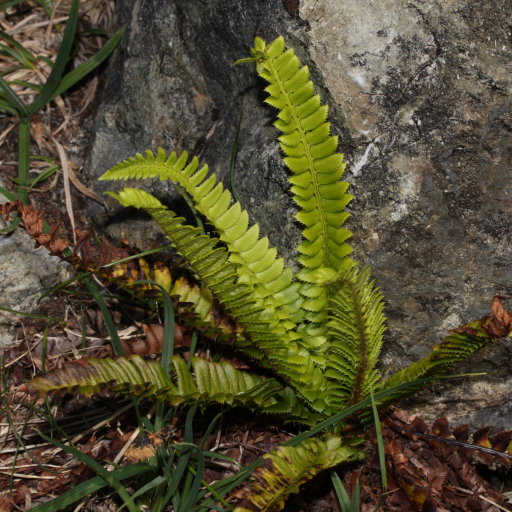
Known as the Northern Holly Fern, this resilient beauty looks like a piece of Christmas greenery that wandered into the high mountains. It is a tough-as-nails evergreen that thrives where most other ferns would shiver, often found tucked into the damp crevices of limestone cliffs and rocky alpine slopes. Its name "lonchitis" comes from the Greek word for "spear-head," referring to the sharp, pointed shape of its individual leaflets.
🔍 How to Identify
- 🌿 The Fronds: These are stiff, upright, and leathery. They grow in a tight, crown-like rosette and maintain a deep, glossy green color throughout the entire year.
- 🪚 The Leaflets: Each individual leaflet (pinna) is shaped like a small sickle and features a distinct "thumb" or lobe at the base that points toward the tip of the frond.
- 🦷 Spiny Margins: True to its "Holly" nickname, the edges of the leaflets are lined with fine, sharp-pointed teeth, giving the plant a prickly texture that discourages hungry wildlife.
🏡 In Your Garden
- 🪨 Rocky Roots: In a garden setting, this fern dreams of its mountain origins. It performs best in rockeries, alpine troughs, or stone walls where its roots can stay cool and tucked away while the crown enjoys perfect drainage.
- ⛰️ Limestone Lover: Unlike many woodland ferns that crave acidic soil, the Northern Holly Fern is a "calciphile." It thrives in lime-rich or alkaline environments; adding a bit of crushed limestone to your garden bed will help it flourish.
- 🐌 Slow and Steady: This is not an aggressive spreader. It grows slowly and maintains a very tidy, compact shape, making it an excellent choice for small spaces or "fairy gardens" where it won't overwhelm its neighbors.
⚠️ Safety & Toxicity
- ✅ Safe Profile: The Northern Holly Fern is generally considered non-toxic to humans, cats, and dogs. It is a very safe choice for households with curious pets.
- 🧤 Physical Irritation: While it isn't poisonous, the "teeth" on the edges of the leaves are surprisingly sharp. To avoid tiny scratches on your hands, it’s a good idea to wear gardening gloves when pruning or transplanting.
✨ Fun Fact
This fern is a true winter warrior. It is so cold-hardy that it can spend months completely buried under several feet of heavy snow; once the spring thaw occurs, the fronds emerge looking just as fresh and green as the day they were covered!

Detailed Care Instructions
Growing Polystichum lonchitis, also known as the Holly Fern, requires specific conditions and care. Here is a step-by-step guide to help you grow this plant successfully:
- Choose the right location: Holly Ferns prefer partial or full shade, although they can tolerate some morning or late afternoon sun. Select an area in your garden that receives dappled sunlight or is shaded for most of the day.
- Prepare the soil: Holly Ferns thrive in well-draining, moist soil that is rich in organic matter. Amend the soil with compost or well-rotted manure to improve its fertility and drainage.
- Planting: Dig a hole that is slightly larger than the root ball of your Polystichum lonchitis plant. Place the fern in the hole, making sure the top of the root ball is level with the soil surface. Backfill the hole and gently firm the soil around the plant.
- Watering: Holly Ferns enjoy consistently moist soil. Water them regularly to keep the soil evenly moist, but not waterlogged. Water deeply to encourage the roots to grow deeply.
- Mulching: Applying a layer of organic mulch around the plant will help retain soil moisture and prevent weed growth. Avoid piling the mulch directly against the fern's stems, as this may cause rotting.
- Fertilization: These ferns don't typically require a lot of fertilization. However, you can use a balanced, slow-release fertilizer once a year in early spring. Follow the packaging instructions for application rates.
- Pruning: Remove any damaged or yellowing fronds to maintain the plant's health and appearance. Cut fronds at the base, close to the soil surface, using clean and sterilized pruning shears.
- Propagation: Polystichum lonchitis can be propagated by division. In early spring, carefully dig up the plant and separate it into smaller sections, ensuring that each division has both roots and foliage. Replant the divisions in suitable locations.
- Pests and diseases: Holly Ferns are generally resistant to pests and diseases. However, keep an eye out for slugs and snails, as they might feed on the fronds. Regularly inspect the plant for any signs of damage or disease.
- Winter care: The Holly Fern is cold-hardy and can survive in temperatures as low as USDA Hardiness Zone 5. However, you may want to provide some protection during harsh winters, such as covering the plant with mulch or straw.
By following these steps, you can successfully grow Polystichum lonchitis and enjoy its beautiful foliage in your garden.

Place in a dark room with little light, like a dark bedroom or a spot far away from a window or directly in a north-facing window.

Polystichum Lonchitis is a fern plant that requires adequate water to grow and thrive. To water this plant, you can either water it directly to the soil around the base of the plant or by adding water to a tray or saucer underneath the pot to allow the plant to absorb the water through its roots. It is important not to overwater the plant as it can lead to root rot and other fungal diseases. The frequency of watering will depend on the plant's environment, humidity, and soil moisture level. It is recommended to check the soil moisture level regularly and water only when the top of the soil feels dry to the touch. Additionally, it is essential to provide good drainage to prevent waterlogging, which can damage the plant's roots.
To fertilize this plant, use a slow-release fertilizer in the spring before new growth appears. Choose a fertilizer with a balanced N-P-K ratio, and apply at the manufacturer’s recommended rate. Be sure to water the plant thoroughly after fertilizing. You can also use a liquid fertilizer diluted to half strength every two weeks during the growing season. Avoid fertilizing in the fall or winter as these plants are dormant during those times.
The recommended soil for the plant is a well-draining, acidic to neutral soil with a pH range of 4.5-7.5. The soil should have good moisture retention capacity and be rich in organic matter. It is important to avoid heavy clay soils and alkaline soils, as they can negatively affect the plant's growth. Before planting, it is recommended to amend the soil with organic matter such as compost or well-rotted manure to improve soil fertility and structure. The plant prefers partial to full shade and requires regular watering to maintain adequate soil moisture levels, especially during the growing season.
To propagate this plant, you will need to first select a healthy and mature plant from which to take cuttings. It is best to take cuttings in the early spring, before the plant has begun to put out new fronds.
Using a clean pair of pruning shears, cut off a healthy frond from the plant. Make sure the frond is at least 6 inches long and has several pairs of leaflets.
Next, remove the lower pairs of leaflets from the cutting, leaving only a few pairs at the tip. This will ensure that the plant focuses its energy on growing new roots, rather than supporting a lot of foliage.
Dip the cut end of the cutting into rooting hormone, then plant the cutting into a pot filled with a mixture of peat moss and sand. Water the cutting well and place it in a bright, but not direct, sunlight.
Keep the soil evenly moist and in a few weeks, you should see new growth on the cutting. Once the cutting has developed a strong root system and several new fronds, it can be transplanted into its own pot or into the ground.








