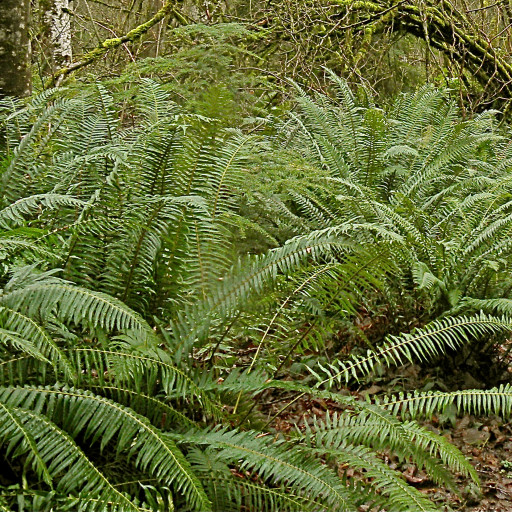
Plant Overview
Known as the "Green Sentinel of the Pacific Northwest," the Western Sword Fern is the quintessential floor-dweller of ancient evergreen forests. Its common name comes from its long, blade-like fronds, which look like a collection of swords thrust into the ground. Historically, Indigenous peoples utilized these resilient fronds as bedding, flooring, and even as "placemats" for cleaning salmon.
🔍 How to Identify
- ⚔️ Frond Shape: The fronds are stiff, leathery, and grow in a circular "crown" or vase shape, often reaching up to 4 or 5 feet in height in ideal conditions.
- 🗡️ The "Sword" Hilt: Look closely at an individual leaflet (pinna); each one has a small lobe at its base that points upward, resembling the hilt or guard of a sword.
- 🟤 Spore Clusters: On the underside of mature fronds, you will find neat rows of rusty-brown dots called sori, which the plant uses for reproduction instead of seeds.
🏡 In Your Garden
- 🌲 Forest Floor Mimicry: This fern thrives in "dry shade," a difficult niche for many plants. To keep it happy, mulch heavily with leaf mold or compost to mimic the decaying organic matter of its native coniferous habitat.
- ✂️ Spring Refresh: While it is evergreen, the older fronds can look tattered by late winter. Instead of hacking the whole plant, wait for the silver, fuzzy "fiddleheads" to appear in spring, then trim away the old, flattened fronds to make room for the new growth.
- 💧 Establishment Nuance: While famous for being drought-tolerant once mature, it requires consistent moisture during its first two years to develop the deep root system that makes it so hardy.
⚠️ Safety & Toxicity
- ✅ Status: Non-toxic and safe.
- 🐾 Pet Friendly: The Western Sword Fern is considered non-toxic to cats, dogs, and horses. It’s a perfect choice for a lush, "jungle" look in a backyard where pets roam freely.
✨ Fun Fact
Indigenous children of the Coast Salish tribes played a game called "Pala-Pala." They would see who could pull the most leaflets off a frond while saying "pala" (meaning "one" or "the only one") for every leaflet on a single breath. Whoever cleared the most leaflets won!

Detailed Care Instructions
Western sword ferns spread through rhizomes over time.
How quickly do western sword ferns grow?
As with most ferns, western sword ferns are fairly slow-growing. It will usually take a couple of years before a western sword fern is large enough to be divided.
Should I apply epsom salts to my western sword fern?
Epsom salts can be used as a liquid fertilizer for ferns, providing magnesium sulfate which can speed up plant growth. However, it is not a necessary part of fern care, and consistent fertilization with a regular balanced fertilizer should be enough for a western sword fern.
| Soil Ph | Acidic |
| Humidity | Dry |
| Lighting | Shade |
| Soil Type | Moist But Well-Drained |
| Difficulty | Easy |
| Plant Type | Evergreen, Rhizome |
| Hibernation | Cold Period |
| Mature Size | 2-4 Ft. Tall, 2-4 Ft. Wide (Outdoors); 1-2 Ft. Tall, 1-2 Ft. Wide (Indoors) |
| Native Area | North America |
| Sun Exposure | Partial, Shade |
| Hardiness Zones | 5-9 |
To grow Polystichum munitum (Western sword fern) successfully, follow these steps:
- Choose the right location: Sword ferns prefer partial to full shade and thrive in moist, well-drained soil. They can tolerate a variety of soil types, but prefer slightly acidic conditions.
- Preparing the soil: Before planting, ensure the soil is loose and well-drained. You can amend heavy clay soils with organic matter (such as compost) to improve drainage.
- Planting: Dig a hole slightly larger than the root ball of the fern. Place the fern in the hole, making sure the crown is level with the soil surface. Backfill the hole with soil, gently firming it around the roots. Water thoroughly after planting.
- Watering: Sword ferns require regular watering to keep the soil consistently moist. Water deeply, ensuring the entire root zone is saturated, but avoid overwatering, as it can lead to root rot. Use a rain gauge or moisture meter to determine when watering is necessary.
- Mulching: Apply a layer of organic mulch, such as bark chips or pine needles, around the base of the fern to help retain moisture and suppress weed growth. Leave a small gap around the crown of the plant to prevent rotting.
- Feeding: Sword ferns generally do not require a lot of fertilization. However, you can apply a balanced slow-release fertilizer in spring to provide some nutrients. Follow the package instructions for dosage.
- Pruning: Remove any dead or diseased fronds by cutting them off near the base of the plant. This helps maintain a tidy appearance and improves airflow, reducing the risk of fungal diseases.
- Winter care: Western sword ferns are hardy in USDA hardiness zones 5-8. In colder regions, protect the ferns during harsh winters by adding a layer of mulch around the base in late fall. This extra insulation helps protect the roots from freezing.
By following these guidelines, you should be able to successfully grow Polystichum munitum plants in your garden.

Place in a dark room with little light, like a dark bedroom or a spot far away from a window or directly in a north-facing window.

Polystichum Munitum plant requires regular watering to thrive. It is important to water the plant deeply so that the water reaches the roots. Allow the top layer of soil to dry out before watering again, but do not let the soil completely dry out. Watering frequency will depend on the climate and time of year, but generally, the plant will need to be watered once or twice a week. Using a watering can or a hose with a soft spray nozzle is recommended to avoid damaging the plant. Avoid getting water on the fronds as this can lead to fungal diseases. Finally, ensure that the plant has good drainage to prevent waterlogging.
To fertilize this plant, use a balanced slow-release fertilizer in early spring before new growth appears. Apply the fertilizer to the soil around the base of the plant, taking care not to get any on the leaves. Water the plant well after fertilizing. Repeat fertilization once or twice during the growing season, following the same instructions. Avoid fertilizing in late fall or winter when the plant is dormant.
The ideal soil for Polystichum Munitum plants typically needs to be well-draining and slightly acidic in nature with a pH range of around 5.5 to 6.5. The soil should also be rich in organic matter and high in nutrients. A good soil mixture for this plant may include a healthy dose of peat moss or compost, mixed with coarse sand or perlite to ensure adequate drainage. It is also important to avoid using heavy or clay soils as they tend to hold too much water and can cause root rot. An ideal soil mix for Polystichum Munitum should be able to hold enough moisture to keep the plant healthy without becoming waterlogged.
There are a few ways to propagate this plant. One method is through spores, which can be collected from mature fronds and planted in a suitable growing medium. Another method is through division, where the plant can be separated into smaller sections and replanted. The ideal time to perform division is in the early spring when new growth is just starting to emerge. This can be done by carefully digging up the plant and separating the roots by gently pulling them apart. Each section should have a healthy root system and a few fronds attached. Finally, the new plants should be planted in a suitable location with adequate moisture and light.








