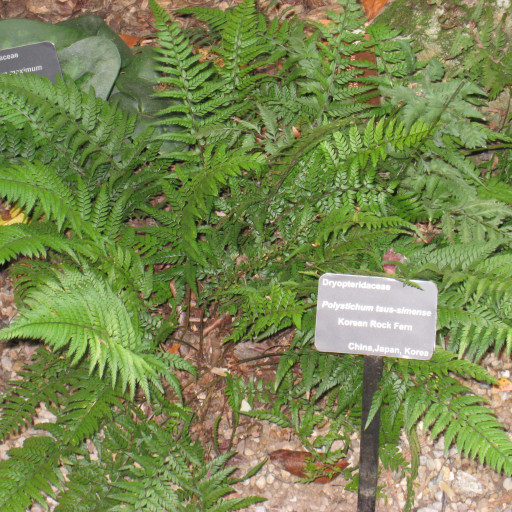
Plant Overview
Known affectionately as the Korean Rock Fern or Tsus-shima Holly Fern, this elegant East Asian native is a favorite for terrarium enthusiasts and shade gardeners alike. Unlike some ferns that become unruly and wild, this species stays compact and tidy, looking almost like a miniature piece of evergreen architecture. It’s a "resilience champion" among ferns, often thriving in those dark, humid corners of the home where other plants might struggle.
🔍 How to Identify
- 🌿 Leathery Fronds: The foliage is a deep, forest-green with a slightly glossy, parchment-like texture that feels much tougher than the delicate leaves of a Maidenhair fern.
- 🖤 Dark Stems: Look closely at the "stems" (stipes); they are covered in distinctive dark brown or black scales, creating a striking visual contrast against the green fronds.
- 📐 Pointed Architecture: The individual leaflets (pinnules) are sharply pointed and arranged in a neat, symmetrical pattern that gives the plant a formal, "holly-like" appearance.
🏡 In Your Garden
- 💧 The Humidity Balance: While it is more drought-tolerant than many ferns, it still dreams of the misty cliffside forests of its homeland. If the tips of the leaves turn crispy, it's a signal that the air is too dry—consider a pebble tray or a bathroom placement.
- 🏔️ Rock-Steady Roots: In nature, this fern often grows in the crevices of rocks. This means it hates "wet feet." Use a potting mix that drains quickly (like a blend of peat and perlite) to prevent the roots from suffocating in stagnant water.
- 🐢 Slow & Steady Growth: Don't be alarmed if it doesn't double in size overnight. This is a slow-growing species that prefers to establish a strong root system rather than rushing to produce new fronds.
⚠️ Safety & Toxicity
- ✅ Safe for All: The Korean Rock Fern is considered non-toxic to humans, cats, and dogs.
- 🌿 Gentle Handling: While it is safe to touch, the base of the stems can be a bit "scruffy" due to the dark scales. These aren't thorns, but they can feel a bit rough to the touch when pruning.
✨ Fun Fact
The species name tsus-simense is a tribute to its origin; it refers specifically to Tsushima Island, a Japanese island located in the Korea Strait where this fern was first extensively studied and documented by botanists.

Detailed Care Instructions
| Humidity | Normal |
| Lighting | Part Sun |
| Difficulty | Medium |
| Temperature | 18°C - 24°C |
| Hardiness Zones | Min 8A |
To grow Polystichum tsus-simense, also known as Korean Rock Fern or Korean Tassel Fern, you can follow these steps:
- Choose the right location: Polystichum tsus-simense thrives well in partial shade to full shade. Select a spot in your garden or indoor space where it can receive filtered sunlight or indirect light.
- Soil preparation: The fern prefers well-draining soil with organic matter. Amend the soil by adding compost or peat moss to improve its structure and moisture retention capabilities.
- Planting: If you have a potted fern, ensure the container has drainage holes. Transplant the fern into the prepared soil, maintaining the same depth at which it was previously grown, and gently firm the soil around it. Water thoroughly after planting.
- Watering: Keep the soil consistently moist but not overly saturated. Water the fern regularly, especially during dry periods. It is important to maintain a balance as Korean Rock Fern does not like to dry out completely or remain continually waterlogged.
- Mulching: Apply a layer of organic mulch, such as wood chips or shredded leaves, around the fern to conserve moisture, suppress weeds, and provide essential nutrients as it decomposes.
- Fertilizing: Feed the fern with a balanced, slow-release fertilizer once or twice a year, following the package instructions. Alternatively, you can use a liquid fertilizer at half the recommended strength during the growing season.
- Pruning: Remove any dead or damaged fronds at the base of the plant to maintain its appearance and overall health. Trim back any excessive growth that may be encroaching on other plants or limited space.
- Protection from extreme conditions: In harsh winters, provide protection to the fern by covering it with a layer of mulch or moving potted plants indoors. Similarly, ensure the fern is shielded from cold winds during winter.
- Division and propagation: After a few years, you may divide the fern by carefully separating the root ball into smaller clumps. Each clump should have healthy fronds and a portion of the rhizome. Replant these divisions in suitable locations or containers.
By following these guidelines, you can successfully grow and care for Polystichum tsus-simense, enjoying its vibrant green fronds and elegant aesthetic appeal.

Place in a window with dappled sun or a spot in the middle of a room. Or directly in a window facing west or east.

To properly water the plant referred to as Polystichum Tsus-simense, it is important to consider the soil moisture level and the plant's needs. The best way to determine when the plant needs water is to feel the soil about two inches deep. If the soil feels dry at this depth, it is time to water.
When watering, use room temperature water and avoid overwatering as too much water can lead to root rot. Water the plant at the base and avoid getting water on the foliage to prevent the growth of mold or fungus.
The frequency of watering will depend on environmental factors such as temperature, humidity, and sunlight. In general, it is recommended to water once a week, but this may vary depending on the conditions the plant is growing in.
During the winter months, reduce watering as the plant may enter a period of dormancy. In contrast, during the summer months when the plant is actively growing, it may require more frequent watering.
Proper watering will help the plant to thrive and maintain its vibrant appearance.
To fertilize this plant, select a balanced fertilizer with equal amounts of nitrogen, phosphorus, and potassium. Apply the fertilizer in early spring when new growth begins and again in late summer. Be careful not to over-fertilize as this can damage the plant. Use a slow-release fertilizer to provide steady nutrients over time. Water the plant well after fertilizing.
The ideal soil for this plant is a well-draining, slightly acidic soil with a pH between 5.5 and 6.5. The soil should be rich in organic matter and have good moisture retention while still allowing for proper drainage. A mixture of peat moss, sand, and loam soil is recommended, with added fertilizers such as slow-release fertilizer or compost. It is essential to avoid heavy clay soils and soil that is constantly wet or dry, as this can lead to root rot or drought stress. The plant also prefers partially shaded to fully shaded areas and requires regular watering to maintain healthy growth.
One way to propagate this plant is through spores. To do this, you will need to collect the spores from mature fronds of the plant. Once you have collected the spores, plant them onto moist soil in a container or tray. Keep the soil moist and the container in a warm and bright location. The spores should germinate within a few weeks.
Another method to propagate this plant is through division. To do this, you will need to carefully dig up the plant and separate the root ball into smaller sections. Each section should have some roots and fronds. Replant each section in a new location and keep the soil moist until they establish.
Lastly, this plant can be propagated through rhizome cuttings. To do this, carefully dig up a clump of the plant and cut off a section of the rhizome with some fronds and roots attached. Plant the cutting in a new location and keep the soil moist until it establishes.
Common pests of the korean rock fern include Mealybugs, spider mites, aphids. Make a habit of checking your korean rock fern frequently for pests so that any infestations can be caught and managed early.







