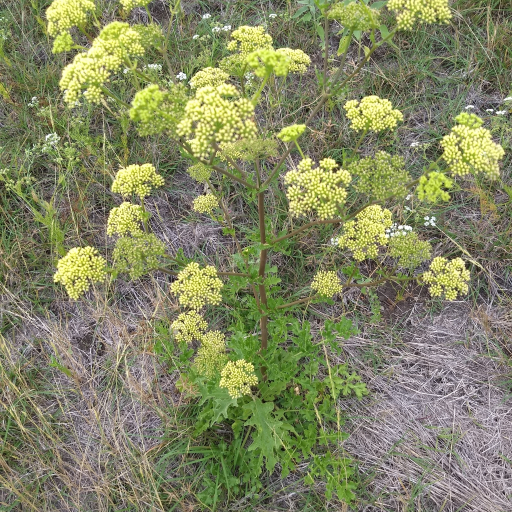
Plant Overview
Often called the Texas Prairie Parsley, this resilient native wildflower is a hallmark of the Southern Great Plains. While it looks like a wild, golden version of the herb found in your kitchen, it is a rugged survivor designed for the heat of the prairie. It serves as a vital bridge in the local ecosystem, acting as both a nectar source and a nursery for some of our most beloved butterflies.
🔍 How to Identify
- 🌼 Golden Umbels: The flowers appear in flat-topped, lace-like clusters (umbels) of tiny, vibrant yellow blossoms that lack the white outer "petals" seen in other parsley relatives.
- 🌿 Fern-like Foliage: Its leaves are deeply divided and lobed, creating a soft, feathery appearance that looks remarkably similar to garden parsley or cilantro.
- 📏 Sturdy Stems: The plant grows upright on thick, ribbed stems that often develop a reddish or purplish hue near the base as the season progresses.
🏡 In Your Garden
- 🌱 The Taproot Rule: Like many prairie natives, it develops a very deep taproot to find water during droughts. This means it hates being moved; choose its "forever home" carefully, as transplanting adult plants usually fails.
- 🦋 A Butterfly Nursery: This plant is a primary host for the Eastern Black Swallowtail butterfly. If you see striped caterpillars munching on the leaves, don't panic—they are your future garden guests!
- ☀️ Sun Seeker: It thrives in poor, rocky, or clay soils where other plants might struggle, provided it has full access to the sun and well-draining earth.
⚠️ Safety & Toxicity
- 🧴 Skin Sensitivity: Like many members of the Apiaceae family, the sap contains compounds that can cause "phytophotodermatitis." If the sap gets on your skin and is then exposed to sunlight, it can cause a red, itchy rash.
- 🐾 Pet Safety: While not considered highly toxic to livestock or pets, the skin-irritating sap can affect curious dogs who brush through a broken stem in bright sunlight.
- 🚫 The Look-alike Warning: Never forage this plant for food. It shares a resemblance to the deadly Poison Hemlock; unless you are an expert, enjoy its beauty from a distance.
✨ Fun Fact
The genus name Polytaenia comes from the Greek words for "many" and "bands," which refers to the unique, numerous oil tubes found inside its seeds—a specialized feature that helps the seeds survive the harsh prairie elements until they are ready to sprout.

Detailed Care Instructions
To grow Polytaenia texana (Texas parsely), follow these steps:
- Obtain seeds or transplants: You can either get seeds from a reliable nursery or order them online. If you prefer transplants, find a local nursery that sells them.
- Choose a suitable location: The ideal spot for Polytaenia texana is an area with full sun to partial shade and well-draining soil. The soil should be rich in organic matter and loamy.
- Prepare the soil: Before planting, prepare the soil by removing any weeds, rocks, or debris. Loosen the soil using a garden fork or tiller to a depth of about 6-8 inches. Amend the soil with compost or well-aged manure to improve fertility and drainage.
- Planting seeds or transplants: If you are using seeds, sow them directly into the prepared soil at a depth of about ¼ inch. Space the seeds or transplants about 12-18 inches apart. Water gently after planting.
- Watering: Regular watering is essential, especially during the establishment phase. Keep the soil consistently moist but not waterlogged. Water deeply at least once a week, and more frequently during hot and dry periods.
- Mulching: Apply a layer of organic mulch, such as wood chips or straw, around the plants to help retain moisture and suppress weeds. Leave a small open space around the base of the plant to prevent rot.
- Fertilizing: Polytaenia texana generally doesn't require heavy feeding. If your soil lacks nutrients, you can apply a balanced, slow-release organic fertilizer once or twice during the growing season, following the manufacturer's instructions.
- Pruning: As the plant grows, you can pinch back the tips to encourage bushier growth and prevent legginess. Regular pruning also helps maintain a neat appearance.
- Pest and disease control: Polytaenia texana is relatively resistant to pests and diseases. However, keep an eye out for common garden pests like aphids or caterpillars and take appropriate measures if necessary, such as handpicking or using organic pest control methods.
- Harvesting: Once the plant reaches maturity, you can start harvesting the leaves as needed. Harvest with clean, sharp scissors or pruning shears, taking care not to damage the stems or the main plant.
Remember to check the specific requirements of Polytaenia texana for your growing zone, as some variations in cultivation may exist depending on your location.

Place in a bright room that is sun drenched almost all day. Or directly in a south-facing window.

Polytaenia Texana is a plant that requires regular watering to help it thrive. The best approach is to water it deeply but infrequently. This means that you should give it a good amount of water, but allow the soil to dry out a bit before watering again.
To water your Polytaenia Texana plant, you should first check the soil moisture level. You can do this by sticking your finger into the soil about an inch down. If the soil feels dry, it's time to water your plant.
When watering your Polytaenia Texana plant, you should use a watering can or hose to gently water the soil around the base of the plant. Be sure to avoid getting water on the leaves, as this can cause them to become waterlogged and potentially develop fungal diseases.
After watering, be sure to allow the soil to drain and avoid leaving the plant sitting in standing water. This can cause the roots to rot and damage the plant.
In general, you should aim to water your Polytaenia Texana plant once or twice a week, depending on the weather conditions. During hot and dry weather, you may need to water the plant more frequently to keep it healthy and hydrated.
To fertilize this plant, first, choose a balanced fertilizer that contains equal parts of nitrogen, phosphorus, and potassium. Then, dilute the fertilizer to half strength by mixing it with water. Apply the fertilizer solution to the soil around the base of the plant, taking care not to get any on the leaves. Water the plant after fertilizing to ensure the nutrients are absorbed. Fertilize every 4-6 weeks during the growing season, reducing the frequency in the fall and winter months. Avoid fertilizing during periods of drought or hot weather.
Polytaenia Texana plant prefers well-draining soil that is rich in organic matter. It thrives in soil that has a pH level between 6.0 to 7.5. The soil should not be compacted, as it can lead to waterlogging and root rot. A soil mix composed of loam, sand, and peat moss is ideal for this plant. Additionally, adding perlite or vermiculite to the soil mix can improve drainage. Regularly amending the soil with compost or other organic matter can provide the necessary nutrients to support healthy growth.
First, select a healthy and mature Polytaenia Texana plant from which to take cuttings. The cutting should be 4-6 inches long and have at least 2-3 leaves.
Next, prepare a pot or container with a well-draining soil mix.
Dip the bottom of the cutting into a rooting hormone and plant it into the soil, making sure the soil is moist but not waterlogged.
Cover the pot with a plastic bag or dome to create a humid environment and place it in a bright, indirect light location.
Keep the soil moist and continue to monitor the cutting for the next few weeks. Once new growth appears, the cutting has rooted and can be transplanted into its own container with potting soil.
Continue to keep the soil moist and provide the plant with bright, indirect light until it becomes established.








