Plant Overview
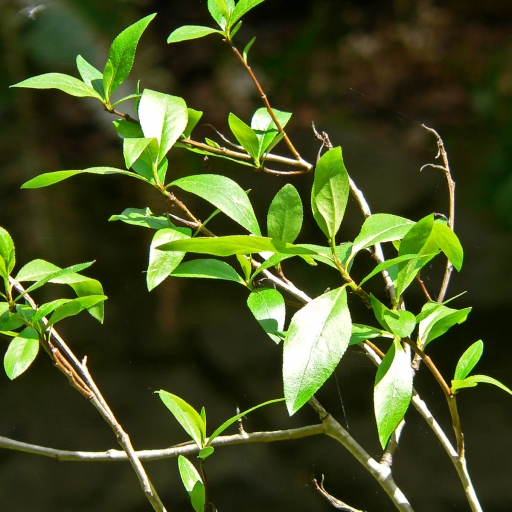
Known as the Narrowleaf Cottonwood, this slender beauty is a signature of the American West’s high-country streams and riverbanks. Unlike its broad-leaved cousins, its foliage mimics the willow, giving it an elegant, willow-like appearance that dances in the mountain breeze. It is a hardy pioneer, often being the first to reclaim land after a flood or fire.
🔍 How to Identify
- 🍃 Willow-like Leaves: The most distinguishing feature is the long, lance-shaped leaves (2–5 inches) with finely toothed edges, lacking the broad "heart" shape typical of other cottonwoods.
- 🪵 Creamy Bark: Young trees boast smooth, yellowish-green bark that eventually turns thick, furrowed, and gray-brown as the tree matures.
- ☁️ Cottony Seeds: In late spring, female trees release "snowflakes" of fluffy, white-tufted seeds that can cover the ground like a summer blizzard.
🏡 In Your Garden
- 💧 Thirsty Roots: This tree is a natural "hydrophile," meaning it craves constant moisture. It is best suited for large properties with natural water features or areas with high water tables, rather than a dry suburban lawn.
- 🏗️ Infrastructure Awareness: Because it has an aggressive, wide-spreading root system designed to anchor into riverbanks, avoid planting it near sewer lines, sidewalks, or home foundations where it might cause damage.
⚠️ Safety & Toxicity
- 🤧 Allergy Alert: While not poisonous to touch or ingest in small amounts, the male trees produce heavy amounts of wind-borne pollen in the spring, which can be a nightmare for hay fever sufferers.
- 🐾 Pet Friendly: It is generally considered non-toxic to dogs, cats, and horses, though the "cotton" shed by female trees can be a messy nuisance for homeowners.
✨ Fun Fact
Native American tribes, including the Hopi and Navajo, used the inner bark of the Narrowleaf Cottonwood as a "survival food" or sweet treat, and the sticky resin from its buds was often used as a natural glue or salve for wounds.

Detailed Care Instructions
To grow Populus angustifolia, also known as the narrowleaf cottonwood, you can follow these guidelines:
- Climate and soil: Populus angustifolia is native to North America and thrives in USDA hardiness zones 3 to 7. It prefers full sun and moist, well-draining soils.
- Propagation: You can propagate Populus angustifolia from seeds or cuttings. If starting from seeds, collect them in autumn and sow them in a cold frame or a pot filled with a mix of soil and compost. Keep the soil moist until germination, which usually takes around 1-2 weeks. If using cuttings, take 6-8 inch stem cuttings from a healthy, disease-free tree during the dormant season, typically in winter or early spring.
- Planting: Transplant the seedlings into their permanent location in late spring or early summer, making sure to give each sapling adequate space to grow. If using cuttings, prepare the planting hole by loosening the soil and mixing in compost or well-rotted manure.
- Watering: Provide regular water to help the trees establish their root systems. Ensure the soil remains consistently moist but not waterlogged. Mulching around the base of the tree can help retain moisture.
- Pruning: Young trees may benefit from formative pruning to encourage a strong branching structure. Remove any damaged or diseased branches, as well as any crossing or rubbing branches.
- Fertilization: Populus angustifolia generally does not require regular fertilizing, but if the tree shows signs of nutrient deficiencies, you can apply a balanced fertilizer in early spring.
- Pest and disease management: Monitor the tree for common pests such as aphids, caterpillars, or borers. Apply appropriate insecticidal treatments or use organic pest-control methods if necessary. Populus angustifolia is generally resistant to diseases but can occasionally suffer from cankers or leaf spot. Promptly remove and destroy any infected plant material.
- Environmental considerations: Narrowleaf cottonwoods are typically found near water sources, so if you have access to a stream, pond, or other suitable location, consider planting your Populus angustifolia nearby, as it can have a positive impact on the environment and provide habitat for various wildlife species.
Remember that growing trees requires patience, and it may take several years for your Populus angustifolia plant to reach its full size and maturity.

Place in a bright room that is sun drenched almost all day. Or directly in a south-facing window.

The Populus Angustifolia plant requires regular and consistent watering to thrive. When watering the plant, it is important to ensure that the soil is moist but not waterlogged. To achieve this, you should water the plant deeply, allowing the water to penetrate the soil and reach the roots. However, be careful not to overwater the plant as this can lead to root rot and other problems.
To determine when the plant needs water, you can check the soil moisture level by inserting your finger into the soil. If the soil feels dry to the touch, it's time to water the plant. It is preferable to water the plant in the morning or early afternoon as watering at night can increase the chances of fungal growth.
When watering the Populus Angustifolia plant, avoid getting water on the foliage as this can lead to foliar diseases. Instead, water the soil directly at the base of the plant. Use a watering can or a hose with a nozzle to ensure that the water is directed to the roots.
During the winter months, the Populus Angustifolia plant requires less water as it becomes dormant. However, be sure to not let the soil become completely dry during this time period.
To fertilize this plant, apply a balanced fertilizer with equal parts nitrogen, phosphorus, and potassium in early spring before new growth appears. Repeat the application every six weeks until late summer. Avoid over-fertilization as it could lead to excessive growth and weak stems. Water the plant thoroughly after fertilizing.
The ideal soil to use for the Populus Angustifolia plant should be well-draining and have a neutral pH level. It should be rich in organic matter and have good water retention capabilities. The soil should also be loose and friable to support the growth of the plant's extensive root system. A sandy loam soil would be appropriate for this plant as it would allow for good air circulation to the roots and prevent waterlogging. In addition, the soil should be free from any disease-causing pathogens or pests that may harm the plant. Regular soil amendments and fertilization should also be carried out to maintain the soil quality and support the healthy growth of the Populus Angustifolia plant.
To propagate this plant, one can start by taking cuttings from a mature plant during the dormant season (late fall to early spring). Ideally, one should choose cuttings that are 6-12 inches long and have at least 2-3 nodes. The cuttings should be taken from the tip of the branch, using clean and sharp pruning shears.
Once the cuttings are collected, remove any leaves from the lower part of the stem and make sure the base of the cutting is at a diagonal angle. Next, dip the cut end of the stem into rooting hormone powder and tap off excess. Then, place the cuttings into a pot filled with sterile soil mix, making sure they are deep enough to maintain stability, and position them in a bright, filtered light environment.
To improve the success rate of propagation, keep the soil moist, cover the pot with a plastic bag or plastic wrap to retain moisture, and mist the cuttings with water every few days. Monitor the temperature to ensure it stays between 60-70°F, as this is optimal for root growth.
After a period of about 4-6 weeks, new growth should appear, signaling that roots have developed and are now able to sustain the new plant. At this point, it's time to take off the plastic wrap and allow sunlight to penetrate through the soil surface, and gradually harden off the new plant by exposing it to environments of increasing light and moisture intensity over several weeks.
Once the new plant has become established, it can be transplanted to its permanent location with sheltered and well-draining soil. With proper care such as regular watering and pruning, this plant should thrive and grow to maturity.








