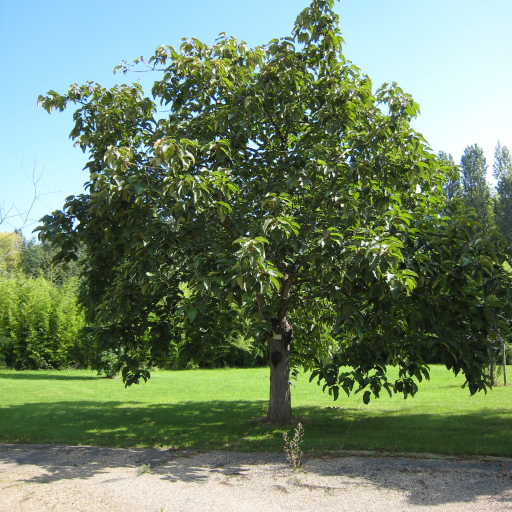
Plant Overview
Known as the "King of Poplars," Populus lasiocarpa, or the Chinese Necklace Poplar, is a botanical showstopper that brings a touch of the prehistoric to modern gardens. Native to the mountain valleys of China, it is famous for its massive, heart-shaped leaves and vibrant red accents. Its nickname comes from its long, dangling seed catkins that resemble beaded jewelry hanging from the branches in early spring.
🔍 How to Identify
- 🍃 Colossal Foliage: The most striking feature is the giant, heart-shaped leaves, which can grow up to 12 inches (30 cm) long—much larger than your average poplar.
- 🔴 Ruby Ribs: The central veins and the long leaf stalks (petioles) are a brilliant, deep crimson red, creating a stunning contrast against the forest-green leaf surface.
- 🧶 Velvety Shoots: New growth and young buds are often covered in a fine, yellowish-gray fuzz (tomentum), which gives the branch tips a soft, felt-like texture.
🏡 In Your Garden
- 💧 Thirst for Moisture: This tree is a "water-lover" and thrives in damp, deep, and fertile soil. It is an excellent choice for planting near ponds or in low-lying areas of the garden where the ground stays naturally moist.
- 🛡️ Wind Protection: Because the leaves are so large, they can act like sails in a storm. To prevent the foliage from tearing or "tattering," it is best to plant it in a sheltered spot away from high-velocity winds.
- ☀️ Sun for Color: While it can tolerate light shade, full sun is required to bring out the intense red coloration in the leaf veins and stems.
⚠️ Safety & Toxicity
- 🟢 Non-Toxic: Populus lasiocarpa is generally considered safe and non-toxic for humans, dogs, and cats.
- 🤧 Pollen Potential: Like most members of the Willow family, it produces catkins in early spring. If you suffer from seasonal allergies, the pollen from male trees may trigger a "hay fever" response during the blooming period.
✨ Fun Fact
The leaves of the Chinese Necklace Poplar are so large and sturdy that they have historically been used by travelers in rural China as emergency umbrellas during sudden mountain rain showers!

Detailed Care Instructions
To grow Populus lasiocarpa, also known as the Chinese white poplar, follow these steps:
- Obtain Seeds or Cuttings: You can either purchase seeds from a reputable source or obtain cuttings from a mature plant. Cuttings should be taken from young branches in the spring or early summer.
- Prepare the Planting Area: Choose a well-draining location with full sun or partial shade. Loosen the soil and remove any weeds or grass. You may want to add organic matter, such as compost, to enhance soil fertility.
- Planting Seeds: If you have obtained seeds, sow them in a seed-starting tray filled with a well-draining potting mix. Bury the seeds approximately 1/8 inch deep and lightly cover them with soil. Keep the soil moist but not waterlogged.
- Propagating from Cuttings: Dip the cut end of the branch in a rooting hormone powder and insert it into a pot filled with a well-draining potting mix. Place the pot in a warm location with indirect light. Mist the cutting regularly to maintain humidity.
- Watering: Water newly planted seeds or cuttings regularly to keep the soil evenly moist, but avoid overwatering. Once the plants are established, water deeply but infrequently to encourage deep root growth.
- Fertilizing: Apply a balanced slow-release fertilizer in early spring and early summer to provide nutrients for healthy growth. Follow the manufacturer's instructions for application rates.
- Pruning: Prune your Populus lasiocarpa plant in early spring to remove any dead or diseased branches and to shape the tree. This will help promote healthier growth and maintain an appealing appearance.
- Protect from Pests and Diseases: Keep an eye out for common poplar pests such as aphids, leaf beetles, or borers. Use appropriate pest control methods if necessary. Additionally, ensure good air circulation and avoid overwatering to prevent diseases like root rot.
- Mulching: Apply a layer of organic mulch around the base of the tree to conserve moisture, suppress weed growth, and regulate soil temperature.
- Winter Care: Populus lasiocarpa is generally cold-hardy but may benefit from protection in severe winters. Mulch around the base of the tree to insulate the roots and wrap the trunk with burlap if needed.
Remember, growing a Populus lasiocarpa plant requires patience and may take several years to reach maturity.
Populus lasiocarpa is a plant species that belongs to the genus Populus. It is a deciduous tree that grows mainly in wet areas such as stream banks, swamps, and wet meadows. The most effective way to water Populus lasiocarpa is to use a soaker hose or drip irrigation system that will provide a slow, steady stream of water directly to the roots. This method will help to avoid water loss due to evaporation and will also prevent the roots from being damaged by high-velocity watering.
It is recommended to water the plant deeply and regularly, especially during the growing season when it is actively growing. In general, the tree needs the equivalent of about 1 inch (2.5 cm) of rainfall per week to thrive, though this can vary depending on factors such as soil type and weather conditions.
To check whether it's time to water the plant, simply dig a small hole a few inches deep and examine the soil. If it feels dry to the touch, it's time to water. Be sure to avoid overwatering, as this can lead to root rot and other issues.
For optimal growth, it is recommended to fertilize this plant in the early spring before new growth appears. Use a balanced fertilizer with equal parts nitrogen, phosphorus, and potassium, and apply according to the package instructions. Avoid fertilizing too late in the season as this can lead to new growth that is vulnerable to frost damage. Additionally, be sure to water the plant thoroughly after fertilizing to ensure nutrients are properly absorbed.
Populus lasiocarpa plant requires well-drained soil that is rich in organic matter and nutrients. A soil pH range of 4.5 to 7.5 is suitable for its growth. The soil texture should be a combination of sand, silt, and clay. The plant prefers a slightly acidic soil, so it is recommended to add organic matter such as compost, peat moss, or grass clippings to the soil.
The soil should retain moisture but not be waterlogged, as the plant does not tolerate soggy soil. Therefore, it is essential to ensure proper drainage. If the soil is heavy and clayey, adding sand or perlite can help improve its drainage.
Additionally, Populus lasiocarpa plant prefers nutrient-rich soil that contains a balanced level of nitrogen, phosphorus, and potassium. Fertilizers can be added to the soil before planting to ensure adequate nutrition. It is best to apply a slow-release organic fertilizer to avoid over-fertilization.
In summary, the ideal soil for Populus lasiocarpa plant is well-drained, slightly acidic, nutrient-rich, and contains organic matter.
Populus Lasiocarpa can be propagated through various methods such as seed propagation, cuttings, and grafting.
Seed propagation involves collecting mature seeds from the tree during late summer or early fall. These seeds can be stored in a cool and dry place until the following spring. In the spring, the seeds can be sown in a well-draining soil mix and placed in a sunny location. The seeds will germinate in about two to three weeks.
The tree can also be propagated by taking hardwood cuttings during the dormant season. Cuttings should be taken from healthy and mature trees and should be about 8-10 inches long with at least three nodes. These cuttings can be treated with a rooting hormone and planted in a soil mix of sand and peat moss. The cuttings should be kept in a humid and warm environment until they begin to root.
Grafting is another method used to propagate Populus Lasiocarpa. This process involves taking a scion, which is a small branch or bud, from a desirable tree and attaching it to the rootstock of another tree. The two plant parts are joined together and wrapped with grafting tape until they grow together. Grafting can be done in the spring or fall and requires careful attention to detail.
No matter what propagation method is used, it is important to keep the plants well-watered and protected from harsh weather conditions until they are mature enough to be transplanted into their permanent location.








