Plant Overview
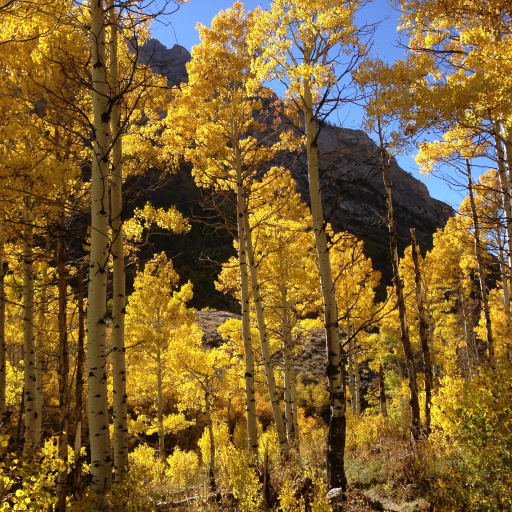
Known as the "Mountain Aspen" or "Golden Aspen," the Quaking Aspen is the most widely distributed tree in North America. It is the true "voice" of the forest; its leaves are famous for dancing and whispering even in the slightest breeze, a phenomenon that has inspired countless myths and campfire stories. Beyond its beauty, this tree is a symbol of endurance and community, often existing as part of a massive, ancient underground network.
🔍 How to Identify
- 🍃 The Quaking Leaf: Heart-shaped or nearly round with finely serrated edges. The petiole (leaf stem) is uniquely flattened, which causes the leaf to pivot and "quake" at the smallest hint of wind.
- ⚪ Chalky Bark: Smooth, greenish-white to cream-colored bark that feels powdery to the touch. Unlike Birch, Aspen bark does not peel off in thin layers.
- 🍂 Autumn Brilliance: In the fall, entire hillsides of these trees transform into a stunning, uniform canopy of shimmering bright gold or buttery yellow.
🏡 In Your Garden
- 🏞️ Cool Climate Specialist: These trees are "pioneer species" that thrive in cooler climates and high altitudes. They struggle significantly in hot, humid southern lowlands, where they become highly susceptible to trunk cankers and pests.
- 🌳 The Clone Network: Be prepared for "babies" to pop up far from the main trunk. Aspens grow primarily through a shared root system (rhizomes). When you plant one, you are often starting a colony; the new shoots (suckers) will quickly claim the surrounding lawn if not managed.
⚠️ Safety & Toxicity
- ✅ Safe Status: The Quaking Aspen is generally considered non-toxic to humans, dogs, and cats.
- 💊 Aspirin Ancestry: The bark contains salicin, a chemical compound closely related to aspirin. While it is not dangerous to touch, it’s best to discourage pets from chewing on the bark or branches, as it could cause mild digestive upset in large quantities.
✨ Fun Fact
The "Pando" colony in Utah is a single Quaking Aspen root system that supports over 40,000 individual tree trunks. It is estimated to be roughly 80,000 years old and weighs 6,000 tons, making it one of the oldest and heaviest living organisms on the planet!

Detailed Care Instructions
Yes. You can't grow quaking aspen around water lines, septic tanks, etc. This is a drawback common to trees and shrubs in the Willow family, including the ever-popular pussy willow (Salix discolor).
Does quaking aspen tree have nice fall foliage?
Yes. It turns a brilliant golden-yellow color in fall.
| Lighting | Full Sun |
| Hardiness Zones | Max 6B |
To grow Populus Tremuloides (Quaking Aspen) plants, follow these steps:
- Collect Seeds: Obtain seeds from a reputable nursery or collect ripe seeds from existing Quaking Aspen trees in early fall when the cottony fluff is present.
- Cold Stratification: Place the seeds in a plastic bag filled with slightly damp sand, peat moss, or vermiculite. Seal the bag and store it in the refrigerator for 60-90 days to simulate winter dormancy. This process, called cold stratification, encourages germination.
- Prepare pots or seed trays: Fill small pots or seed trays with a well-draining soil mix, such as a combination of peat moss, perlite, and vermiculite.
- Sow the seeds: Sow the stratified seeds on the soil surface, spacing them apart and lightly pressing them into the soil. Do not cover the seeds with soil, as they require light to germinate.
- Watering: Moisten the soil surface with a spray bottle or a gentle sprinkle. Avoid overwatering, as excessive moisture can cause the seeds to rot.
- Maintain Temperature and Moisture: Place the pots or trays in a cool location with a temperature between 60-70°F (15-21°C). Covering the pots with a clear plastic dome or plastic wrap helps retain moisture. Check the soil regularly and mist if it becomes dry.
- Germination: It may take 2-6 weeks for the seeds to germinate. Once the seedlings emerge, remove the plastic cover and provide them with bright, indirect light.
- Transplanting: When the seedlings have grown two sets of true leaves, they are ready to be transplanted into larger pots or directly into the ground. Ensure the soil is well-drained and fertile.
- Outdoor Planting: Choose a sunny location with rich, loamy soil for planting. Quaking Aspen trees prefer a lot of sunlight. Space the young trees about 10-15 feet apart.
- Watering and Maintenance: Keep the soil evenly moist (but not soggy) for the first year. Water deeply and less frequently as the trees establish. Mulching around the base of the trees helps retain moisture and suppresses weeds.
- Pruning: Trim any damaged or diseased branches as the tree grows. Prune to maintain the desired shape and remove any dead wood.
- Protect from Wildlife: Quaking Aspen is often browsed by deer and rabbits. Consider protecting the trees with fencing or applying repellents to discourage animal grazing until the trees are well established.
Remember, growing trees from seeds requires time, patience, and dedicated care. Quaking Aspen can also reproduce vegetatively by rhizome growth or suckering, so you may explore those methods as well.

Place in a bright room that is sun drenched almost all day. Or directly in a south-facing window.

Populus Tremuloides plant requires regular and consistent watering to keep the soil evenly moist. The plant should not be allowed to dry out completely, as this can harm its growth and development. The best way to water this plant is to use a watering can or hose to slowly and evenly saturate the soil around the base of the plant. It is important to avoid over-watering, as this can lead to root rot and other problems. To check the moisture level of the soil, stick your finger down into the soil up to your knuckle. If the soil feels dry, it is time to water. If it feels moist, wait a day or two before checking again. It is also a good idea to mulch around the base of the plant to help retain moisture in the soil and prevent evaporation.
- Before fertilizing, ensure that the soil is moist, but not waterlogged.
- Choose a balanced, slow-release fertilizer with equal amounts of nitrogen, phosphorus, and potassium.
- Apply the fertilizer evenly around the drip line of the tree, keeping it at least 12 inches away from the trunk.
- Use a garden fork or rake to work the fertilizer into the top layer of soil.
- Water the area thoroughly after application to allow the fertilizer to penetrate the soil.
- Avoid fertilizing during periods of drought or extreme heat.
- Repeat the fertilization process annually in early spring, just before new growth begins.
The ideal soil for the Populus Tremuloides plant is light and porous, allowing for adequate drainage and aeration. The soil should have a slightly acidic (pH 5.0-6.5) to neutral (pH 6.5-7.0) pH value. Organic matter is beneficial but not necessary, and the soil should be fertile with adequate levels of nitrogen, phosphorus, and potassium. It is important to avoid heavy or compacted soils, as they can limit root growth and lead to waterlogging. Additionally, the soil should be well-drained to prevent waterlogged conditions and root rot.
Populus tremuloides is a deciduous tree that belongs to the Salicaceae family. It can be propagated by cutting, grafting, or by seed. The cutting method involves taking a stem cutting from a mature tree and planting it in a rooting hormone. Once the cutting has rooted, it can be transplanted into soil and grown into a new tree.
Grafting involves taking a cutting from a mature tree and attaching it to the rootstock of a different tree to create a hybrid tree. This method is commonly used in commercial fruit tree production.
Seeds can also be used to propagate Populus tremuloides. The seeds need to be collected from a mature tree in late summer or fall when the seed pods have opened. The seeds should be planted in a well-draining soil in the fall or early spring. The seeds will germinate in the spring and can be transplanted into soil to grow into trees.
Regardless of the propagation method used, it is important to plant Populus tremuloides in a location that receives full sun and has well-draining soil. These trees also require regular water and do best in temperate climates.
Common pests of the quaking aspen include Spider mites, larvae. Make a habit of checking your quaking aspen frequently for pests so that any infestations can be caught and managed early.








